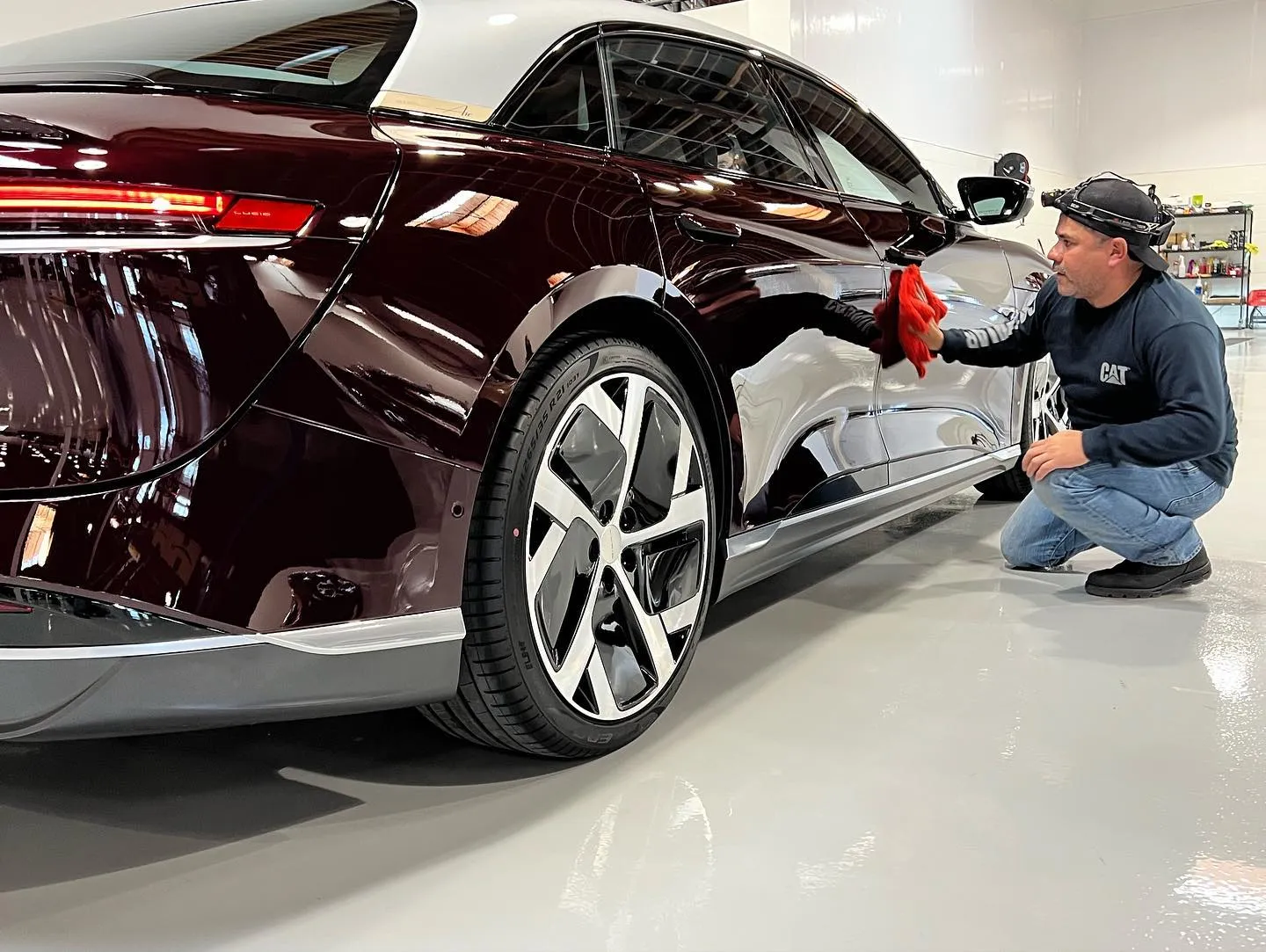
Window tinting in Pleasant Hill, CA, is a practical way to make your vehicle more comfortable during sunny East Bay afternoons. If you’ve ever returned to your car after shopping, working, or running errands and found the seats and steering wheel uncomfortably hot, you already know how much sunlight can affect a vehicle’s interior.
Maybe you commute along I-680, travel through Concord, CA, or spend time around Walnut Creek, CA. Bright sunlight through your side windows can create glare, warm the cabin, and make longer trips less comfortable. Quality automotive window film can help reduce these problems while giving your vehicle a cleaner, more uniform appearance.
But which type of tint should you choose?
You’ve probably heard about carbon window tint, ceramic window tint, and traditional dyed films. They may look similar when installed, but their construction and performance can differ quite a bit.
You also need to consider California’s window tint laws, which place strict limits on what can be installed on the front side windows and windshield.
At High Gloss Auto Detailing, we provide professional XPEL window tinting for customers from Pleasant Hill, CA, and surrounding East Bay communities. Our XPEL-certified shop is located in Pleasanton, CA, where we offer carbon and ceramic window film options.
This guide explains the different film types, their benefits, what happens during installation, and how to choose the right tint for your vehicle.
Table of Contents
- What Is Automotive Window Tinting?
- Why Pleasant Hill Vehicle Owners Choose Window Tint
- Types of Automotive Window Tint Film
- Carbon vs. Ceramic Window Tint
- Understanding XPEL PRIME Window Films
- How Much Heat Can Window Tint Reject?
- California Window Tint Laws and Legal Shades
- Window Tinting Packages Available Near Pleasant Hill
- How to Choose the Right Window Tint
- What to Expect During Professional Installation
- What to Expect After Your Windows Are Tinted
- How to Care for Your Window Tint
- What Affects a Window Tinting Quote?
- Choosing a Window Tint Installer Near Pleasant Hill
- Window Tinting for Pleasant Hill and Nearby Communities
- Frequently Asked Questions
- Schedule Your Window Tinting Appointment
- Sources and References
What Is Automotive Window Tinting?
Automotive window tinting involves applying a thin film to a vehicle’s glass.
Depending on the product, the film can reduce visible sunlight, reject portions of solar heat, block ultraviolet radiation, and create a darker appearance.
Most aftermarket automotive tint is installed on the inside surface of vehicle windows.
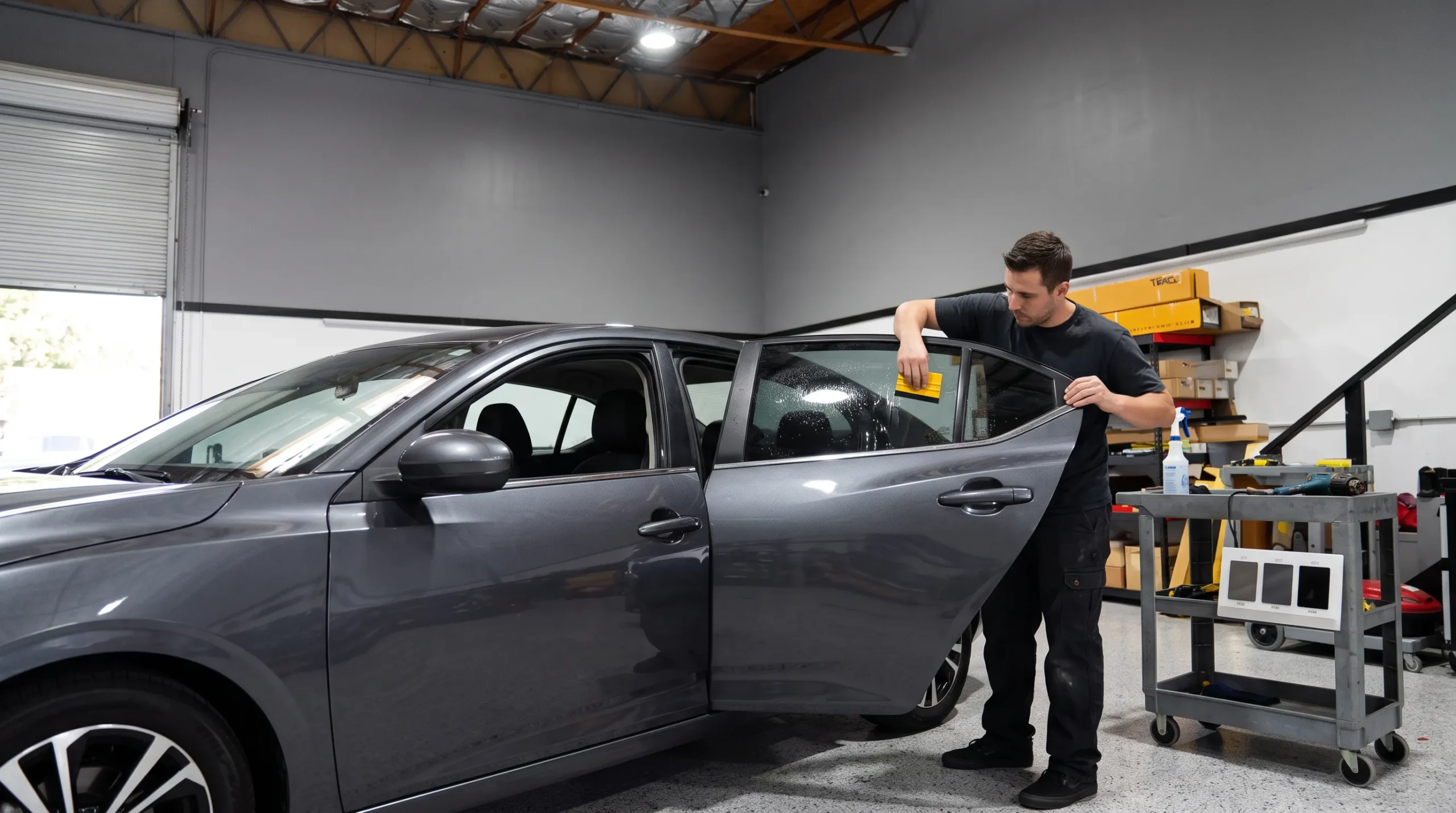
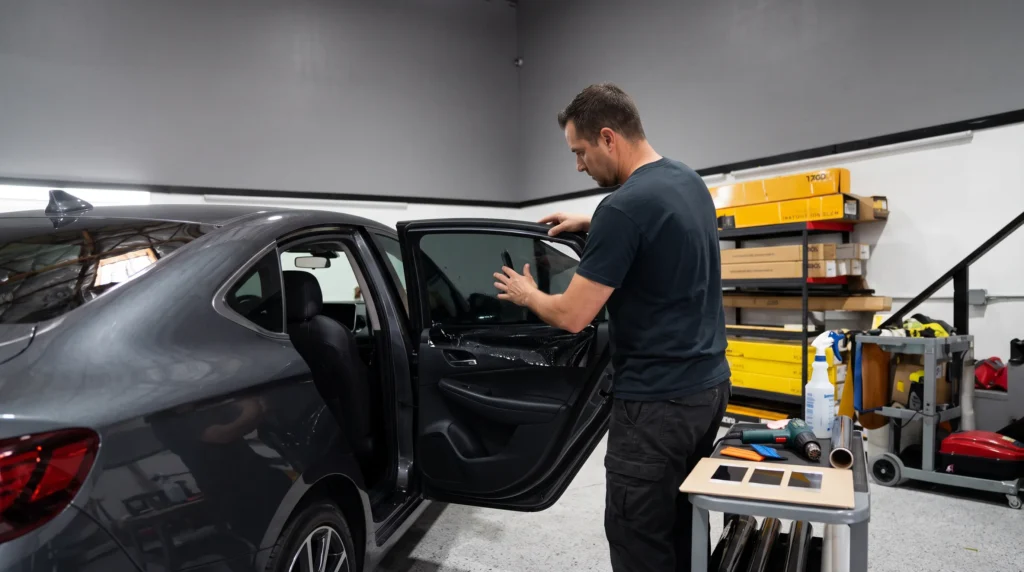
A professional installer carefully prepares the glass, fits the film to the window, and applies it using tools and techniques appropriate for the product.
Does Window Tint Just Make Glass Darker?
No.
Modern automotive films can do much more than change the appearance of your windows.
Some are designed mainly for shade and glare reduction. Others use ceramic technology to reject infrared radiation while allowing more visible light to pass through.
This means two films with a similar appearance may have different heat-rejection ratings.
The XPEL PRIME window film lineup includes dyed and nano-ceramic products with different performance characteristics.
When comparing window tinting in Pleasant Hill, CA, think about what you want the film to accomplish instead of choosing solely by darkness.
Why Pleasant Hill, CA, Vehicle Owners Choose Window Tinting
Window tinting can address several concerns that come with owning and using a vehicle in the East Bay.
Some owners want relief from sunlight. Others want rear-passenger privacy or a particular exterior appearance.
Let’s look at the benefits.
Reduced Cabin Heat
Sunlight enters a vehicle through its glass and warms interior surfaces.
Seats, dashboards, and door panels absorb solar energy and can become hot while the vehicle is parked.
Heat-rejecting window film reduces some of the solar energy entering through treated windows.
This can help make the cabin more comfortable, especially during sunny weather.
A tinted car can still become very hot when parked, so window film should never be treated as a way to make it safe to leave children or pets inside.
Less Glare During Daytime Travel
Bright sunlight can make commuting uncomfortable.
If you regularly travel between Pleasant Hill, CA, and Walnut Creek, CA, you may encounter glare through the side windows during parts of the day.
Window tint can reduce visible light and help make bright conditions more manageable.
The correct shade matters, though.
Excessively dark film can make it harder to see outside in low-light conditions, especially at night.
UV Protection for Passengers
Ultraviolet radiation can pass through some automotive glass.
XPEL reports that its PRIME CS, XR, and XR PLUS films block 99% of harmful UV rays under the manufacturer’s published test conditions.
That adds UV protection through the treated glass.
Keep in mind that window tint doesn’t eliminate every source of UV exposure, and the result depends on the windows receiving film.
Protection for Interior Materials
Sun exposure can contribute to the fading and aging of certain interior materials.
Dashboard surfaces, upholstery, leather, and plastic trim may change appearance over time.
UV-blocking window films can help reduce one source of that exposure.
They won’t prevent every type of wear, but they can be part of caring for your vehicle’s interior.
Privacy for Rear Passengers
Darker rear-window tint can make it harder for people outside to see into the cabin.
This may appeal to families, SUV owners, and people who frequently have passengers in the rear seats.
Privacy depends on lighting conditions and the film’s shade. Window tint is not a guarantee that belongings will remain hidden or protected from theft.
Types of Automotive Window Tint Film Explained
There are several types of automotive window film, and each has different characteristics.
When researching window tinting in Pleasant Hill, CA, you’ll commonly encounter dyed, carbon, metalized, and ceramic films.
Understanding their differences can help you make a more informed choice.
1. Dyed Window Tint
Dyed window tint uses coloring agents within the film to reduce visible light transmission and create a darker appearance.
It is often chosen for its appearance and ability to reduce glare.
The heat-rejection performance depends on the particular film.
Some dyed films reject less infrared energy than higher-performing ceramic films.
Who Might Prefer Dyed Window Tint?
A dyed film may suit someone whose main concern is appearance or reducing brightness through legally permitted rear glass.
XPEL PRIME CS is an example of a color-stable dyed film.
2. Carbon Window Tint
Carbon window tint uses carbon-based technology to create its appearance and manage sunlight.
These films are available from several manufacturers and can provide a dark, consistent appearance without relying on a traditional metalized construction.
Heat-rejection performance varies between products.
Don’t assume every film described as carbon has the same infrared or total solar energy rejection.
Who Might Prefer Carbon Window Tint?
Carbon film may appeal to owners who want a darker rear-window appearance while comparing options beyond ordinary dyed tint.
At High Gloss Auto Detailing, we advertise standard carbon and ceramic tint choices.
Ask our team about the exact carbon film product available for your vehicle, including its specifications and warranty.
3. Metalized Window Tint
Metalized window film includes metallic materials that reflect portions of incoming solar energy.
Depending on the construction, this can provide heat rejection and a reflective appearance.
Some metal-containing films may interfere with radio-frequency signals or certain electronic systems.
The actual effect depends on the film and the equipment involved.
Metalized tint is useful to understand when comparing film technology, but it is not listed as a separate package type on High Gloss Auto Detailing’s current tinting page.
4. Ceramic Window Tint
Ceramic window tint uses tiny ceramic particles within the film to help reject infrared radiation.
This technology can provide strong heat rejection without requiring the darkest possible shade.
For owners who want to reduce cabin heat, ceramic film is worth comparing with standard carbon and dyed options.
XPEL PRIME XR and XR PLUS are examples of nano-ceramic automotive films.
Is Ceramic Tint Always Better?
It depends on what you want.
If heat rejection is your biggest concern, certain ceramic films may perform better than standard dyed products.
If appearance is your main concern, another film may meet your expectations.
Compare the film’s specifications and legal placement rather than assuming one technology is the right choice for every window.
Carbon vs. Ceramic Window Tint: Which Should You Choose?
Carbon and ceramic window tint can both create a clean exterior appearance.
The difference comes from how the films are made and their measured performance.
Carbon vs. Ceramic Window Tint Comparison
| Feature | Carbon Window Tint | Ceramic Window Tint |
|---|---|---|
| Film construction | Carbon-based technology | Ceramic particle technology |
| Glare reduction | Depends on shade | Depends on shade |
| Heat rejection | Varies by product | Can be high, depending on product |
| UV protection | Depends on film specifications | Depends on film specifications |
| Signal interference | Depends on construction | Nonmetalized products are commonly designed to avoid interference |
| Available shades | Depends on manufacturer | Depends on manufacturer |
| Appearance | Often dark and consistent | Light and dark options available |
When Carbon Tint Makes Sense
Carbon tint can be worth discussing when you want an attractive window finish and a film with suitable glare and sun-control performance.
Ask about the exact product rather than relying on the word carbon alone.
When Ceramic Tint Makes Sense
If your biggest concern is heat entering through the windows, compare ceramic film specifications.
A well-performing ceramic film may provide strong infrared rejection even at a lighter shade.
That’s useful when you prefer a lighter appearance on legally permitted windows.
What About Window Tint and Electronics?
Some older metallic films were known for potential signal interference.
Modern nonmetalized carbon and ceramic options are often designed to avoid that issue.
XPEL lists no signal interference for its PRIME CS, XR, and XR PLUS products.
Ask your installer about the particular film if you use connected vehicle features, GPS, radio systems, or electronic toll equipment.
Understanding XPEL PRIME Window Film Options
High Gloss Auto Detailing is XPEL certified and works with XPEL window tint products.
XPEL’s PRIME lineup includes several automotive film technologies.
Our shop’s service page advertises carbon and ceramic options but does not identify every currently stocked PRIME series.
The following products are useful manufacturer examples to compare. Contact our team to confirm which films and shades are available.
XPEL PRIME CS
PRIME CS is a color-stable dyed automotive window film.
XPEL advertises up to 35% infrared rejection and 99% UV rejection for the product line.
It’s designed for owners interested in appearance, glare reduction, and UV protection.
It is important not to confuse PRIME CS with a carbon film. XPEL identifies it as dyed film technology.
XPEL PRIME XR
PRIME XR uses multi-layer nano-ceramic technology.
XPEL advertises up to 85% infrared rejection and 99% UV rejection.
For Pleasant Hill, CA, vehicle owners focused on reducing solar heat, XR is worth comparing with the standard film options.
Available performance figures depend on the exact shade and published measurement.
XPEL PRIME XR PLUS
PRIME XR PLUS uses nano-ceramic technology and is advertised with infrared rejection of up to 96%.
It also offers 99% UV rejection according to XPEL.
This product is worth discussing when heat rejection is a major concern.
A lighter XR PLUS shade and a darker XR PLUS shade won’t necessarily have identical total solar energy rejection, so ask for the specifications of the selected film.
XPEL PRIME Film Comparison
| XPEL Film | Film Technology | Advertised Maximum Infrared Rejection | Advertised UV Rejection |
|---|---|---|---|
| PRIME CS | Color-stable dyed | Up to 35% | 99% |
| PRIME XR | Nano-ceramic | Up to 85% | 99% |
| PRIME XR PLUS | Nano-ceramic | Up to 96% | 99% |
Source: XPEL PRIME Film Comparison.
These are manufacturer-advertised maximum ratings, not guaranteed performance figures for every shade or vehicle.
How Much Heat Can Automotive Window Tint Reject?
Heat rejection is one of the biggest reasons people research window tinting in Pleasant Hill, CA.
But the numbers can be confusing.
One product may advertise infrared rejection, while another emphasizes total solar energy rejection.
These are different measurements.
What Is Infrared Rejection?
Infrared rejection describes how well a film rejects infrared radiation across a specified measurement range.
Infrared radiation contributes to the heat you feel when sunlight enters the cabin.
Different testing methods and wavelength ranges can produce different published ratings.
That’s why it’s worth comparing specifications from the same test method.
What Is Total Solar Energy Rejected?
Total Solar Energy Rejected, or TSER, accounts for a broader portion of incoming solar energy.
It includes more than just one part of the infrared spectrum.
A film advertised with 96% infrared rejection does not necessarily reject 96% of all solar energy.
For a realistic comparison, ask about the TSER rating of the exact film and shade.
XPEL provides technical information through its official product specification library.
Can Light Window Tint Still Reject Heat?
Yes.
Some ceramic films are designed to reject infrared energy while allowing a relatively high amount of visible light through.
That means a lighter-looking film can still have measurable heat-rejection performance.
Still, lighter appearance does not automatically make a film legal on California front side windows.
The installation must meet the state’s rules for that window.
California Window Tint Laws: What Is Legal in Pleasant Hill, CA?
California has rules covering aftermarket film on front side windows, windshields, rear side windows, and rear glass.
These rules apply in Pleasant Hill, CA, just as they do in the rest of the state.
The main requirements appear in California Vehicle Code Section 26708.
California Window Tint Rules at a Glance
| Window | General Rule |
|---|---|
| Front driver and passenger windows | Ordinary dark aftermarket tint is not permitted; a narrow clear UV-film exception applies |
| Rear passenger side windows | Darker tint is generally permitted, subject to other applicable requirements |
| Rear windshield | Tint is generally permitted with compliant outside mirrors on both sides |
| Front windshield | Aftermarket film is highly restricted; qualifying upper strips and narrow exceptions may apply |
Can You Tint the Front Side Windows?
California places strict limits on aftermarket tint applied to the windows beside the front seats.
Under Vehicle Code Section 26708(d), qualifying aftermarket UV-protective film must:
- Be clear, colorless, and transparent
- Transmit at least 88% of visible light through the film itself
- Leave the finished glass-and-film combination compliant with the applicable 70% minimum visible light transmission requirement
- Be designed to improve protection against UVA radiation
- Meet the required certification conditions
The installer must provide the required signed certificate, which must be kept in the vehicle.
This is more restrictive than simply selecting a film labeled 70%.
A 70% VLT film does not satisfy the 88% film requirement for this exception.
What Is Visible Light Transmission?
Visible light transmission, or VLT, measures how much visible light passes through a film or glazing system.
A higher VLT percentage means more visible light passes through.
A lower percentage means the film appears darker.
Common nominal film shades include:
| Film VLT | General Appearance |
|---|---|
| 5% | Very dark |
| 20% | Dark |
| 35% | Medium-dark |
| 50% | Moderately tinted |
| 70% | Light |
| 88% or higher | Very light or nearly clear |
These are general appearance descriptions, not a list of legally permitted shades for each California window.
The completed glass-and-film combination can transmit less light than the film alone.
Are Rear Windows Allowed to Be Darker?
California generally permits darker aftermarket tint on rear passenger side windows.
Rear windshield tint is also generally permitted when the vehicle has compliant outside rearview mirrors on both sides.
You should still consider nighttime visibility before choosing very dark rear glass.
The darkest available film isn’t necessarily the most comfortable option for every owner.
What About Windshield Tint?
California restricts aftermarket windshield film.
A qualifying strip may be installed on the uppermost portion of the windshield under Section 26708(c).
The statute includes a placement measurement requiring the lower edge to be at least 29 inches above the undepressed driver’s seat, measured according to the procedure in the law.
It also restricts certain colors, lettering, and glare.
This is not a blanket rule allowing a strip of any darkness across the top four inches.
Is Full Windshield Tint Legal?
Full-windshield aftermarket tint is highly restricted.
Section 26708 includes a narrow medical exception involving qualifying clear, colorless UV-protective material and a dermatologist’s certificate.
It does not give general permission to apply dark ceramic film across a road-use vehicle’s entire windshield.
The California Highway Patrol’s window tint guidance also explains the restrictions and limited exceptions.
Before requesting any front-side or windshield film, confirm that the intended product and installation meet the law.
Window Tinting Packages Available Near Pleasant Hill, CA
High Gloss Auto Detailing advertises four coverage choices on our window tinting service page.
The listed options are:
- Windshield Strip
- 2-Front Window Match
- Full Vehicle
- Full Windshield
Our website states that the advertised packages are available with standard carbon or ceramic film choices.
The exact film and coverage must be confirmed before installation, and any work on the front side windows or windshield must comply with California law.
Windshield Strip
A windshield strip focuses on the upper portion of the front windshield.
It is intended to help reduce sunlight entering near the top of the glass.
The strip’s material, color, and placement must satisfy California’s requirements.
Ask our team which products and placement options are permitted for your vehicle.
2-Front Window Match
This advertised option concerns the front driver and passenger windows.
Some owners want their front windows to look more similar to the darker rear glass.
California does not generally permit ordinary dark aftermarket front-side tint for cosmetic matching.
Any film applied to those windows must meet the statutory exception that applies to the installation.
A shop should explain the legal limitations before recommending a film.
Full Vehicle Window Tinting
Full Vehicle is intended for customers considering film across several windows.
The legal coverage may differ between the front, rear, and windshield areas.
Rear passenger glass permits greater shade flexibility, while front-side windows and the windshield are subject to stricter rules.
Ask for a written list of the windows included and the film used on each.
Full Windshield
Our service page also lists a Full Windshield option.
This listing does not mean any film can legally be installed across the entire windshield on a vehicle used on California public roads.
Full-windshield film must meet an applicable statutory exception.
Our team can discuss the restrictions and whether any lawful option applies to your situation.
How to Choose the Right Window Tint for Your Vehicle
Before scheduling window tinting in Pleasant Hill, CA, think about what you want from the film.
If Heat Is Your Biggest Concern
Compare nano-ceramic products and ask about both infrared rejection and total solar energy rejection.
Look at the specifications for the exact shade you’re considering.
If Appearance Matters Most
Look at available film samples and compare how they appear from both inside and outside the vehicle.
Remember that California restricts darker film on front side windows.
Rear glass provides more room to choose different appearances.
If You Travel Frequently at Night
Consider how the selected shade affects visibility after dark.
Very dark film can make it harder to see through the windows when there is little exterior lighting.
You may prefer a lighter rear-window shade if nighttime visibility is a concern.
If You Own an SUV or Family Vehicle
Think about rear-passenger comfort, sunlight entering through the side windows, and visibility.
Ask which window areas are suitable for treatment.
Some vehicles have factory privacy glass, which can affect the appearance and combined transmission of aftermarket film.
If You Own a Tesla or Vehicle With Large Glass Panels
Modern vehicles may have panoramic roofs, curved rear glass, and extensive glass areas.
These can affect film fitting and product suitability.
Ask whether the film is approved for your specific glass and whether the manufacturer has installation restrictions.
Not every glass surface should automatically receive the same film.
What to Expect During Professional Window Tint Installation
Professional tinting involves several steps.
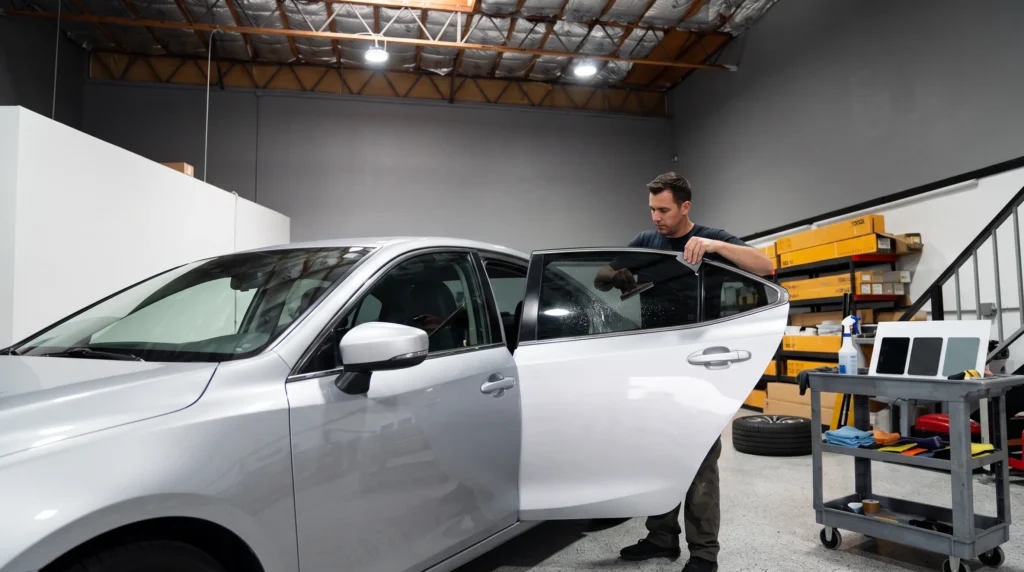
At High Gloss Auto Detailing, our published process includes measuring the windows, cleaning and preparing the surfaces, and applying the film.
Here’s what you can expect during a typical appointment.
Step 1: Inspecting Your Vehicle
The installer examines the glass and any existing film.
Scratches, chips, old adhesive, rear defroster lines, and window seals can affect installation.
If your windows already have aftermarket tint, tell the shop before scheduling.
Existing film may need to be removed.
Step 2: Confirming Film Selection
Before application, the installer should confirm the film series and the windows receiving it.
This is also the time to check legal restrictions.
Ask questions about appearance, heat rejection, and visibility before the film goes on.
Step 3: Measuring and Fitting the Film
Automotive glass comes in many shapes and sizes.
Curved rear windows, small quarter windows, and large side windows require careful fitting.
The installer prepares the film for the intended glass surface.
Step 4: Cleaning the Glass
Clean glass is necessary for a good installation.
Dust, oils, dirt, and old adhesive can become trapped beneath the film.
The installer cleans the glass and prepares the surrounding area before applying the product.
Step 5: Applying the Window Film
The installer applies the film using a suitable installation solution and specialized tools.
The film is positioned against the inside of the glass, and excess moisture is worked out.
The goal is a smooth, even appearance without trapped debris or poorly fitted edges.
Step 6: Final Inspection
After installation, the windows are inspected for alignment, visible contamination, and film edges.
Some slight haze or moisture can remain while the film cures.
Ask which changes are normal and when you should contact the shop about a concern.
What to Expect After Your Windows Are Tinted
The installation may be finished, but the film still needs time to settle.
Understanding what happens afterward can prevent unnecessary worry.
Your Windows May Look Slightly Cloudy
Freshly installed film can have a hazy appearance.
Small moisture pockets may also be visible as the application solution dries.
According to XPEL’s automotive window film care instructions, haze and moisture bubbles may remain for up to ten days.
Drying time depends on conditions.
You May Need to Keep the Windows Closed
XPEL recommends waiting approximately one to five days after installation before lowering or cleaning tinted windows, depending on the climate.
Follow the instructions given by your installer for your particular film.
Lowering the glass too early may interfere with the film while the adhesive is settling.
The Film Needs Time to Cure
Curing involves moisture leaving the film and the adhesive settling into place.
Warm and dry conditions may affect how quickly this happens.
Do not try to push out moisture pockets or peel the film to inspect them.
If something doesn’t look right after the expected curing period, contact the installer.
Ask About Warranty Documents
Before leaving the shop, request the film information and applicable warranty terms.
Keep the installation receipt and any warranty paperwork.
This makes it easier to identify the product and request service if you notice a problem later.
How to Care for Window Tint After Installation
Proper cleaning helps maintain the film’s appearance.
Once your installer confirms that the tint is ready for cleaning, follow the film manufacturer’s instructions.
Use a Soft Microfiber Towel
XPEL recommends a slightly damp microfiber towel for cleaning PRIME automotive window film.
Use gentle pressure rather than aggressive scrubbing.
Avoid Ammonia-Based Cleaners
XPEL advises using mild, non-ammonia glass cleaners when a cleaning product is necessary.
Harsh cleaners may affect certain films.
Always check that a product is suitable for tinted glass.
Don’t Use Abrasive Cleaning Tools
Avoid scouring pads, sharp scrapers, and rough materials.
These can scratch or damage the film’s surface.
Be Careful Around Window Edges
The film’s edges need proper care, especially soon after installation.
Don’t pick at an edge or attempt to lift the film.
If you notice peeling, contact your installer.
Keep Your Interior Clean
Window tint works best as part of regular vehicle care.
Dust, fingerprints, and interior film buildup can still collect on treated glass.
Our professional auto detailing services can help with maintaining your vehicle’s overall appearance.
What Affects a Window Tinting Quote in Pleasant Hill, CA?
Window tinting quotes depend on several details.
Two vehicles may need different amounts of film and installation work, even when the owners request similar coverage.
Number of Windows
Tinting two windows involves a different amount of work than treating multiple rear and side windows.
The total coverage affects the installation.
Vehicle Size and Window Shape
Large SUVs, trucks, compact cars, and sports vehicles have different glass layouts.
Some windows are more curved or difficult to access than others.
Film Type
Carbon and ceramic films have different product specifications.
The film series and selected shade may affect the work and materials involved.
Existing Window Tint
If your vehicle already has aftermarket film, removal may be needed before new film can be applied.
Old adhesive and damaged film can require extra preparation.
Special Glass Features
Curved glass, defroster lines, antennas, sensors, and panoramic roof panels can affect installation requirements.
If your vehicle has special glass features, mention them when requesting a quote.
For an accurate quote, call High Gloss Auto Detailing at (510) 542-3295 or send us your vehicle information.
How to Choose a Window Tint Installer Near Pleasant Hill, CA
Choosing a good installer means looking beyond shade samples.
The shop should be able to explain the film, the installation process, and legal restrictions.
Ask Which Products Are Available
Don’t settle for a description that only says ceramic tint.
Ask for the manufacturer, film series, and specifications.
High Gloss Auto Detailing works with XPEL window film products.
Confirm Legal Coverage
Ask how the shop handles front-side and windshield installations under California law.
A reputable installer should be able to explain why certain shades are not permitted on those windows.
Review the Installation Process
Ask how the glass is prepared and what happens if existing film needs to be removed.
A clear explanation helps you understand the work being performed.
Understand the Warranty
High Gloss Auto Detailing advertises lifetime tint warranty support through the shop and the window film manufacturer.
XPEL also advertises lifetime limited warranty coverage for its PRIME window films, subject to the written terms.
Ask which promises come from the manufacturer, which come from the installer, and what the warranty excludes.
Look at Previous Work
Customer reviews and examples of completed vehicles can help you judge the shop’s work.
Pay attention to film edges, visible contamination, and communication.
High Gloss Auto Detailing is an XPEL-certified business offering automotive protection and detailing services.
You can learn more about our team on our About Us page.
Window Tinting Services for Pleasant Hill, CA, and Nearby Communities
High Gloss Auto Detailing welcomes vehicle owners looking for window tinting in Pleasant Hill, CA, at our Pleasanton, CA, shop.
Pleasant Hill, CA, and Pleasanton, CA, are different cities, so customers traveling from Pleasant Hill should plan for an appointment at our Pleasanton location.
Our website lists Pleasant Hill, CA, among the communities we serve.
Concord, CA
Customers from Concord, CA, can contact us about carbon and ceramic window films, sun glare reduction, and legally permitted tint coverage.
Walnut Creek, CA
If you spend time commuting or parking outdoors in Walnut Creek, CA, our team can help you compare XPEL window film options for your vehicle.
Martinez, CA
Vehicle owners from Martinez, CA, are welcome to discuss window film choices for comfort, rear-passenger privacy, and UV protection.
Lafayette, CA
For drivers from Lafayette, CA, our team can explain how film darkness and heat-rejection performance differ.
Pleasanton, CA
Our shop is located in Pleasanton, CA, where we provide professional window tinting and automotive protection services.
Dublin, CA
We also serve customers from Dublin, CA, interested in window tinting, ceramic coating, paint protection film, and auto detailing.
If you’re considering several services, you can also explore our XPEL ceramic coating and paint protection film pages.
Frequently Asked Questions About Window Tinting in Pleasant Hill, CA
1. What Type of Window Tint Is Best for Reducing Heat?
Ceramic window tint is worth considering if reducing incoming solar heat is your main concern.
XPEL PRIME XR and XR PLUS use nano-ceramic technology and have higher advertised infrared rejection ratings than XPEL PRIME CS dyed film.
The actual result depends on the selected shade, glass, and other conditions.
Ask for the infrared rejection and total solar energy rejection ratings of the exact product you’re considering.
2. Is Ceramic Window Tint Better Than Carbon Tint?
Ceramic tint may be a better fit if you’re comparing films mainly for heat rejection.
Carbon tint can also provide an attractive appearance and sun-control benefits.
Performance varies between individual products, so you shouldn’t assume that every ceramic film performs better than every carbon film.
At High Gloss Auto Detailing, we advertise both carbon and ceramic choices.
Our team can discuss the available products and their specifications.
3. What Is the Darkest Legal Window Tint in California?
California’s rules depend on the location of the window.
Rear passenger windows generally allow darker tint, while rear windshield tint is generally permitted with compliant outside mirrors on both sides.
Front side windows are subject to much stricter limits.
Qualifying aftermarket clear UV-protective material must transmit at least 88% of visible light on its own, with the finished glass-and-film combination meeting the applicable 70% requirement and other conditions.
Ordinary dark aftermarket tint is not permitted on front side windows.
4. How Long Does Professional Window Tint Installation Take?
The appointment time depends on your vehicle, the number of windows, window shapes, film type, and whether existing tint needs removal.
Tinting two windows may require less work than preparing and installing film across several windows.
Curved rear glass and specialty vehicle features can affect the process.
Contact High Gloss Auto Detailing to discuss your vehicle and confirm an appointment schedule.
5. How Long Should I Wait Before Rolling Down My Windows?
XPEL recommends waiting approximately one to five days after installation before lowering or cleaning windows, depending on the climate.
Your installer may give instructions suited to the exact film and conditions.
Temporary haze or moisture pockets can appear while the film cures.
If you notice persistent bubbling or lifted edges after the expected curing period, contact the installer.
6. How Much Does Window Tinting Cost in Pleasant Hill, CA?
The quote depends on the type of film, number of windows, vehicle design, existing tint removal, and coverage requested.
Carbon and ceramic films have different specifications, and the amount of installation work can vary by vehicle.
For a personalized quote, call High Gloss Auto Detailing at (510) 542-3295 or complete our online contact form.
We’ll help you discuss the available film options for your vehicle.
7. Where Can I Get XPEL Window Tinting Near Pleasant Hill, CA?
High Gloss Auto Detailing is an XPEL-certified business serving customers from Pleasant Hill, CA, and nearby East Bay communities.
Our shop is located at:
High Gloss Auto Detailing
7034 Commerce Cir Suite E
Pleasanton, CA 94588
Phone: (510) 542-3295
Business Hours:
- Monday through Friday: 9:30 AM to 6:30 PM
- Saturday: 10:00 AM to 6:30 PM
We offer carbon and ceramic window tinting options, along with ceramic coating, paint protection film, paint correction, and auto detailing.
Visit our window tinting service page to review our advertised coverage options.
Schedule Professional Window Tinting Near Pleasant Hill, CA
Choosing window tinting in Pleasant Hill, CA, comes down to understanding what you want from the film and which products are appropriate for your vehicle.
If reducing heat is your biggest concern, ceramic film is worth comparing.
If you want a darker appearance on the rear windows, carbon and other film technologies offer options to consider.
And if you’re thinking about tinting your front side windows or windshield, understanding California law should come before choosing a shade.
At High Gloss Auto Detailing, our XPEL-certified team can help you compare available window films, discuss heat-rejection specifications, and review which coverage options are permitted for your vehicle.
We welcome customers from Pleasant Hill, CA, Concord, CA, Walnut Creek, CA, Martinez, CA, Lafayette, CA, Dublin, CA, and surrounding East Bay communities.
Ready to make your vehicle more comfortable and give it a cleaner appearance?
Call (510) 542-3295 to ask about XPEL window tinting and request a personalized quote.
You can also contact High Gloss Auto Detailing online to request an appointment.
Visit our shop:
High Gloss Auto Detailing
7034 Commerce Cir Suite E
Pleasanton, CA 94588
Get the window film that fits your vehicle, your comfort needs, and California’s requirements.
Sources and References
The following sources support the film descriptions, heat-rejection specifications, advertised tint coverage, California legal requirements, and aftercare recommendations in this guide.
| Source Title | Publisher | Publication Date | URL |
|---|---|---|---|
| Window Tinting in Pleasanton, CA & Dublin, CA | High Gloss Auto Detailing | Not listed | Window Tinting Services |
| XPEL PRIME Window Tint | XPEL | Not listed | XPEL PRIME Film Comparison |
| XPEL Product Specifications | XPEL | Not listed | XPEL Film Technical Specifications |
| California Vehicle Code Section 26708 | California State Legislature | Amendment effective January 1, 2026 | California Window Tint Law |
| Frequently Asked Questions: Vehicle Modification | California Highway Patrol | Not listed | CHP Window Tint Guidance |
| XPEL Product Care Instructions | XPEL | Not listed | XPEL Automotive Window Film Care |
| About High Gloss Auto Detailing | High Gloss Auto Detailing | Not listed | About Our Shop |
| Contact High Gloss Auto Detailing | High Gloss Auto Detailing | Not listed | Contact and Shop Location |
Film performance, available products, warranty coverage, and shop packages may change. California legal requirements should be checked before installation. The legal information in this article is intended as general guidance and does not replace the current Vehicle Code or professional legal advice.
Window Tinting in Pleasant Hill, CA: Film Types and What to Expect - High Gloss Auto Detailing XPEL Certified Installer

Window Tinting in Pleasant Hill, CA: Film Types and What to Expect Premier Certified XPEL Installer. Window tinting in Pleasant Hill, CA, is a practical way
Product Brand: High Gloss Auto Detailing
5
Pros
- Discover the best ceramic coating services in Pleasanton, CA, with High Gloss Auto Detailing. Protect your car’s paint with Ceramic Pro, the industry leader in automotive protection. Call us today or schedule an appointment online!