Window tinting in Castro Valley, CA, is worth doing right the first time. Whether you want to reduce cabin heat, cut down on sun glare, or give your vehicle a cleaner appearance, choosing the right installer makes a difference. A quality window film can perform well for years, but poor installation can leave you dealing with bubbles, peeling edges, trapped dirt, and an uneven appearance.
If you regularly commute along I-580, travel through Hayward, CA, or park your car outside during the workday, you probably know how uncomfortable a sun-soaked interior can become. Hot seats, bright sunlight through the side windows, and a warm steering wheel are familiar problems for many East Bay vehicle owners.
Automotive window tint can help. But the film itself is only part of the decision.
You also need to know who’s installing it, whether they use products from established manufacturers, how they prepare the glass, and what happens if something goes wrong after installation.
At High Gloss Auto Detailing, we provide professional XPEL window tinting for customers from Castro Valley, CA, and surrounding East Bay communities. Our XPEL-certified shop is located in Pleasanton, CA, where we offer carbon and ceramic window film options.
This guide explains what to look for in a window tint installer, which questions to ask, how to compare film options, and what to expect before and after your appointment.
Table of Contents
- Why Choosing the Right Window Tint Installer Matters
- What to Look for in a Window Tinting Shop
- Questions to Ask Before Booking Window Tinting
- Understanding Different Window Tint Film Types
- Comparing XPEL PRIME Window Films
- How to Compare Window Tint Performance
- California Window Tint Laws and Legal Shades
- Window Tinting Packages Available Near Castro Valley
- What Happens During Professional Window Tint Installation?
- Signs of a Quality Window Tint Installation
- Window Tint Warranties: What Should You Check?
- Window Tint Aftercare and Maintenance
- Common Mistakes When Choosing a Tint Installer
- What Affects Your Window Tinting Quote?
- Why Choose High Gloss Auto Detailing?
- Window Tinting Services for Castro Valley and Nearby Cities
- Frequently Asked Questions
- Schedule Your Window Tinting Appointment
- Sources and References
Why Choosing the Right Window Tint Installer Matters
Window tinting might look straightforward from the outside.
An installer places a piece of film over the glass, smooths it out, and sends you on your way.
But there’s much more happening during a professional installation.
Vehicle windows come in different shapes, sizes, and curves. Some have defroster lines, sensors, unusual seals, or factory privacy glass. Each of these details can affect how the film is fitted and installed.
A trained installer needs to understand the film’s characteristics, prepare the glass properly, and work carefully around these surfaces.
Good Window Tint Starts With Proper Preparation
Imagine applying a screen protector to your phone.
If there’s dust trapped underneath, you’ll probably notice it every time you look at the screen.
Window tint works in a similar way.
Dirt, lint, or residue left on the glass before installation can become trapped beneath the film.
Careful cleaning reduces the chance of these problems.
The film must also be fitted to the shape of the glass without unnecessary creases or poorly finished edges.
The Film Brand Matters Too
Not every window tint product offers the same performance.
Some films focus on creating a darker appearance. Others use ceramic technology to reject more infrared heat.
Two films may look nearly identical but have very different heat-rejection specifications.
That’s why choosing window tinting in Castro Valley, CA, should involve comparing both the installer and the product.
A Warranty Is Part of the Decision
Even professionally installed window tint can develop problems under certain conditions.
Knowing who handles warranty questions can make the experience easier.
Ask whether the coverage comes from the manufacturer, the installer, or both.
The written terms matter more than simply hearing that a product has a lifetime warranty.
What to Look for in a Window Tinting Shop Near Castro Valley, CA
Before choosing a shop, spend a little time researching how it handles automotive window film.
You don’t need to know everything about tinting technology.
You just need to know which questions lead to clear answers.
1. Experience With Automotive Window Film
Automotive window tinting requires different techniques from applying film to ordinary flat glass.
Rear windshields may have pronounced curves. Side windows move through rubber seals, and some vehicles have delicate interior trim near the glass.
Ask whether the shop regularly works on your vehicle type.
A technician familiar with automotive glass should be able to discuss preparation, fitting, and curing without making unrealistic promises.
2. Manufacturer Training and Certification
Some window film manufacturers provide training and certification programs.
These programs can help installers learn proper handling and application procedures for their products.
High Gloss Auto Detailing is an XPEL-certified business and XPEL vendor.
We work with XPEL automotive protection products, including window film.
You can learn more about our business on our About Us page.
Certification is a useful factor to consider, but it shouldn’t be the only one. Ask about the actual installation process and the products available for your car.
3. Clear Film Information
Be cautious when a shop describes a product only as ceramic tint or premium tint.
Those terms don’t identify the exact film.
Ask for the manufacturer, film series, and shade.
You should also be able to review the manufacturer’s published specifications.
A shop that can explain the differences between films makes it easier to choose based on your needs.
4. A Clean Installation Area
Dust and contamination can affect the appearance of an installation.
A shop should take reasonable steps to keep the glass and surrounding work area clean.
Ask how the windows are prepared before film application.
You can also ask whether old tint or adhesive must be removed before new film is installed.
5. Reviews and Completed Work
Customer reviews can help you understand how a business communicates and handles appointments.
Look for comments about film appearance, installation quality, and support after the service.
Photos of completed vehicles can also be useful.
Pay attention to film edges, rear-window clarity, and how consistently the film follows the shape of the glass.
6. Knowledge of California Window Tint Laws
A window tint installer should understand which products are permitted on different vehicle windows.
California has strict rules for front side windows and windshields.
A shop should explain those rules rather than recommending a dark film simply because other vehicles have it.
For window tinting in Castro Valley, CA, legal compliance should be part of the conversation before any film is applied.
Questions to Ask Before Booking Window Tinting in Castro Valley, CA
A short conversation with the installer can tell you a lot about how the shop operates.
Before scheduling, consider asking these questions.
Which Exact Window Film Will You Install?
Request the manufacturer and product line.
If you’re considering ceramic tint, ask whether the film is XPEL PRIME XR, XR PLUS, or another product.
At High Gloss Auto Detailing, our website advertises carbon and ceramic film choices. Contact us to confirm which exact products and shades are currently available.
What Heat-Rejection Ratings Does the Film Have?
Ask about infrared rejection and total solar energy rejection.
These measurements are not interchangeable.
A good installer should be able to explain the difference in everyday language.
Is the Film Legal for My Vehicle’s Windows?
The answer depends on the window location, film specifications, and the vehicle’s existing glass.
Ask about the legal requirements before choosing a shade.
Will You Remove Existing Tint?
If your vehicle already has aftermarket film, it may need to be removed before new tint can be installed.
Ask whether old film removal and adhesive cleaning are included in the proposed work.
What Does the Warranty Cover?
Ask whether bubbling, peeling, fading, or other film-related problems are covered.
Find out whether there are exclusions, registration requirements, or documents you need to keep.
How Long Will My Appointment Take?
The time involved depends on the number of windows, glass shape, existing film, and installation requirements.
Ask for an appointment schedule based on your specific vehicle.
What Happens if I Notice a Problem After Installation?
A professional shop should explain how to report a concern.
Ask how long you should allow for curing and when you should return if something doesn’t look right.
Here’s what matters: The right installer should answer these questions without pressuring you into choosing a film you don’t understand.
Understanding Different Window Tint Film Types
Window film technology has changed over the years.
Today, vehicle owners can compare several types of automotive tint, each designed with different materials and performance goals.
Dyed Window Tint
Dyed window film uses coloring agents to reduce visible sunlight and create a tinted appearance.
It can help reduce glare and give the vehicle a darker look.
Heat-rejection performance depends on the particular product.
Some dyed films reject less infrared energy than higher-performing ceramic films.
XPEL PRIME CS is an example of a color-stable dyed automotive film.
Carbon Window Tint
Carbon window tint uses carbon-based materials within the film construction.
Depending on the product, it can provide a consistent appearance and sun-control benefits.
Carbon film performance varies between manufacturers.
High Gloss Auto Detailing advertises standard carbon tint as one of our available choices.
Ask our team which carbon product is currently stocked and how its specifications compare with the ceramic options.
Ceramic Window Tint
Ceramic window tint uses small ceramic particles within the film to help reject solar infrared radiation.
This can provide heat-rejection benefits without requiring an extremely dark appearance.
XPEL PRIME XR and XR PLUS use nano-ceramic technology.
For vehicle owners who commute regularly or park outside, ceramic film is worth comparing when cabin heat is a concern.
Metalized Window Tint
Metalized film uses metallic materials to reflect portions of solar energy.
Some metallic films may interfere with certain radio-frequency signals or vehicle electronics.
The effect depends on the product and the equipment.
Metalized tint is useful to understand when comparing film types, although it is not listed as a separate standard option on our current service page.
Comparing XPEL PRIME Window Tint Films
High Gloss Auto Detailing works with XPEL products.
XPEL’s PRIME automotive window film lineup includes several film technologies designed for different sun-control goals.
The manufacturer’s PRIME window tint comparison describes three major product lines.
XPEL PRIME CS
PRIME CS uses color-stable dyed film technology.
XPEL advertises up to 35% infrared rejection and 99% rejection of harmful UV rays.
This product may appeal to owners who want a tinted appearance, glare reduction, and UV protection.
PRIME CS is dyed film, not ceramic film.
It should also not be assumed to be the same product as the standard carbon tint advertised by our shop.
XPEL PRIME XR
PRIME XR uses multi-layer nano-ceramic technology.
XPEL advertises up to 85% infrared rejection and 99% UV rejection.
If you’re considering window tinting in Castro Valley, CA, primarily to reduce incoming solar heat, PRIME XR is worth comparing with other film choices.
The published maximum ratings don’t apply to every shade in the same way.
XPEL PRIME XR PLUS
PRIME XR PLUS also uses nano-ceramic technology.
XPEL advertises up to 96% infrared rejection and 99% rejection of harmful UV rays.
This film is worth discussing when you want to compare XPEL’s higher infrared-rejection options.
Keep in mind that 96% infrared rejection does not mean the film blocks 96% of all solar heat.
XPEL PRIME Film Comparison
| Film | Technology | Advertised Maximum Infrared Rejection | UV Rejection |
|---|---|---|---|
| PRIME CS | Color-stable dyed | Up to 35% | 99% |
| PRIME XR | Nano-ceramic | Up to 85% | 99% |
| PRIME XR PLUS | Nano-ceramic | Up to 96% | 99% |
Source: XPEL PRIME Window Tint.
These figures are manufacturer-advertised maximums. They are not the same as total solar energy rejection, and performance varies according to the product and testing method.
Contact High Gloss Auto Detailing to confirm the films available for your vehicle.
How to Compare Window Tint Performance Before Choosing an Installer
One of the easiest mistakes when shopping for automotive tint is comparing products based only on darkness.
A film that looks darker doesn’t automatically reject more heat.
Three measurements can help you understand what you’re getting.
Visible Light Transmission
Visible Light Transmission, or VLT, measures how much visible light passes through the film or finished glass.
A higher VLT allows more visible light through.
A lower VLT creates a darker appearance.
Common film shades include:
| Film VLT | General Appearance |
|---|---|
| 5% | Very dark |
| 20% | Dark |
| 35% | Medium-dark |
| 50% | Moderately tinted |
| 70% | Light |
| 88% or higher | Very light or nearly clear |
These descriptions don’t mean every shade is legal on every California vehicle window.
The existing glass affects the final light transmission after film is installed.
Infrared Rejection
Infrared radiation contributes to solar heat entering the cabin.
A film’s infrared rejection rating describes how well it rejects infrared energy under a particular test method.
Different products may use different measurement ranges.
Ask about the rating for the exact film you’re considering.
Total Solar Energy Rejected
Total Solar Energy Rejected, commonly called TSER, measures how much of the incoming solar energy is rejected.
TSER considers more of the solar spectrum than a single infrared rejection measurement.
That’s why a film with a high infrared rejection figure may have a lower TSER rating.
When comparing window tinting in Castro Valley, CA, ask for shade-specific performance information rather than relying on one advertised percentage.
Can a Light Ceramic Film Reject Heat?
Yes.
Certain ceramic films can reject substantial infrared energy while allowing more visible light through than darker films.
That makes film technology worth comparing even when you prefer a lighter appearance.
The product still must meet California’s requirements for the window where it will be installed.
California Window Tint Laws: What Should Your Installer Know?
Before applying window film, your installer should explain the legal limits that apply to your vehicle.
California has different rules for front side windows, rear side windows, rear windshields, and front windshields.
These requirements apply in Castro Valley, CA, and throughout the state.
The main restrictions appear in California Vehicle Code Section 26708.
California Window Tint Rules at a Glance
| Window Location | General California Rule |
|---|---|
| Front driver and passenger windows | Ordinary dark aftermarket tint is prohibited; qualifying clear UV-protective material may be permitted |
| Rear passenger windows | Darker tint is generally permitted, subject to applicable requirements |
| Rear windshield | Tint is generally permitted with compliant outside mirrors on both sides |
| Front windshield | Aftermarket tint is restricted, with narrow exceptions |
Can You Tint the Front Side Windows in California?
California does not generally permit ordinary dark aftermarket tint on the front driver and passenger side windows.
Vehicle Code Section 26708(d) allows certain clear, colorless, transparent UV-protective material if all statutory conditions are met.
Those conditions include:
- The film itself must transmit at least 88% of visible light.
- The finished glass-and-film combination must satisfy the applicable 70% minimum visible light transmission requirement.
- The material must be designed to improve protection against UVA radiation.
- The driver must possess the required signed certificate identifying the installer and manufacturer.
- Material that becomes damaged or interferes with clear vision must be removed or replaced.
This is stricter than simply choosing a film labeled 70% VLT.
A 70% film does not meet the separate 88% film requirement for that exception.
Why Factory Glass Matters
Your vehicle’s original glass already has a visible light transmission rating.
Adding aftermarket film reduces the combined transmission.
A film labeled 88% doesn’t automatically mean the completed window will satisfy every legal requirement.
The glass and film must be considered together.
Ask the installer how compliance is checked.
Are Darker Rear Windows Legal?
California generally allows darker film on side windows behind the driver.
Rear windshield tint is also generally permitted when the vehicle has outside mirrors on both sides meeting the statutory requirements.
Even where darker film is legal, think about visibility after sunset.
Very dark rear windows may make it harder to see pedestrians, cyclists, or other objects outside.
What About Windshield Tint?
California restricts aftermarket film on windshields.
A qualifying strip may be installed at the uppermost portion of the windshield under Section 26708(c).
The statute requires the bottom edge of the strip to be at least 29 inches above the undepressed driver’s seat, measured using the procedure described in the law.
The film must also meet restrictions involving color, lettering, and reflected glare.
This is more precise than the commonly repeated claim that any four-inch strip is permitted.
Is Full Windshield Ceramic Tint Legal?
Full-windshield aftermarket film is highly restricted in California.
A narrow medical exception allows certain clear, colorless UV-protective material under particular conditions, including documentation signed by a licensed dermatologist.
That exception does not permit ordinary dark windshield tint.
High Gloss Auto Detailing advertises a Full Windshield coverage option, but an advertised service does not mean every proposed installation is lawful on a road-use vehicle.
Your installer should review whether any applicable exception permits the requested work.
For another reference, see the California Highway Patrol’s vehicle modification FAQ.
Window Tinting Packages Available Near Castro Valley, CA
High Gloss Auto Detailing advertises four window tint coverage options.
Our window tinting service page lists standard carbon and ceramic film choices.
The available coverage must be confirmed for your vehicle and comply with California law.
Our Advertised Window Tint Packages
| Package | Coverage Focus | What to Confirm |
|---|---|---|
| Windshield Strip | Upper windshield | Legal placement and film type |
| 2-Front Window Match | Front side windows | Whether a qualifying clear-film installation is permitted |
| Full Vehicle | Multiple windows | Exact window list, film type, and legal coverage |
| Full Windshield | Front windshield | Whether a statutory exception applies |
Windshield Strip
A windshield strip is intended to reduce some of the sunlight entering through the top portion of the windshield.
California limits the material and placement.
Before choosing this option, ask which products and dimensions are permitted on your vehicle.
2-Front Window Match
Some vehicle owners want their front side windows to resemble the darker rear glass.
Our website advertises a 2-Front Window Match option.
California’s front-side-window restrictions mean ordinary dark film cannot generally be installed simply for appearance matching.
Any proposed front-side installation must meet the applicable legal exception.
Ask our team to explain what is lawful before selecting this option.
Full Vehicle Window Tint
Full Vehicle is intended for owners who want film on multiple glass areas.
The exact windows and films should be listed in the agreed installation scope.
Different windows may require different film choices under California law.
Ask for a written description of the coverage before booking.
Full Windshield
Our service page also lists Full Windshield.
Because California heavily restricts aftermarket windshield film, this option requires particular attention to the law.
A clear-looking ceramic film is not automatically permitted across the entire windshield.
The installation must qualify under an applicable exception.
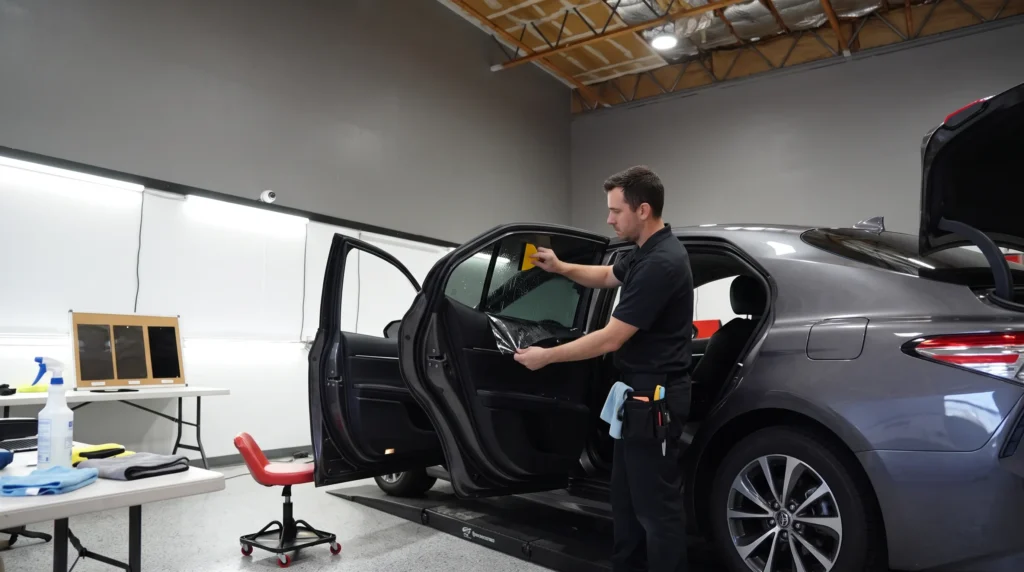
What Happens During Professional Window Tint Installation?
Understanding the installation process helps you know what to expect when visiting a shop.
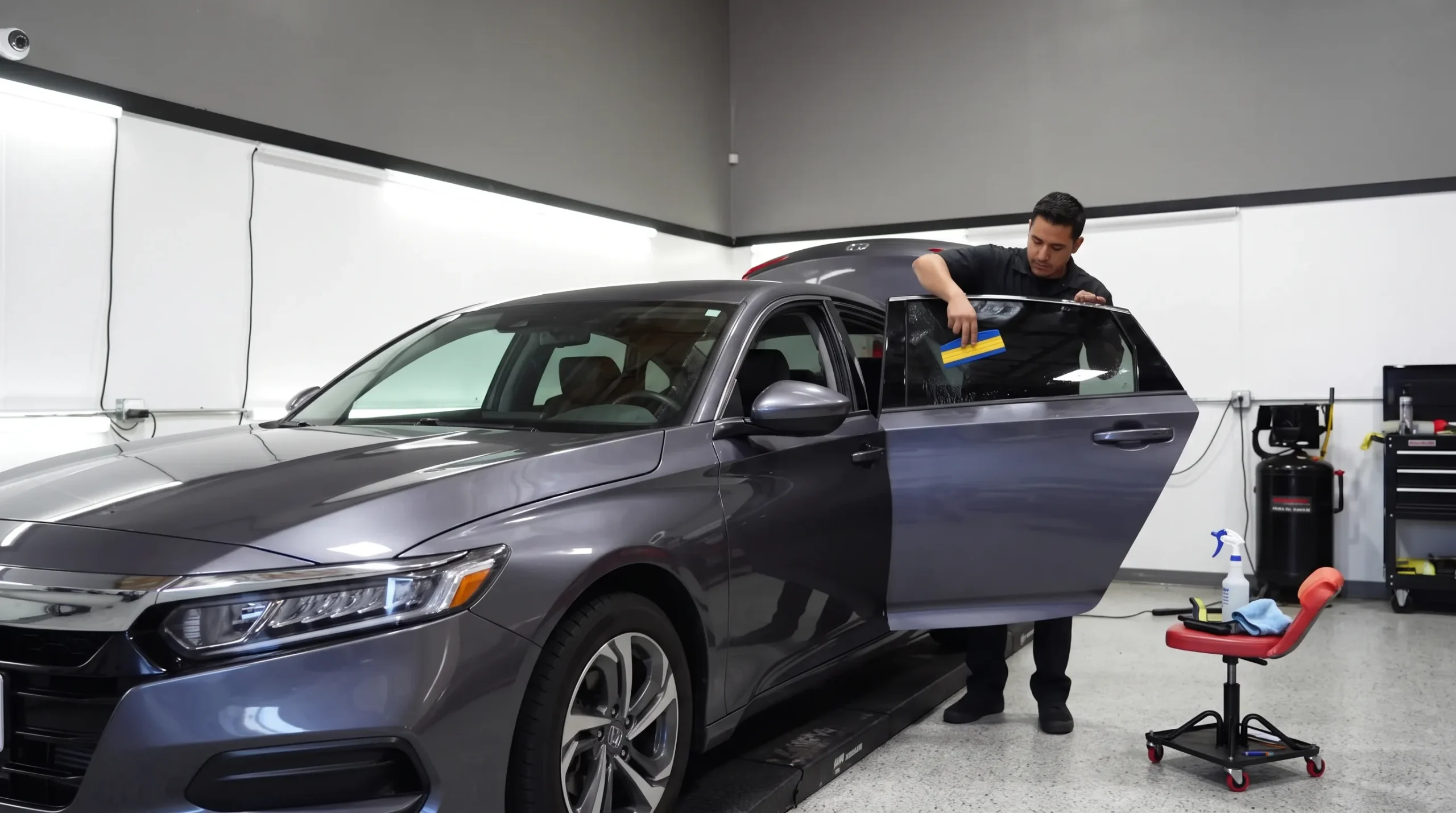
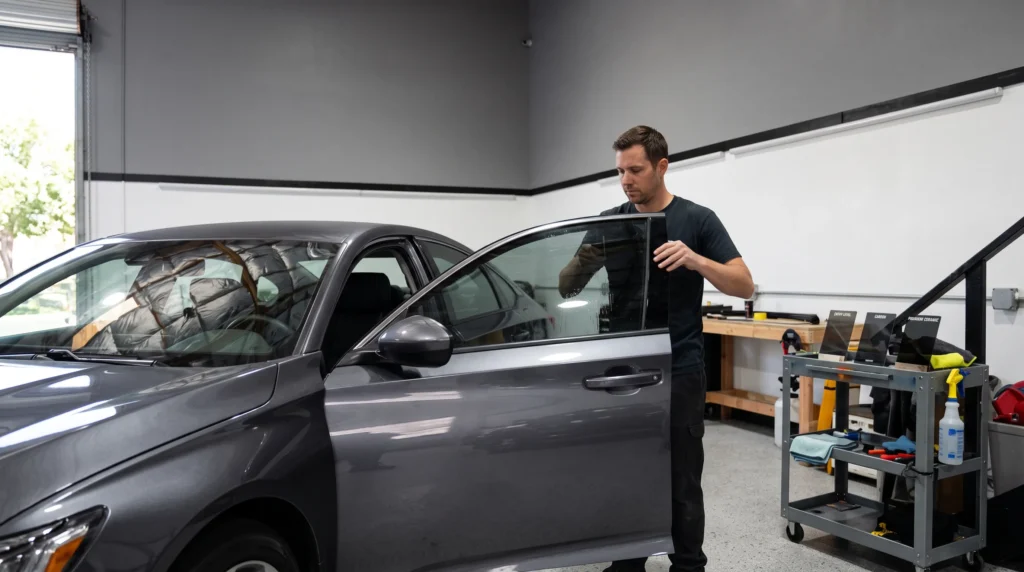
At High Gloss Auto Detailing, our published process includes accurate window measurements, proper cleaning and preparation, and window film application.
Step 1: Inspecting the Windows
The installer examines the vehicle’s glass.
Existing film, scratches, old adhesive, defroster lines, window seals, and glass shape can affect the installation.
If your vehicle already has aftermarket tint, tell the shop before scheduling.
Step 2: Confirming the Film and Coverage
The film brand, product line, shade, and treated windows should be confirmed before work begins.
This is also when legal requirements need to be reviewed.
Don’t hesitate to ask questions about the film’s heat-rejection ratings and appearance.
Step 3: Cleaning and Preparing the Glass
The glass must be cleaned carefully before film application.
Dust, lint, oils, and residue can become trapped beneath the film.
A clean surface helps reduce visible contamination in the finished result.
Step 4: Measuring and Fitting the Film
The installer fits the film to the window’s shape.
Some rear windows have curved glass that requires careful shaping.
The installer must also work around seals, trim, and other vehicle details.
Step 5: Applying the Film
Automotive window film is typically applied to the interior surface of the glass.
The installer uses a suitable application solution and tools to position the film and remove excess moisture.
The adhesive then needs time to settle.
Step 6: Inspecting the Finished Installation
Before the vehicle is returned, the installer should check the film’s alignment and visible edges.
You should also receive instructions about curing, cleaning, and when the windows can be lowered.
Signs of a Quality Window Tint Installation
How can you tell whether the finished work looks right?
Some aspects can be inspected immediately, while others become clearer after the film has cured.
Clean Film Edges
The tint should fit the window properly.
Film that stops unevenly or shows poorly fitted edges may affect the finished appearance.
Small differences in edge placement can depend on the vehicle and installation method, so ask what is expected.
Limited Visible Contamination
The film should not have obvious dirt, large particles, or foreign material trapped beneath it.
A perfectly invisible installation under every lighting condition is not a realistic expectation, but noticeable contamination deserves a conversation with the installer.
Consistent Appearance
The film should look reasonably consistent across the treated glass.
If one window looks unusually different, ask whether the difference comes from the film, factory glass, or installation.
No Persistent Peeling
Film edges should remain properly attached after curing.
If an edge begins to peel or lift, contact the shop.
Avoid trying to reposition it yourself.
Understanding Temporary Moisture
Fresh window film may have haze or small moisture pockets.
These can be normal during curing.
According to XPEL’s window film care guidance, some haze and moisture bubbles may remain for up to ten days after installation.
Do not judge every temporary moisture mark as a permanent defect.
Window Tint Warranties: What Should You Check?
Warranty coverage is an area where comparing installers can be useful.
Two shops may advertise lifetime coverage but have different terms.
Manufacturer Warranty vs. Installer Warranty
The manufacturer may provide coverage for qualifying film defects.
The installer may offer separate coverage related to the installation work.
These are not automatically the same warranty.
High Gloss Auto Detailing advertises lifetime window tint warranty support through the shop and manufacturer.
Ask for the written terms that apply to the product and service you select.
What Does XPEL’s Warranty Cover?
XPEL advertises a transferable lifetime limited warranty for its PRIME automotive window films.
Coverage is subject to written conditions and exclusions.
The manufacturer’s warranty information discusses product-related issues such as peeling, cracking, fading, and discoloration.
The exact terms should be checked for your selected film.
Review the XPEL Warranty Information before scheduling.
Questions to Ask About Warranty Coverage
Ask whether the warranty requires registration, proof of installation, or a particular maintenance routine.
Find out how a claim is submitted and who examines the film.
Also ask whether damage from scratches, harsh cleaners, or improper use is excluded.
Keep your installation receipt, product details, and applicable warranty documents.
Window Tint Aftercare: How to Protect Your New Film
Once your windows are tinted, proper care helps maintain their appearance.
The first several days after installation deserve attention because the film is still curing.
Wait Before Lowering Your Windows
XPEL recommends waiting approximately one to five days after PRIME film installation before lowering or cleaning the windows, depending on climate.
Your installer may provide more precise instructions.
Follow those directions rather than assuming the windows can be lowered immediately.
Allow Moisture to Dry
Temporary haze and moisture pockets may appear beneath newly applied film.
XPEL states that these may remain for up to ten days while installation moisture dries.
Don’t press on bubbles, pierce the film, or peel it.
If something remains concerning after the expected curing period, contact the installer.
Use Suitable Glass Cleaners
Once cleaning is permitted, use a soft microfiber cloth slightly dampened with water.
XPEL recommends mild, non-ammonia glass cleaners when a cleaning product is needed.
Avoid abrasive pads, sharp scrapers, and aggressive rubbing.
Protect the Film From Scratches
Window tint can still be scratched by sharp objects.
Use care around jewelry, seatbelt buckles, pet claws, and items that might contact the glass.
Keep Up With Interior Cleaning
Fingerprints, dust, and residue can collect on tinted glass just like untreated windows.
Routine cleaning helps maintain appearance and visibility.
Our auto detailing services can also help with general vehicle interior and exterior care.
Common Mistakes to Avoid When Choosing a Window Tint Installer
When comparing window tinting in Castro Valley, CA, a few mistakes can make the decision harder than it needs to be.
Choosing Only by the Darkest Shade
Darkness does not tell you everything about heat rejection.
Compare the manufacturer’s performance ratings, legal requirements, and nighttime visibility.
Not Asking for the Film Brand
If you don’t know the exact film being installed, comparing warranties and specifications becomes difficult.
Request the manufacturer and product line.
Ignoring California Law
A shop willing to apply a dark front-side film does not make the installation lawful.
Understand the window-specific rules before choosing a shade.
Assuming Every Lifetime Warranty Is Identical
Read the written warranty.
Ask which problems are covered, what is excluded, and whether the shop provides separate installation coverage.
Expecting the Tint to Look Fully Cured Immediately
Temporary haze or moisture may appear after installation.
Know the expected curing period before deciding that something is wrong.
Forgetting About Existing Tint
Old aftermarket film may need removal.
Tell the installer about previous tinting work so the preparation can be included in the service discussion.
What Affects a Window Tinting Quote in Castro Valley, CA?
The work involved in window tinting varies by vehicle and requested coverage.
An accurate quote should account for several details.
Film Type and Product Line
Carbon and ceramic films can have different material specifications.
The exact product matters when comparing options.
Number of Windows
Tinting selected windows involves different work from installing film across several glass areas.
Ask for a list of the windows included in your quote.
Window Shape and Vehicle Design
Some vehicles have curved rear windows, small quarter windows, or difficult-to-access glass.
These details can affect installation.
Existing Window Film
Old tint and leftover adhesive may require removal and cleaning before new film can be applied.
Special Glass Features
Rear defrosters, antennas, sensors, glass roofs, and factory coatings may affect the suitability or preparation of certain film products.
Tell the installer about unusual glass features or previous repairs.
Warranty and Aftercare
The service should include clear information about the product, installation, and warranty terms.
Need a quote for window tinting in Castro Valley, CA?
Call High Gloss Auto Detailing at (510) 542-3295 or send us your vehicle information.
Why Choose High Gloss Auto Detailing for Window Tinting Near Castro Valley, CA?
High Gloss Auto Detailing is an XPEL-certified business serving customers from Castro Valley, CA, and surrounding East Bay communities.
Our shop is located in Pleasanton, CA.
We provide automotive protection and appearance services for daily commuters, family vehicles, trucks, SUVs, luxury cars, and sports cars.
XPEL-Certified Service
Our team works with XPEL window film products.
We can help you discuss the differences between carbon and ceramic film options, available shades, and suitable installation coverage.
Carbon and Ceramic Window Tint Choices
We advertise both standard carbon and ceramic tinting.
The right option depends on your vehicle, comfort goals, and preferred appearance.
Ask us to confirm the film products currently available.
Multiple Coverage Options
Our advertised services include Windshield Strip, 2-Front Window Match, Full Vehicle, and Full Windshield options.
California legal requirements determine which films and applications are permitted.
Warranty Support
We advertise tint warranty support through our shop and the film manufacturer.
Our team can help explain the written warranty terms for the selected installation.
Other Vehicle Protection Services
Along with window tint, we offer:
These services focus on different areas of vehicle care.
If you’re considering several treatments, let our team know when arranging your appointment.
Window Tinting Services for Castro Valley, CA, and Nearby Communities
High Gloss Auto Detailing welcomes customers seeking window tinting in Castro Valley, CA, at our shop in Pleasanton, CA.
Our published service area includes Castro Valley and several neighboring communities.
Hayward, CA
Vehicle owners from Hayward, CA, can contact us about carbon and ceramic window film, legal tint coverage, and heat-rejection options.
San Leandro, CA
Customers from San Leandro, CA, are welcome to discuss XPEL window films for rear-window privacy, glare reduction, and passenger comfort.
San Lorenzo, CA
If you commute regularly or park your vehicle outside in San Lorenzo, CA, our team can help explain film performance and available installation options.
Oakland, CA
Vehicle owners from Oakland, CA, can contact our Pleasanton shop to discuss professional window tinting and automotive protection services.
Dublin, CA
We serve customers from Dublin, CA, who want window tinting, ceramic coating, paint protection film, and detailing.
Pleasanton, CA
Our physical shop is located at:
High Gloss Auto Detailing
7034 Commerce Cir Suite E
Pleasanton, CA 94588
Although we’re not physically located in Castro Valley, CA, we welcome customers from Castro Valley and nearby East Bay communities.
Contact us to arrange an appointment at our shop.
Frequently Asked Questions About Window Tinting in Castro Valley, CA
1. How Do I Choose a Good Window Tint Installer in Castro Valley, CA?
Start by checking the shop’s experience, film brands, customer reviews, and warranty information.
Ask which exact product will be installed and how the glass is prepared.
A knowledgeable installer should explain film performance, California legal requirements, curing time, and aftercare.
High Gloss Auto Detailing is an XPEL-certified business serving Castro Valley, CA, from our Pleasanton, CA, location.
2. Is Ceramic Window Tint Better Than Carbon Tint?
Ceramic tint may be a better match if reducing solar heat is your main concern.
Certain ceramic films provide higher infrared rejection than standard dyed or carbon products.
Carbon tint can still offer an attractive appearance and sun-control benefits.
The actual performance depends on the individual product.
Ask about infrared rejection, total solar energy rejection, UV protection, and available shades.
3. What Is the Darkest Legal Window Tint in California?
California has different rules depending on the window.
Darker film is generally permitted on rear side windows, while rear windshield tint is generally allowed when compliant outside mirrors are present on both sides.
Front side windows are more restricted.
Qualifying clear UV-protective film must transmit at least 88% of visible light on its own and satisfy the combined glazing requirement and other conditions.
Ordinary dark aftermarket film is not permitted on the front side windows.
4. How Can I Tell if My Window Tint Was Installed Correctly?
Look for clean edges, consistent appearance, and minimal visible contamination.
Freshly installed tint may show temporary haze or small moisture pockets while it cures.
According to XPEL, those conditions can remain for up to ten days.
If you notice persistent peeling, trapped dirt, or concerning defects after the expected curing period, contact your installer.
5. How Long Does XPEL Window Tint Last?
XPEL PRIME automotive window films are designed for long-term use and come with a transferable lifetime limited manufacturer warranty, subject to the written terms.
Coverage depends on the selected product and applicable exclusions.
Maintenance, film damage, and installation conditions can affect the film’s appearance over time.
Ask High Gloss Auto Detailing for the current warranty documents before scheduling.
6. How Much Does Professional Window Tinting Cost in Castro Valley, CA?
A quote depends on the film type, number of windows, vehicle design, existing film removal, and installation requirements.
Different vehicles may require different amounts of preparation and film-fitting work.
For a personalized quote, call High Gloss Auto Detailing at (510) 542-3295 or complete our online contact form.
7. Where Can I Get XPEL Window Tinting Near Castro Valley, CA?
High Gloss Auto Detailing serves vehicle owners from Castro Valley, CA, and surrounding East Bay communities.
Our shop is located at:
High Gloss Auto Detailing
7034 Commerce Cir Suite E
Pleasanton, CA 94588
Phone: (510) 542-3295
Business Hours:
- Monday through Friday: 9:30 AM to 6:30 PM
- Saturday: 10:00 AM to 6:30 PM
We offer carbon and ceramic window tinting choices, along with paint protection film, ceramic coating, paint correction, and auto detailing.
Visit our window tinting service page to learn more about the advertised options.
Schedule Window Tinting Near Castro Valley, CA
Choosing window tinting in Castro Valley, CA, doesn’t need to be complicated.
Start by finding a shop that can explain its film products, installation process, and warranty terms.
If reducing cabin heat is your biggest concern, compare ceramic film specifications.
If you want rear-window privacy or a darker appearance, discuss the available shades and nighttime visibility.
And if you’re considering film for the front side windows or windshield, make sure the proposed installation complies with California law.
At High Gloss Auto Detailing, our XPEL-certified team can help you compare carbon and ceramic window tint options and understand what to expect from your appointment.
We welcome customers from Castro Valley, CA, Hayward, CA, San Leandro, CA, San Lorenzo, CA, Dublin, CA, Pleasanton, CA, and nearby East Bay communities.
Ready to find the right window tint for your vehicle?
Call (510) 542-3295 to discuss your vehicle, compare available films, and request a personalized quote.
You can also contact High Gloss Auto Detailing online to request an appointment.
Visit our shop:
High Gloss Auto Detailing
7034 Commerce Cir Suite E
Pleasanton, CA 94588
Choose a window tint installer who can explain the film, the process, and the care your vehicle needs after installation.
Sources and References
The following sources support the window tint service descriptions, XPEL film specifications, warranty information, California tint requirements, and aftercare recommendations in this article.
| Source Title | Publisher | Publication Date | URL |
|---|---|---|---|
| Window Tinting in Pleasanton, CA & Dublin, CA | High Gloss Auto Detailing | Not listed | Window Tinting Services |
| Auto Detailing & Protection in Castro Valley, CA | High Gloss Auto Detailing | Not listed | Castro Valley Service Area |
| XPEL PRIME Window Tint | XPEL | Not listed | XPEL PRIME Film Comparison |
| Automotive Window Film | XPEL | Not listed | XPEL Automotive Window Tint |
| Warranty Information | XPEL | Not listed | XPEL Window Film Warranty |
| Product Care Instructions | XPEL | Not listed | XPEL Window Film Care |
| California Vehicle Code Section 26708 | California State Legislature | Amended effective January 1, 2026 | California Window Tint Law |
| California Vehicle Code Section 26708, Published Statutory Text | Justia | 2025 code, amendment effective January 1, 2026 | California Vehicle Code Text |
| Frequently Asked Questions | California Highway Patrol | Not listed | CHP Vehicle Modification Guidance |
| Contact High Gloss Auto Detailing | High Gloss Auto Detailing | Not listed | Contact and Shop Information |
Film specifications, available products, warranty terms, and installation options may change. California tint requirements should be checked before installation. This article provides general guidance and does not replace the current Vehicle Code. Confirm the proposed film and written service details with High Gloss Auto Detailing before booking.
Window Tinting in Castro Valley, CA: How to Pick an Installer - High Gloss Auto Detailing XPEL Certified Installer

Window Tinting in Castro Valley, CA: How to Pick an Installer Premier Certified XPEL Installer. Window tinting in Castro Valley, CA, is worth doing right the
Product Brand: High Gloss Auto Detailing
5
Pros
- Discover the best ceramic coating services in Pleasanton, CA, with High Gloss Auto Detailing. Protect your car’s paint with Ceramic Pro, the industry leader in automotive protection. Call us today or schedule an appointment online!