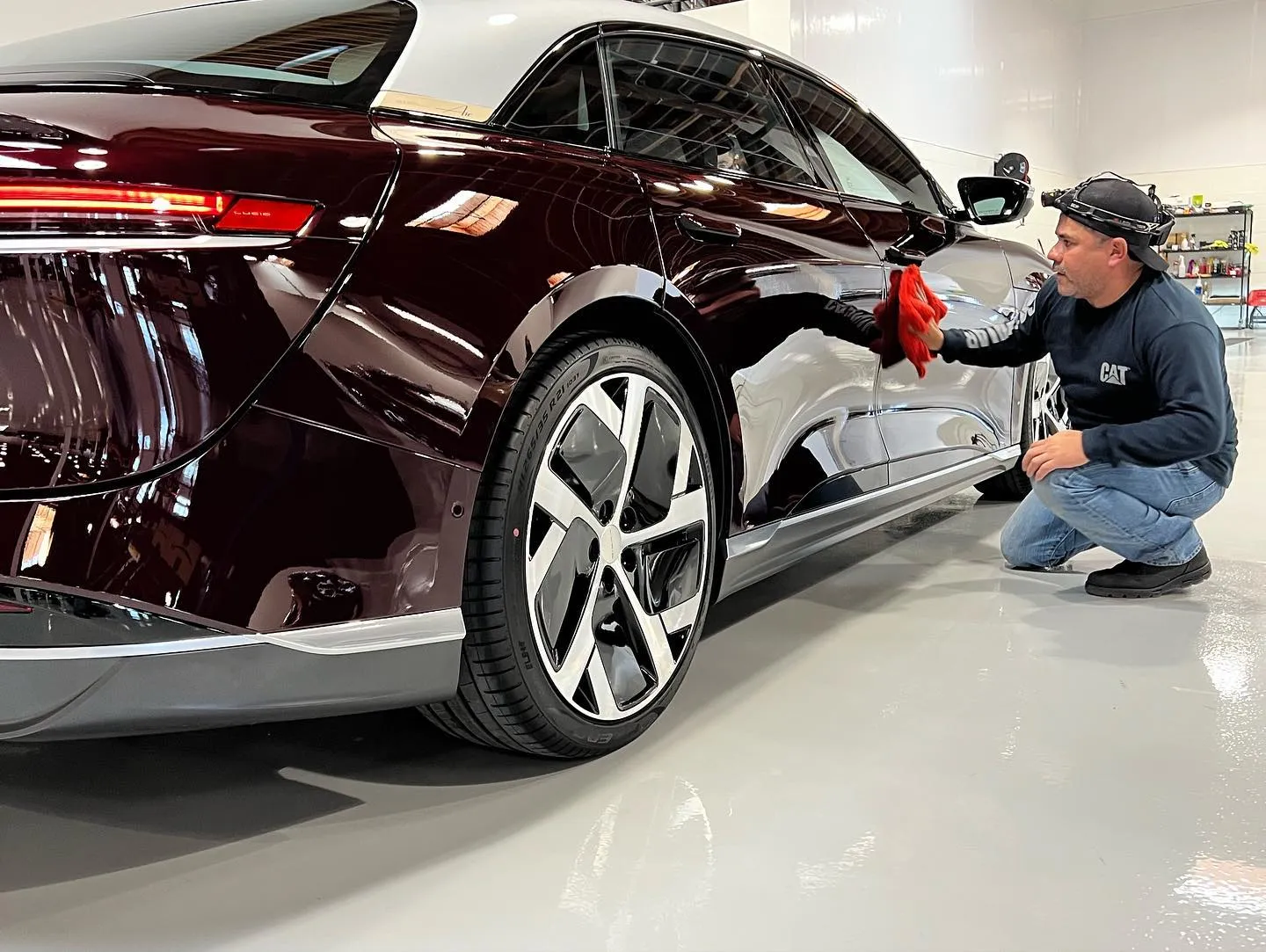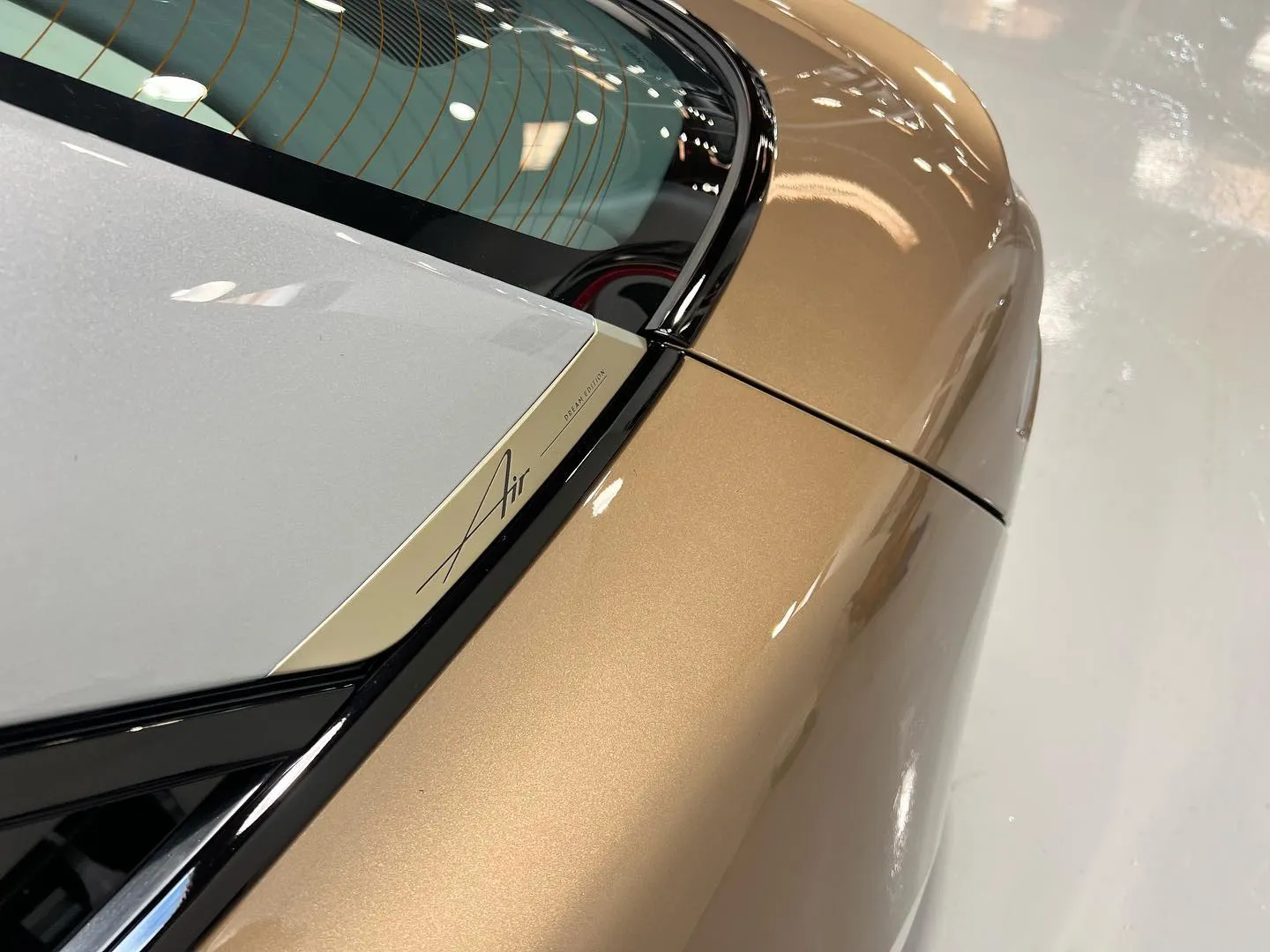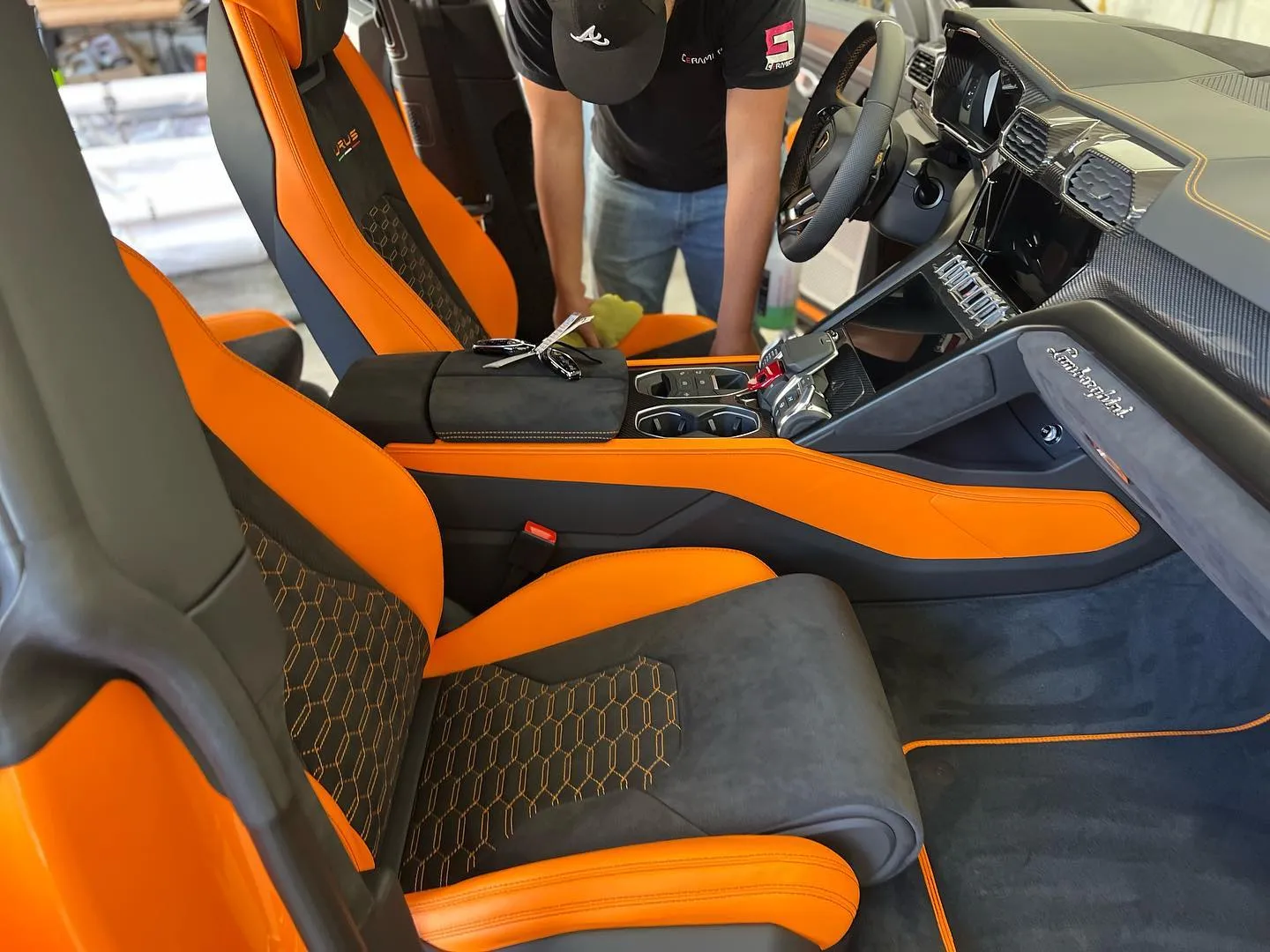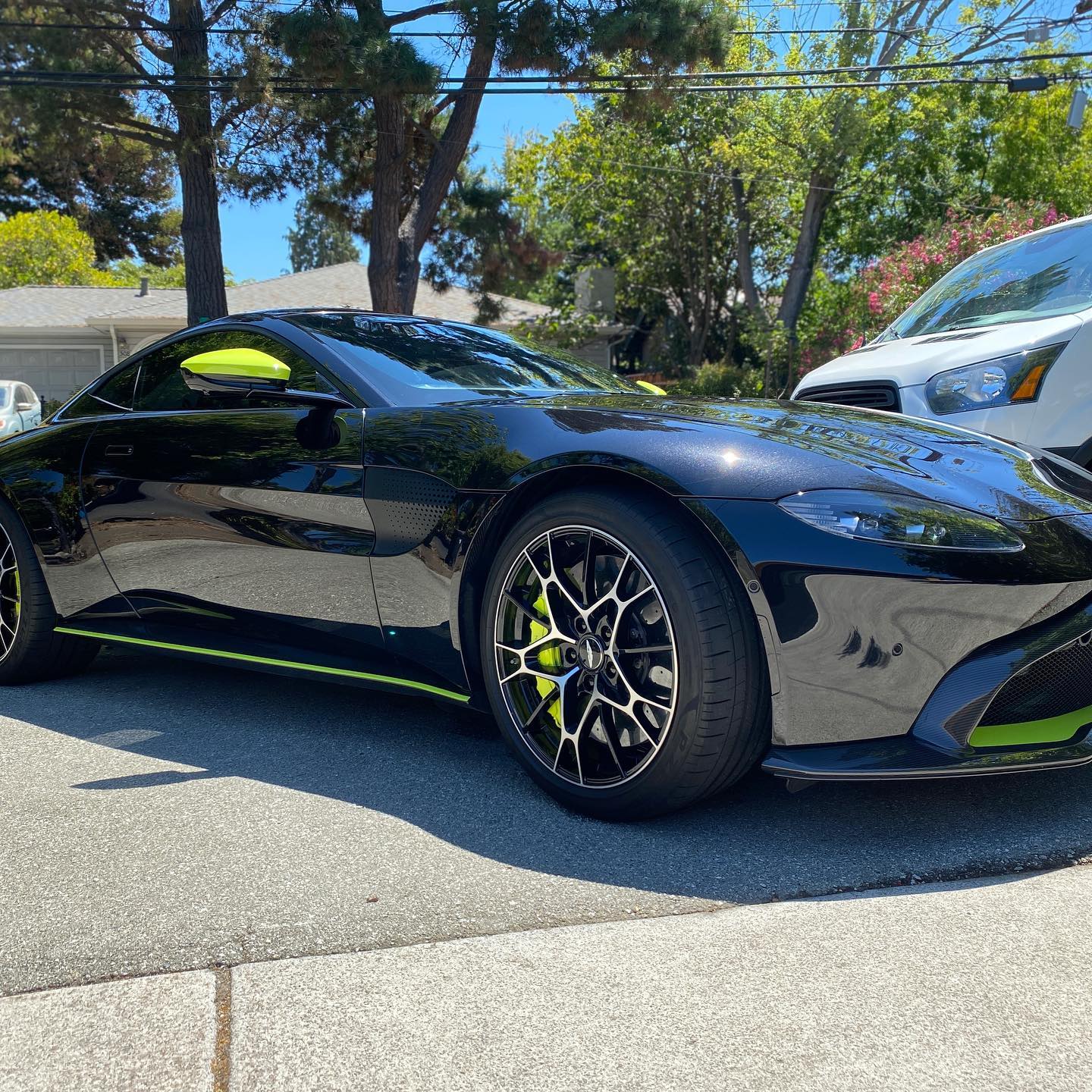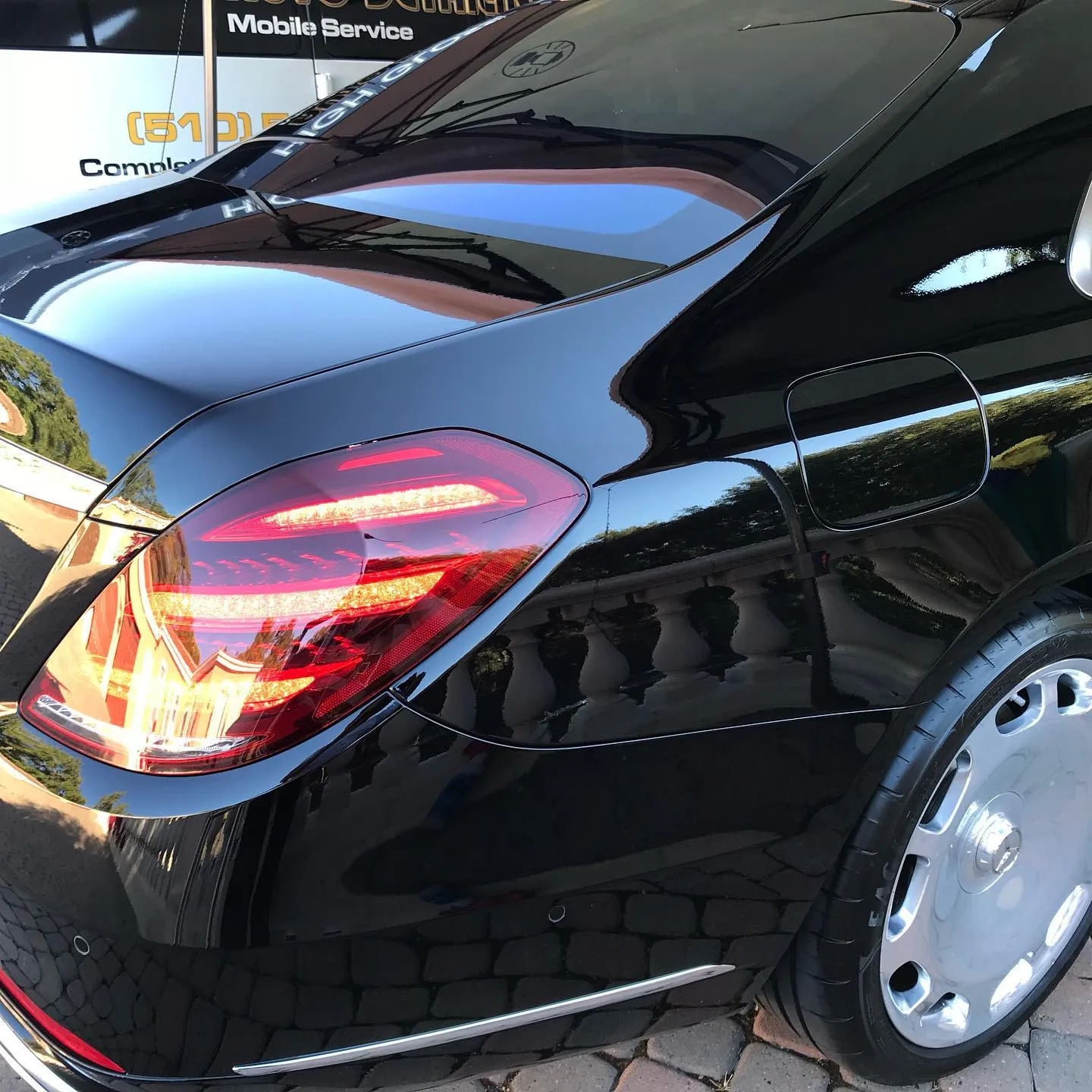
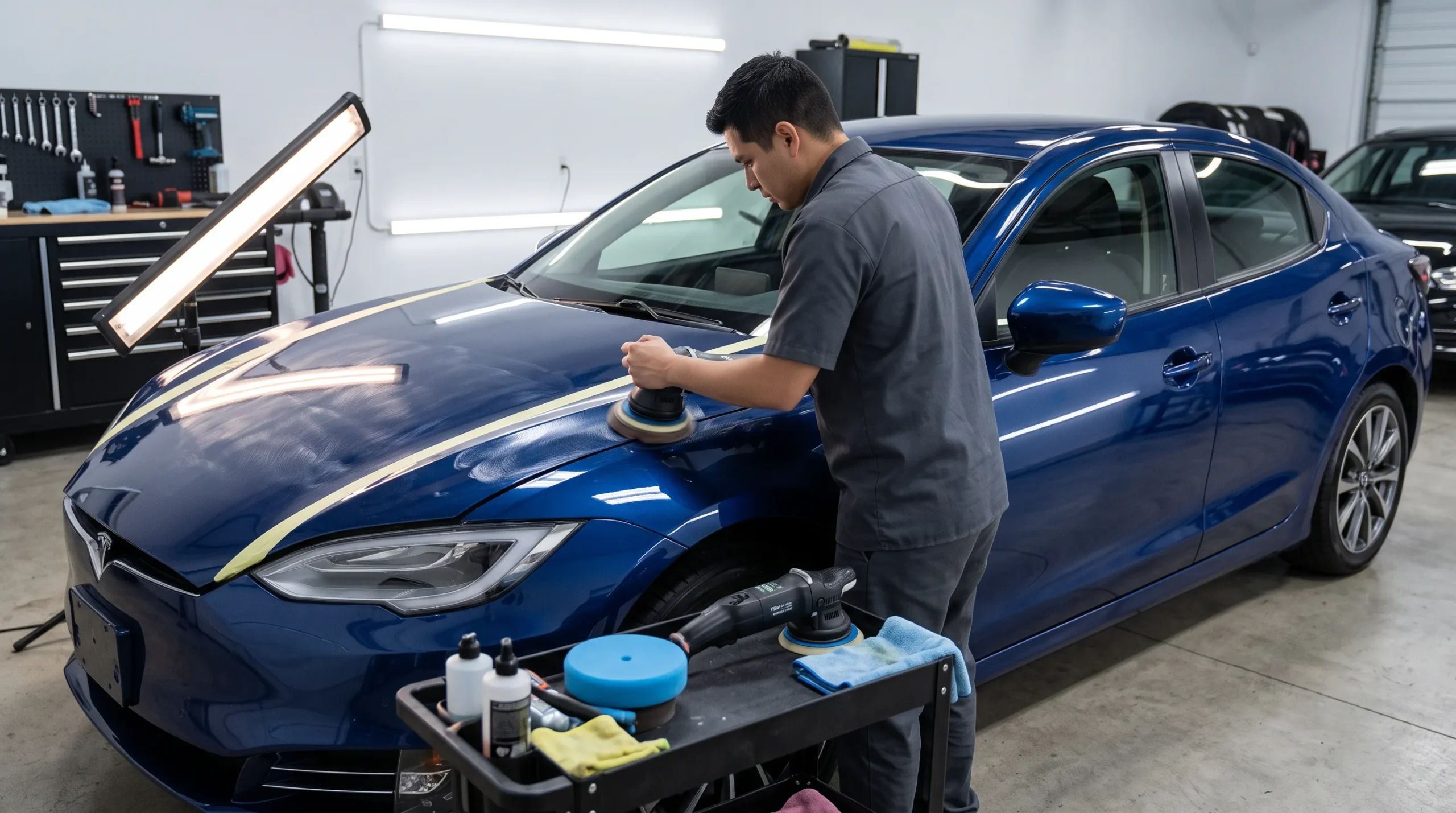
Paint correction in Pinole and Hercules, CA can range from a lighter machine-polishing service to a multi-step process for vehicles with heavier swirl marks, oxidation, scratches, haze, or past polishing marks. The right stage depends on the condition of the paint, the depth of the defects, and what you want the vehicle to look like when the work is finished.
That is where some confusion starts.
Terms such as one-step correction, two-step correction, polishing, compounding, and paint refinement may sound similar, but they describe different amounts of work. A vehicle with mild wash marks may not need the same process as a dark-colored car covered in swirls and deeper defects.
High Gloss Auto Detailing provides professional paint correction for drivers from Pinole, CA, Hercules, CA, and surrounding Bay Area communities. Our shop is located at 7034 Commerce Cir Suite E in Pleasanton, CA.
This guide explains the stages of paint correction, what happens during each part of the process, and how to decide which level may fit your vehicle.
Table of Contents
- What Paint Correction Actually Does
- Which Paint Defects Can Be Corrected?
- Stage 1: Paint Inspection
- Stage 2: Washing and Decontamination
- Stage 3: Test Spot and Paint Evaluation
- Stage 4: One-Step Paint Correction
- Stage 5: Two-Step Paint Correction
- What Compounding Does
- What Polishing Does
- Why Clear Coat Condition Matters
- Can Paint Correction Remove Every Scratch?
- Why Dark Paint Often Shows More Defects
- Paint Correction vs Auto Detailing
- Paint Correction Before Ceramic Coating
- Paint Correction Before PPF
- How to Choose the Right Paint Correction Stage
- Paint Correction for Pinole, CA Drivers
- Paint Correction for Hercules, CA Drivers
- Schedule Paint Correction
- Frequently Asked Questions
- Sources
What Paint Correction Actually Does
Paint correction works on defects in the painted finish.
These defects can become visible when sunlight, parking-lot lighting, or inspection lights hit the vehicle from certain angles.
Meguiar’s states that compounds can remove or reduce scratches, swirls, oxidation, holograms, and other light-to-moderate paint defects. 3M also describes polishing as a method for removing minor scratches, compound swirls, water spots, and other surface imperfections.
Paint correction is different from covering defects with wax or another temporary product.
The polishing process works on the upper painted surface to reduce the uneven areas that create visible defects.
The amount of correction needed depends on what is present.
A lightly swirled daily driver may need one polishing stage.
A vehicle with heavier defects may benefit from a cutting or compounding stage followed by a finer polishing stage.
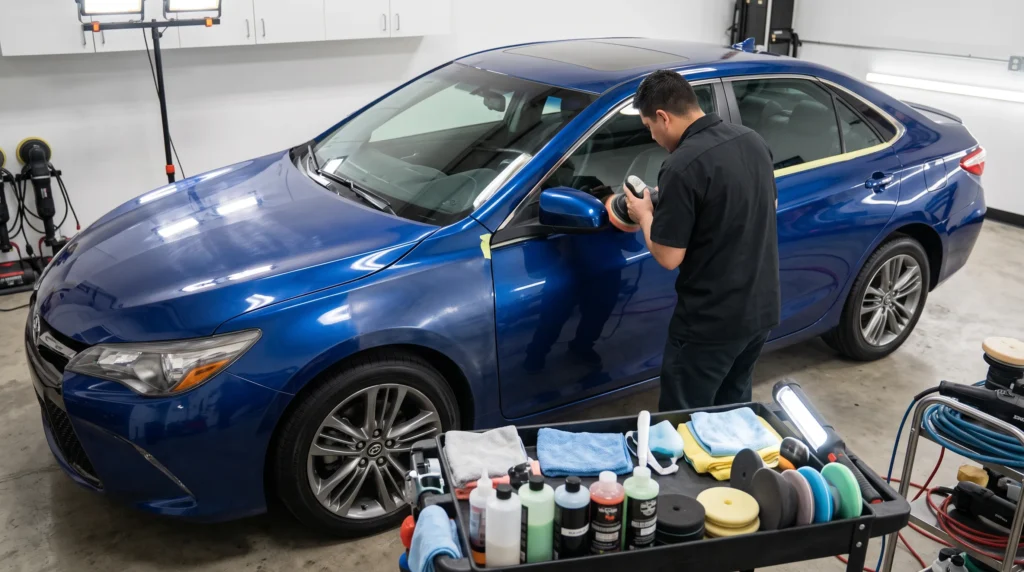
That is why an inspection comes before choosing a package.
Which Paint Defects Can Be Corrected?
Drivers looking for paint correction in Pinole and Hercules, CA often contact a shop after noticing defects such as:
- Swirl marks
- Fine scratches
- Wash marks
- Water spots
- Oxidation
- Haze
- Holograms
- Towel marks
- Light etching
- Past machine-polishing marks
Many of these defects may respond to compounding or polishing.
The depth of the damage matters.
If a scratch is deep enough to pass through the clear coat, machine polishing alone may not safely remove it.
A shop should inspect deeper damage before deciding how far to correct it.
Trying to remove every visible mark can sometimes require more clear-coat removal than makes sense.
A better goal may be to improve the overall finish while leaving deeper defects that should not be chased aggressively.
Stage 1: Paint Inspection
The first stage of professional paint correction is inspection.
The technician needs to see what is actually happening across the vehicle.
Paint condition can change from panel to panel.
The hood may have heavier water spotting.
The doors may show wash swirls.
The rear quarter panels may have fine scratches.
One side of the vehicle may also have more sun exposure or damage than the other.
During an inspection, the technician can look for:
- Swirl density
- Scratch depth
- Oxidation
- Water spotting
- Haze
- Previous repair work
- Repainted panels
- Clear-coat condition
- Areas needing more attention
Focused lighting can make defects much easier to see.
This is also the time to tell the technician what bothers you most.
If the hood is your main concern, say so.
If you want the entire vehicle prepared for ceramic coating, mention that before correction begins.
Stage 2: Washing and Decontamination
Paint correction should begin on properly cleaned paint.
Loose dirt needs to be removed before a polishing pad touches the surface.
After washing, the paint may still contain bonded contamination.
Meguiar’s recommends inspecting the finish after washing and using clay when the surface feels rough. Its care guidance separates bonded contamination from paint defects such as swirls and oxidation.
Decontamination can remove material that ordinary washing leaves behind.
That can include:
- Road film
- Tar
- Embedded particles
- Industrial fallout
- Other bonded residue
A clay treatment or other decontamination process leaves the surface smoother before machine work begins.
This step matters because polishing contaminated paint can interfere with the correction process.
High Gloss Auto Detailing can also perform exterior preparation through its auto detailing services.
Stage 3: Test Spot and Paint Evaluation
A test spot gives the technician a chance to see how the paint responds before working across the whole vehicle.
Not all automotive paint behaves the same way.
Some paint can respond quickly to a mild polishing combination.
Other finishes may need more cutting ability to reduce the same type of defect.
A test area helps answer questions such as:
- Is a lighter polish enough?
- Is compounding needed?
- Does the finish haze after cutting?
- Does the paint need a second finishing step?
- Are deeper scratches safe to leave alone?
The goal is to choose a pad and polishing product that fit the paint rather than using the same process on every vehicle.
This is one reason package names should not replace an inspection.
A one-step process may work very well on one vehicle and leave too many defects on another.
Stage 4: One-Step Paint Correction
A one-step correction uses one main machine-polishing stage to improve the finish.
It often aims to reduce lighter defects while restoring clarity and gloss at the same time.
One-step correction may fit vehicles with:
- Mild swirl marks
- Light wash marks
- Slight haze
- Fine surface scratches
- Paint that has lost some gloss
3M offers one-step finishing systems designed to combine cutting and polishing in a single process.
That helps explain what a one-step correction is trying to accomplish: enough correction to reduce visible defects while leaving the finish clean and glossy without requiring a second full polishing pass.
A one-step service does not mean every defect will disappear.
Deeper scratches and heavier oxidation may remain.
For many daily-driven vehicles, that can still produce a large visual improvement.
Stage 5: Two-Step Paint Correction
A two-step correction separates defect removal from final refinement.
The first stage is usually the more aggressive step.
A compound and cutting pad are used to reduce heavier swirls, oxidation, scratches, or other defects.
The second stage uses a finer polish and polishing pad.
This finishing step is used to remove light haze, compounding marks, or fine swirls that may remain after the first pass.
3M describes machine polish as a way to remove compound swirls from clear coat and leave a smoother, glossier surface.
That is the reason a two-step process can produce a more refined finish on paint that needs heavier initial correction.
Two-step correction may fit vehicles with:
- Heavier swirl marks
- Moderate oxidation
- More visible scratches
- Holograms
- Paint that needs a stronger cutting stage
- Haze left from earlier polishing work
Not every vehicle needs two stages.
Removing more material than needed does not help the paint.
The condition of the finish should decide the process.
What Compounding Does During Paint Correction
Compounding is usually the stronger correction portion of the job.
Meguiar’s describes correction compounds as products made to address light-to-moderate scratches, swirls, oxidation, acid-rain marks, and holograms.
A compound uses abrasives to work on the uneven upper paint surface.
The pad and machine also affect how aggressively the combination works.
A technician may change:
- Compound type
- Pad material
- Pad firmness
- Machine speed
- Working time
- Pressure
The idea is not to use the strongest combination automatically.
The technician wants enough cutting action to reduce the defect while respecting the remaining paint.
Once compounding is complete, the surface may need a finer polish to refine the finish.
What Polishing Does During Paint Correction
Polishing uses a finer approach than heavy compounding.
3M states that machine polish can remove compound swirls, minor scratches, light oxidation, and water spots while producing a smooth, glossy surface.
Meguiar’s also states that polish can reduce fine swirl marks and towel marks.
On a one-step correction, polishing may be the main stage.
On a two-step correction, polishing usually follows the heavier cutting step.
The finishing stage can improve:
- Clarity
- Gloss
- Reflections
- Paint depth
- Surface uniformity
This is especially noticeable on dark paint.
Black, dark blue, deep red, and similar colors can make faint haze or machine marks easier to see.
A careful finishing pass can help the paint look cleaner under direct light.
Why Clear Coat Condition Matters
Most modern automotive finishes use a clear coat over the color layer.
Paint correction works on that upper finish.
That means the technician should not treat clear coat as an unlimited material.
Every abrasive correction process removes a small amount from the surface.
The amount varies with the product, pad, machine, paint, and amount of work performed.
This is why deeper defects should be evaluated rather than automatically removed.
A scratch can sometimes be made much less noticeable without trying to erase it completely.
For a daily-driven vehicle, preserving paint while producing a cleaner appearance can make more sense than chasing every mark.
Ask your technician what level of correction is reasonable for the condition of your vehicle.
Can Paint Correction Remove Every Scratch?
No.
Paint correction can reduce many scratches, but some are too deep to remove safely through machine polishing.
A light scratch in the upper clear coat may respond well.
A deeper scratch that reaches through the clear coat or into the color layer is a different problem.
Those deeper marks may need:
- Touch-up paint
- Refinishing
- Body-shop work
- Another repair method
One useful rule is to have the scratch inspected rather than assuming machine polishing will erase it.
A professional shop should be willing to explain when leaving some of a defect is the safer choice.
The goal is better paint, not unnecessary removal of clear coat.
Why Dark Paint Often Shows More Defects
Dark-colored vehicles can make swirl marks and haze easier to see.
Bright sunlight reflects strongly from fine surface defects.
Black paint can look deep and glossy in shade, then show circles and fine scratches as soon as direct light hits the panel.
That does not always mean dark paint is more damaged.
It often means the defects are easier to notice.
Light silver, white, and similar colors can have the same wash marks without showing them as clearly.
When booking paint correction in Pinole and Hercules, CA, do not judge the required stage by color alone.
The technician still needs to inspect the actual condition.
Paint Correction vs Auto Detailing
Paint correction and auto detailing are related but different.
Auto detailing can include washing, decontamination, wheel cleaning, surface cleaning, dressings, and protective products.
Paint correction focuses on defects in the painted finish.
A vehicle can be very clean and still have heavy swirl marks.
It can also have well-corrected paint while the wheels, interior, and trim need cleaning.
When comparing services, ask whether machine polishing is included and what level of defect removal is expected.
A detail with light polishing should not automatically be compared with a multi-stage paint-correction service.
Paint Correction Before Ceramic Coating
Paint correction and ceramic coating are often paired.
XPEL ceramic coating is applied after the paint has been cleaned and prepared.
If swirl marks and scratches bother you before coating, it is usually better to discuss them before the coating goes on.
Ceramic coating does not remove scratches.
It goes over the prepared finish.
This makes paint inspection especially useful before a coating appointment.
A newer car may need only light refinement.
A vehicle with years of wash marks may need a one-step or two-step correction first.
Tell High Gloss Auto Detailing what result you want so the preparation can be discussed before installation.
Paint Correction Before PPF
Paint correction can also be discussed before XPEL paint protection film is installed.
PPF goes over the painted surface.
If visible defects are present underneath, some owners prefer to address them before the film is applied.
Not every panel needs correction before PPF.
A newer vehicle with clean paint may need minimal work.
An older car may benefit from polishing first.
This is another case where inspection makes more sense than choosing a correction stage in advance.
High Gloss Auto Detailing is XPEL certified and can plan paint preparation alongside PPF or coating work.
How to Choose the Right Paint Correction Stage
Choosing between lighter polishing, one-step correction, and two-step correction should begin with your goal.
Ask yourself what you see when you look at the vehicle.
You May Need Lighter Refinement If:
- The paint is already in good condition
- Swirls are faint
- Gloss is the main concern
- The vehicle is being prepared for protection
You May Need One-Step Correction If:
- Light-to-moderate swirls are visible
- The paint looks hazy
- Fine scratches show in sunlight
- You want a noticeable improvement on a daily driver
You May Need Two-Step Correction If:
- Swirl marks are heavier
- Previous machine work left holograms
- The paint has moderate oxidation
- A stronger cutting pass is needed before finishing
The technician may recommend a different process after seeing the vehicle.
That is normal.
Paint condition decides the work more accurately than age, mileage, or package name.
Paint Correction in Pinole, CA
High Gloss Auto Detailing serves drivers looking for paint correction in Pinole, CA from our Pleasanton, CA shop.
Pinole, CA is included in our listed service area.
Drivers from Pinole may contact us for correction of swirl marks, light scratches, oxidation, haze, and other paint concerns.
Our shop can also combine correction with other vehicle-care services when needed, including:
If you are coming from Pinole, CA, send information about your vehicle and the paint defects you want addressed before the appointment.
Paint Correction in Hercules, CA
High Gloss Auto Detailing also serves drivers looking for paint correction in Hercules, CA.
Hercules, CA is listed among our Bay Area service communities.
Nearby areas such as Pinole, CA, Richmond, CA, El Cerrito, CA, and other East Bay cities may also have drivers looking for professional paint refinement.
Our physical shop is located at:
High Gloss Auto Detailing
7034 Commerce Cir Suite E
Pleasanton, CA 94588
Before driving in, contact us to discuss the vehicle and schedule an appointment.
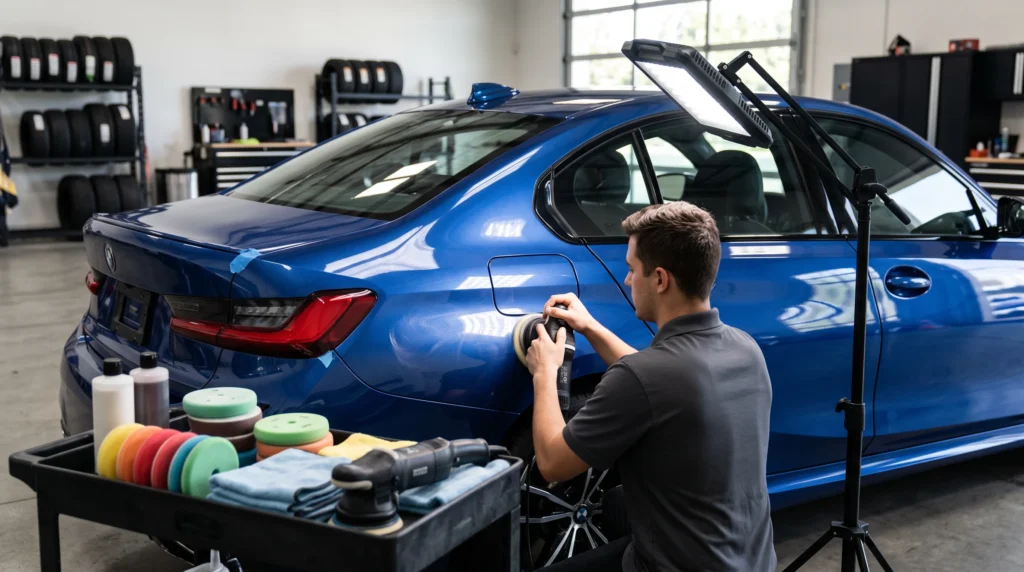
Photos of the paint under direct light can be useful when showing swirl marks or scratches, though the final recommendation may depend on an in-person inspection.
Schedule Paint Correction for Pinole and Hercules, CA
If you are comparing paint correction in Pinole and Hercules, CA, start with the condition of your vehicle rather than a stage number.
High Gloss Auto Detailing can inspect the paint and discuss whether the vehicle calls for lighter polishing, one-step correction, two-step correction, or another approach.
The right service depends on:
- Defect type
- Defect depth
- Paint condition
- Vehicle size
- Previous paint work
- Desired finish
- Protection planned afterward
We do not need to guess at pricing before understanding what your vehicle needs.
Call (510) 542-3295 or visit the High Gloss Auto Detailing contact page to request a quote and schedule an appointment.
Frequently Asked Questions About Paint Correction in Pinole and Hercules, CA
1. What is a one-step paint correction?
A one-step correction uses one main machine-polishing stage to reduce lighter swirl marks, haze, fine scratches, and similar defects while improving gloss. It can be a good fit for paint that does not need a heavier compounding and finishing process.
2. What is a two-step paint correction?
A two-step correction normally begins with a stronger compounding stage for defect removal. A finer polishing stage follows to reduce haze or machine marks and refine the finish.
3. Can paint correction remove swirl marks?
Yes, many swirl marks can be reduced or removed through machine polishing. Meguiar’s and 3M both describe polishing and correction compounds as suitable for swirl marks and other light surface defects.
4. Can paint correction remove deep scratches?
Not always. A deep scratch may extend too far through the clear coat to remove safely through polishing. The shop should inspect deeper damage before deciding what result is reasonable.
5. Do I need paint correction before ceramic coating?
It depends on the condition of the paint. If swirl marks, scratches, or haze bother you, correcting them before ceramic coating may produce a cleaner finished appearance.
6. Should paint correction be done before PPF?
Correction may make sense before paint protection film if the panels have visible defects you want addressed. Clean newer paint may need much less preparation.
7. Where can I get paint correction near Pinole and Hercules, CA?
High Gloss Auto Detailing serves both Pinole, CA and Hercules, CA from our shop at 7034 Commerce Cir Suite E, Pleasanton, CA 94588. Call (510) 542-3295 or visit our contact page to discuss your vehicle and schedule an inspection.
Sources
High Gloss Auto Detailing
Publisher: High Gloss Auto Detailing
Publication Date: Not listed
URL: https://highglossautodetailing.com/
Paint Correction
Publisher: High Gloss Auto Detailing
Publication Date: Not listed
URL: https://highglossautodetailing.com/services/paint-correction/
Meguiar’s FAQ
Publisher: Meguiar’s
Publication Date: Not listed
URL: https://www.meguiars.com/faq
Meguiar’s Professional DA Microfiber Correction Compound
Publisher: Meguiar’s
Publication Date: Not listed
URL: https://www.meguiars.com/products/professional/paint/meguiars-professional-d300-detailer-da-microfiber-correction-compound
3M Finesse-it II Machine Polish
Publisher: 3M
Publication Date: Not listed
URL: https://www.3m.com/3M/en_US/p/d/b40065595/
Automotive Paint Finishing Systems
Publisher: 3M
Publication Date: Not listed
URL: https://www.3m.com/3M/en_US/automotive-manufacturing-and-assembly-us/product-solutions/paint-finishing/
Paint Correction in Pinole and Hercules, CA: The Stages Explained - High Gloss Auto Detailing XPEL Certified Installer

Paint Correction in Pinole and Hercules, CA: The Stages Explained Premier Certified XPEL Installer. Paint correction in Pinole and Hercules, CA can range from
Product Brand: High Gloss Auto Detailing
5
Pros
- Discover the best ceramic coating services in Pleasanton, CA, with High Gloss Auto Detailing. Protect your car’s paint with Ceramic Pro, the industry leader in automotive protection. Call us today or schedule an appointment online!