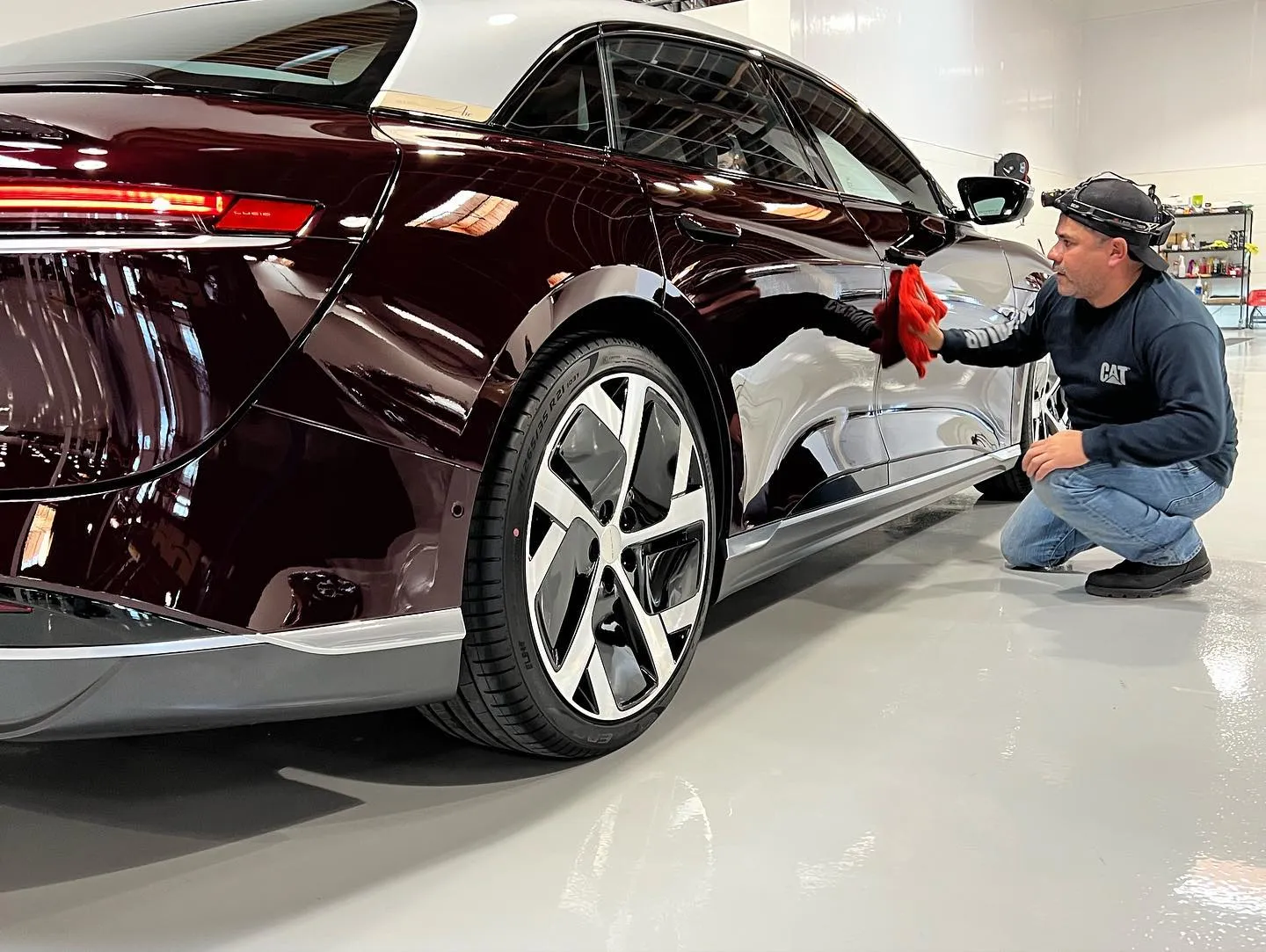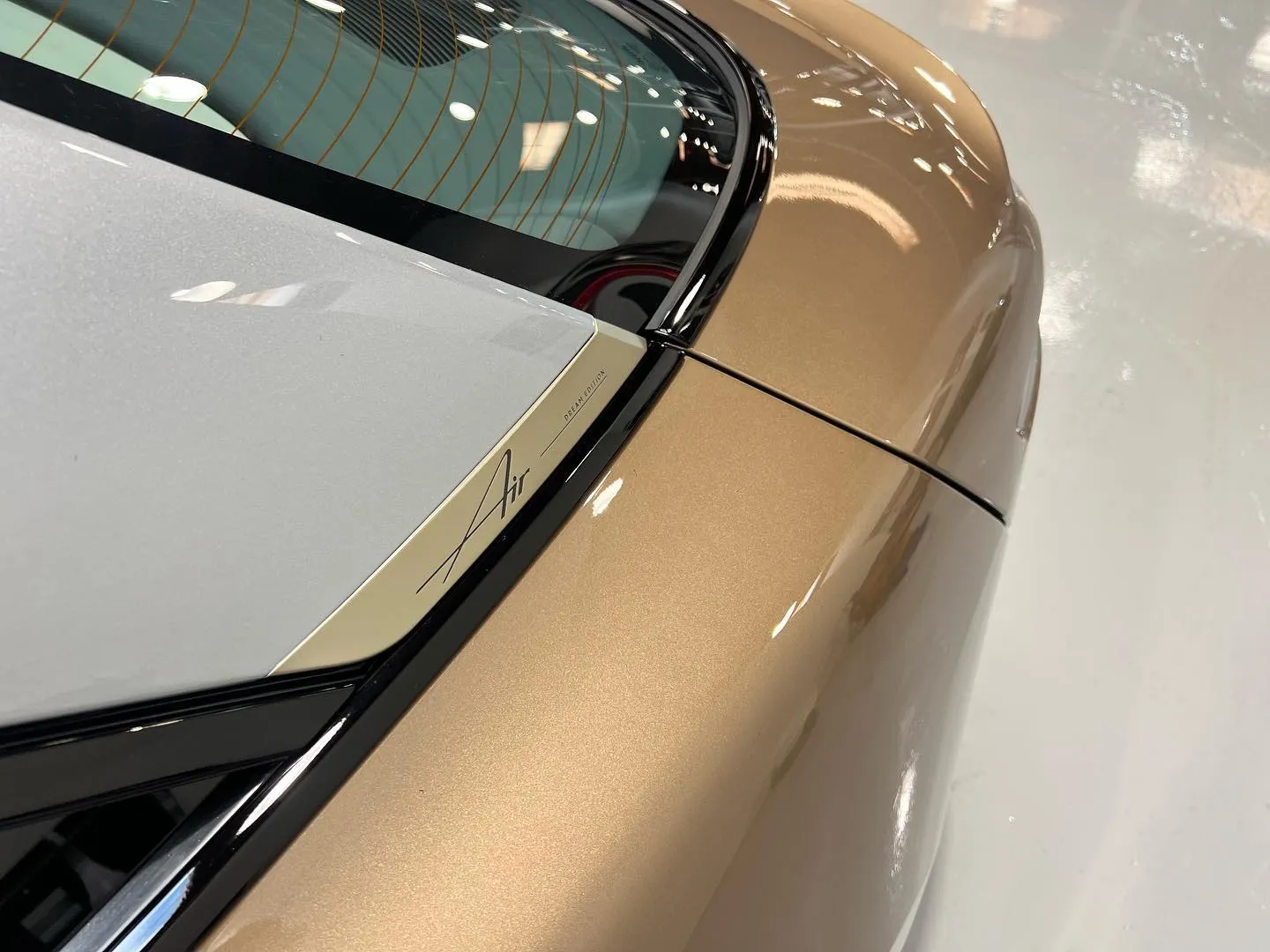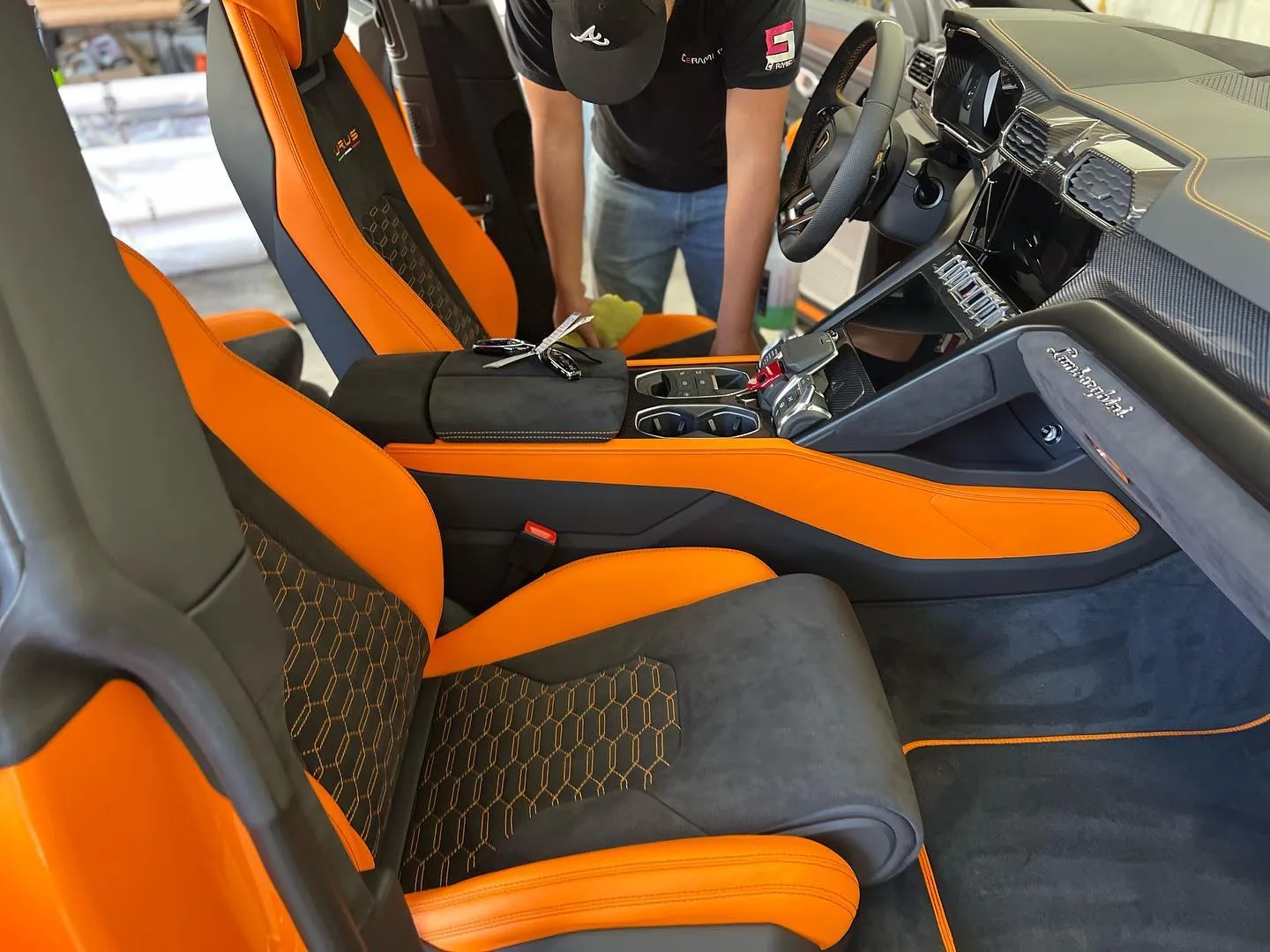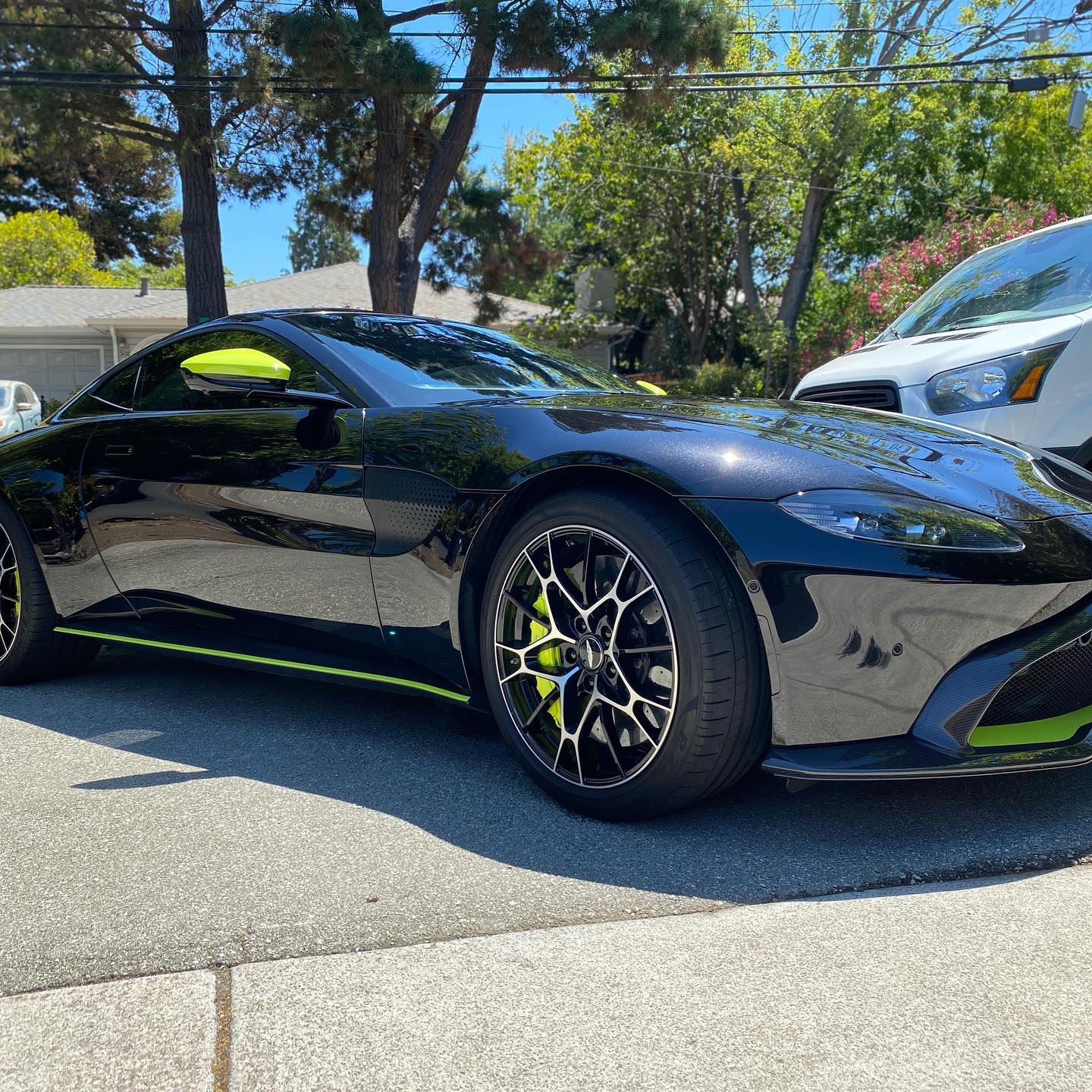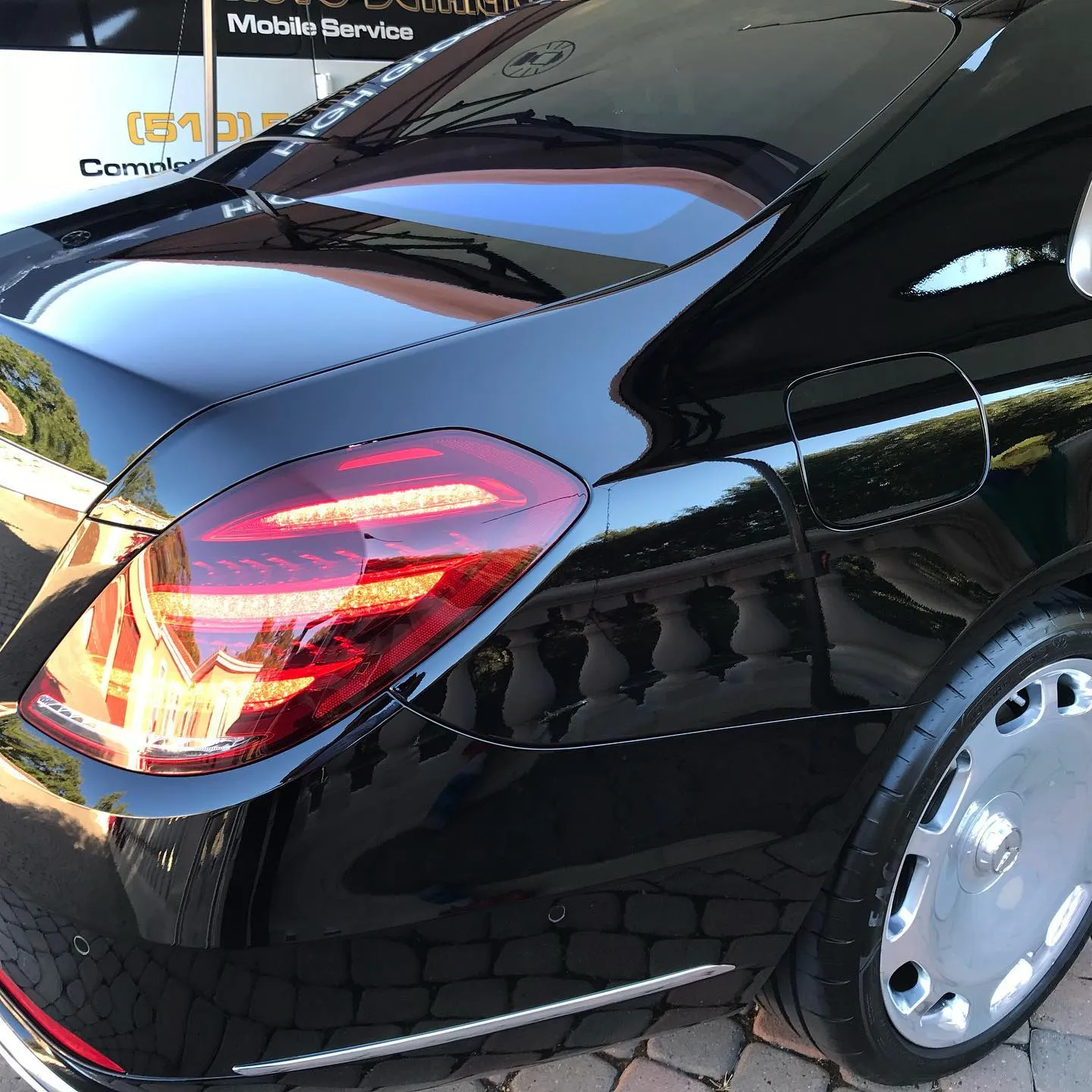
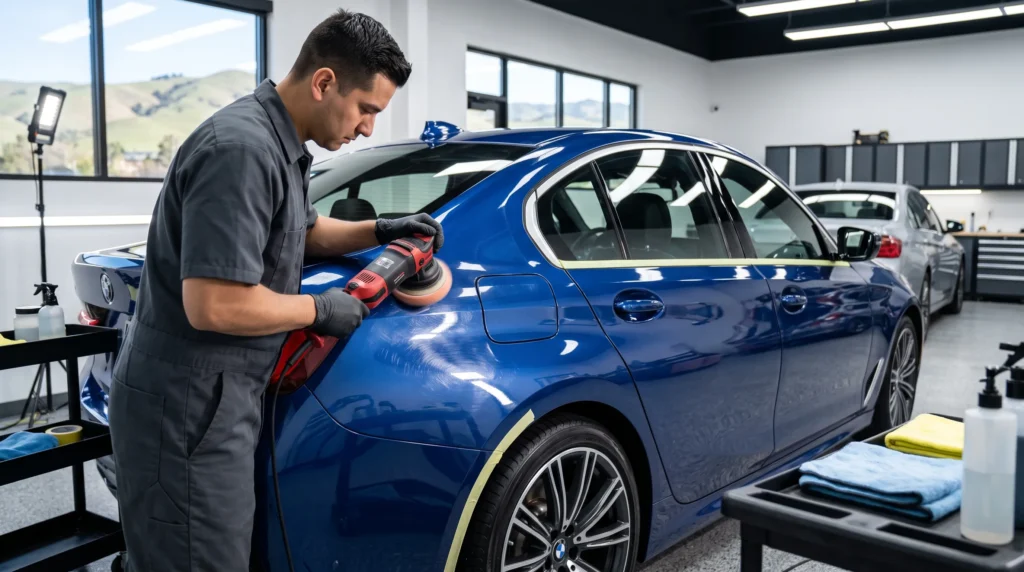
Paint correction in Livermore, CA is often the step that separates a ceramic coating job from a ceramic coating job that also addresses the swirl marks, haze, light scratches, or oxidation already visible in the paint. Ceramic coating goes over the finish that is there. It does not erase defects simply because a coating is placed on top.
That is why paint inspection comes first.
A newer vehicle may need only light polishing before coating. A dark-colored daily driver covered in wash swirls may need a stronger correction process. A vehicle with deeper scratches may need some defects left alone if removing them would require too much work on the clear coat.
High Gloss Auto Detailing provides paint correction and XPEL ceramic coating for Livermore, CA drivers from our Pleasanton, CA shop. We are XPEL certified, an XPEL vendor, and offer paint-preparation work that can be paired with XPEL FUSION ceramic coating.
This guide explains swirl removal before coating, how one-step and two-step correction differ, why coating should follow correction rather than cover over defects, and what Livermore, CA drivers should expect from the process.
Table of Contents
- Why Paint Correction Comes Before Ceramic Coating
- What Swirl Marks Actually Are
- Why Ceramic Coating Does Not Remove Swirls
- Start With a Paint Inspection
- Wash and Paint Decontamination
- Clay and Shine Paint Correction
- One-Step Paint Correction
- Two-Step Paint Correction
- Compounding vs Polishing
- How Much Swirl Removal Should You Expect?
- Can Every Scratch Be Removed?
- Why Dark Paint Shows Swirls More Easily
- Paint Correction on a New Vehicle
- Preparing Paint for XPEL FUSION
- What Happens After Correction
- Caring for Corrected and Coated Paint
- Paint Correction for Livermore, CA Drivers
- Schedule Paint Correction Before Coating
- Frequently Asked Questions
- Sources
Why Paint Correction Comes Before Ceramic Coating
XPEL’s installation guidance for FUSION PLUS states that paint correction should be completed before coating when the vehicle needs it.
There is a simple reason.
Ceramic coating bonds over the surface after the paint has been cleaned and prepared. If swirl marks, scratches, or haze are still present, those defects remain under the coating.
XPEL also describes paint correction as a way to create a cleaner surface before ceramic coating is applied.
That makes the order of work worth getting right:
- Wash the vehicle.
- Remove bonded contamination.
- Inspect the paint.
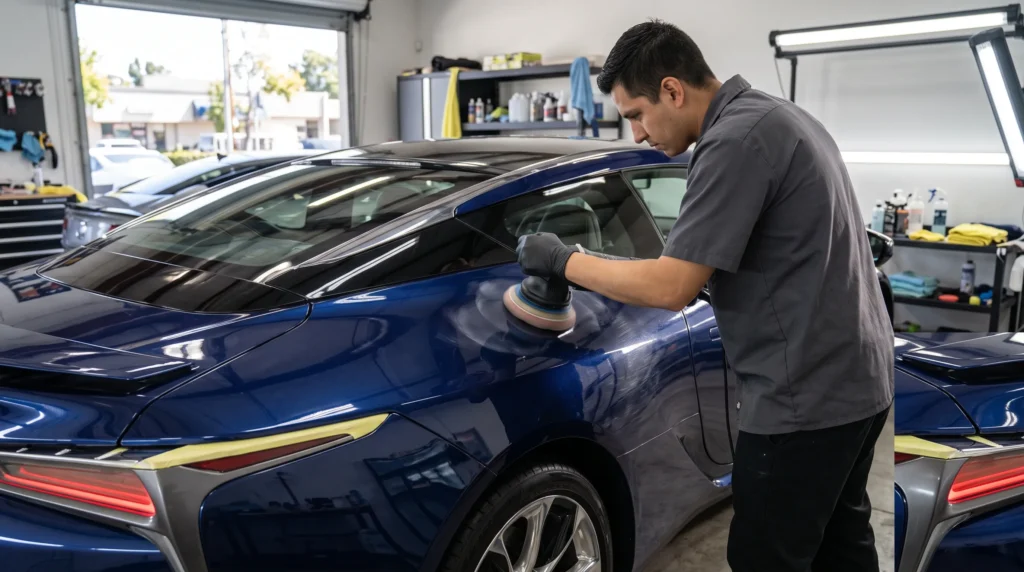
- Correct defects when needed.
- Clean the corrected surface.
- Apply ceramic coating.
Skipping correction can make sense if the paint is already in very good condition.
Skipping it simply because the owner assumes coating will hide swirls is different.
If you can see the defects now, ask what they will look like after coating.
What Swirl Marks Actually Are
Swirl marks are fine scratches in the upper painted finish.
They are often easiest to see under direct sunlight or focused shop lighting.
Instead of looking like one long scratch, they appear as circular or curved patterns around reflected light.
Common causes can include:
- Dirty wash mitts
- Automatic car washes
- Dry wiping dusty paint
- Dirty drying towels
- Poor washing methods
- Abrasive contact
- Past machine polishing
Swirl marks may be light or heavy.
A vehicle can have thousands of fine marks spread across its panels and still look glossy in shade.
Then the sun hits the hood and the defects become easy to see.
That is one reason drivers begin looking for paint correction in Livermore, CA before ceramic coating.
They want the finish corrected before a longer-lasting coating goes over it.
Why Ceramic Coating Does Not Remove Swirls
Ceramic coating and paint correction serve two separate jobs.
Paint correction works on defects already present in the finish.
Ceramic coating is applied afterward to create a water-repelling protective surface.
XPEL describes FUSION PLUS as a coating with hydrophobic properties that helps treated surfaces repel water and grime.
That does not make it a scratch-removal product.
Coating a swirled panel means the swirled panel is still underneath.
A glossy coating may even make reflections clearer, which can make existing paint condition easier to notice in strong light.
What this means is straightforward: if swirl marks bother you before coating, deal with them before coating.
Start With a Paint Inspection
The right correction level cannot be chosen from vehicle age alone.
A three-year-old car that has been hand washed carefully may have cleaner paint than a six-month-old vehicle that has gone through repeated brush washes.
The technician should look at:
- Swirl density
- Scratch depth
- Oxidation
- Haze
- Water spots
- Holograms
- Past repainting
- Clear-coat condition
- Paint hardness
- Areas with heavier defects
High Gloss Auto Detailing states that its paint correction services address swirl marks, holograms, scratches, fading, and oxidation.
The shop also offers several correction levels rather than treating every vehicle the same way.
That allows the process to match the paint condition more closely.
Wash and Paint Decontamination Before Correction
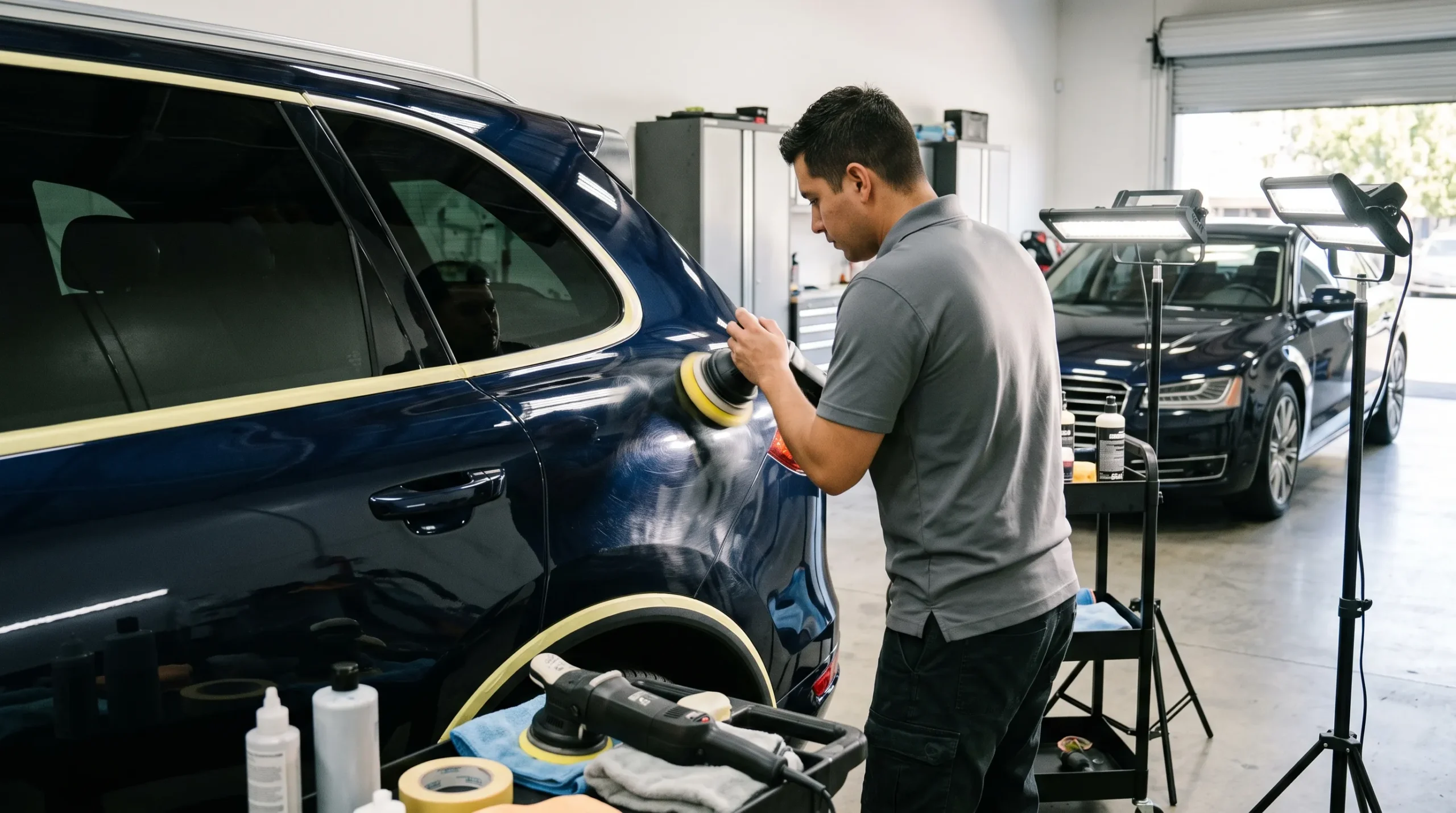
Machine polishing should not start on dirty paint.
The exterior first needs to be washed and dried.
Then the technician can check for bonded contamination.
Material can remain stuck to paint even after the visible dirt is gone.
Paint decontamination may address:
- Road film
- Tar
- Embedded particles
- Industrial fallout
- Other bonded residue
High Gloss Auto Detailing includes paint decontamination across its current correction packages.
XPEL’s FUSION PLUS installation sheet also says contaminated paint should be cleaned with clay before coating.
This preparation gives the polishing process a cleaner surface to work on.
It also reduces the chance of bonded contamination interfering with coating preparation later.
Clay and Shine Paint Correction
High Gloss Auto Detailing currently lists a Clay and Shine package as the lightest paint-correction option.
The package includes:
- Paint decontamination
- Single-stage polish
- Target of 10% to 20% defect removal
- Paint sealant
This type of service is aimed more at improving gloss and reducing lighter surface defects than removing a large percentage of swirls.
It may fit a vehicle that already has fairly clean paint but needs some refinement.
For a driver planning ceramic coating, the technician may recommend a different route depending on how many visible defects are present and what finish the owner wants before coating.
If you see only faint marks under direct light, lighter polishing may be enough.
If the paint is covered in swirls, a one-step or two-step process may make more sense.
One-Step Paint Correction in Livermore, CA
High Gloss Auto Detailing’s current one-step correction package includes:
- Paint decontamination
- Single-stage machine compounding
- Target of 60% or greater paint-defect removal
- Paint sealant
- A finish that the shop lists as suited for ceramic coating afterward
A one-step correction aims to get meaningful defect removal from one main machine stage.
That can work well for paint with moderate swirl marks and lighter defects.
The technician selects a pad and compound combination based on the way the paint responds.
A one-step process tries to strike a balance between correction and final finish.
For many daily-driven vehicles, this can remove a large amount of visible swirling without moving into a full two-step process.
Two-Step Paint Correction in Livermore, CA
High Gloss Auto Detailing’s current two-step package includes:
- Paint decontamination
- Two-stage machine polishing and compounding
- Target of 90% or greater defect removal
- Paint sealant
- A finish that the shop lists as suited for ceramic coating afterward
A two-step process separates stronger defect removal from final polishing.
The first step usually uses a more aggressive pad and compound to reduce heavier swirls, scratches, haze, or oxidation.
The second step uses a finer polish to refine the paint after the cutting stage.
XPEL describes a similar approach when discussing multi-stage correction before ceramic coating.
Its Stage 2 explanation uses a stronger polish-and-pad combination first, followed by a finishing polish to remove marring or holograms left by the first step.
This can make two-step correction a better fit for vehicles with heavier visible defects.
Compounding vs Polishing Before Ceramic Coating
Compounding and polishing are both abrasive paint processes, but they are not identical.
Compounding
Compounding is normally used when the paint needs more defect removal.
It can reduce:
- Swirl marks
- Light scratches
- Oxidation
- Haze
- Holograms
- Other surface defects
Polishing
Polishing is generally finer.
It can be used to improve clarity and remove lighter defects or refine the surface after compounding.
During a two-step correction, the compound does more of the defect-removal work and the polish refines the finish.
During a one-step correction, the technician may select a combination that can cut defects while still leaving a clean finish in one main pass.
The exact approach depends on the paint.
How Much Swirl Removal Should You Expect?
High Gloss Auto Detailing gives drivers target defect-removal ranges for its current paint correction packages.
The shop lists:
- Clay and Shine: 10% to 20% defect removal target
- One-Step Correction: 60% or greater target
- Two-Step Correction: 90% or greater target
These percentages are useful as service goals, not guarantees that every individual scratch will disappear.
Some defects may be much deeper than others.
A panel can have light swirls that respond well while also containing a few deeper scratches that should remain.
Paint thickness and clear-coat condition can also affect what is safe to remove.
When comparing paint correction in Livermore, CA, ask what level of improvement the technician expects on your specific vehicle.
Can Every Scratch Be Removed Before Coating?
No.
A scratch that stays within the upper portion of the clear coat may respond to polishing or compounding.
A scratch that runs much deeper may not.
Removing a deep defect can require working farther into the clear coat than is sensible for the vehicle.
A good correction plan does not chase every scratch simply because it is visible.
The goal is to improve the finish while respecting the paint.
If a deeper scratch remains after correction, the technician can explain whether another repair method makes more sense.
Ceramic coating can still be applied after the paint reaches the agreed level of correction.
Why Dark Paint Shows Swirls More Easily
Black and other dark colors often make swirl marks easier to see.
The contrast between reflected light and tiny scratches can make the defects stand out under sunlight.
A black hood may look deep and glossy inside a garage, then show rings of fine scratches outside.
White and silver paint can have similar defects without displaying them as clearly.
This does not mean every dark vehicle needs two-step correction.
The paint still needs to be inspected.
A well-maintained black car may need only light polishing.
A poorly washed lighter vehicle may need far more work.
Color affects visibility of defects, not the full correction decision.
Paint Correction on a New Vehicle
New does not always mean defect-free.
XPEL notes that paint imperfections can appear during manufacturing, transport, dealership preparation, or washing.
High Gloss Auto Detailing also states that new cars can have clear-coat flaws due to poor care before delivery.
That makes inspection worthwhile even on a new vehicle.
Before installing ceramic coating, look at the paint under direct sunlight or focused lighting.
Check for:
- Swirl marks
- Towel marks
- Light scratches
- Water spots
- Haze
If the paint already looks the way you want, only light preparation may be needed.
If defects stand out, correction may improve the finish before coating.
Preparing Paint for XPEL FUSION Ceramic Coating
XPEL’s FUSION PLUS technical sheet lays out a clear preparation sequence.
The manufacturer calls for:
- Washing and completely drying the surfaces
- Clay treatment when contamination is present
- Paint correction before coating when required
- A final surface wipe before application
That sequence supports the same point throughout this guide: coating preparation is about getting the surface ready first.
High Gloss Auto Detailing’s ceramic coating process also includes exterior washing, paint decontamination, glass cleaning, and a one-stage polish.
Some vehicles need no more than that listed preparation.
Others need separate correction first.
The difference comes down to what the paint looks like before the coating appointment.
What Happens After Paint Correction?
Once correction is finished, the paint is checked again.
The technician looks for remaining swirls, haze, compounding marks, or other defects.
The surface then needs to be prepared for coating.
XPEL’s FUSION PLUS guidance calls for a final wipe before coating application.
After that, the coating is applied across the prepared surface in sections.
XPEL states that FUSION PLUS should stay dry for at least six hours after application under the guidance in its technical sheet.
The coating continues curing after application.
Follow the instructions given by High Gloss Auto Detailing for the exact product installed on your vehicle.
Caring for Corrected and Coated Paint
Removing swirl marks is only half the job.
You also want to reduce the chance of putting them back into the finish.
Careful washing can help.
Avoid:
- Dirty wash mitts
- Dry wiping dusty paint
- Harsh brush washes
- Dirty drying towels
- Heavy pressure while drying
XPEL tells FUSION PLUS owners to avoid aggressive wiping.
Its care instructions also warn against letting tap water evaporate on coated surfaces because minerals can leave water spots.
A simple care routine includes:
- Wash with clean wash media.
- Rinse thoroughly.
- Dry the vehicle fully.
- Avoid washing very hot paint in direct sun when possible.
- Remove bird droppings and bug residue without harsh scrubbing.
- Use coating-safe products.
- Contact the installer if contamination does not come off through normal washing.
Good wash habits help protect the correction work you already paid for.
Paint Correction for Livermore, CA Drivers
High Gloss Auto Detailing has a dedicated Livermore, CA paint correction service page and lists Livermore, CA among its service areas.
Our shop is located at:
High Gloss Auto Detailing
7034 Commerce Cir Suite E
Pleasanton, CA 94588
Livermore, CA drivers can contact us for swirl removal, scratch reduction, oxidation correction, paint refinement, and ceramic-coating preparation.
We also serve drivers from Pleasanton, CA, Dublin, CA, and other nearby Bay Area communities.
Related services include:
If coating is your end goal, mention that when you contact the shop.
That allows the correction and coating preparation to be planned together.
Schedule Paint Correction Before Ceramic Coating
If you are looking for paint correction in Livermore, CA, start by showing the shop what you want removed.
Swirl marks may call for one-step correction.
Heavier swirls, haze, scratches, or holograms may point toward a two-step process.
Paint that is already in good shape may need less work.
High Gloss Auto Detailing can inspect the paint and discuss which correction level makes sense before XPEL FUSION ceramic coating is applied.
The goal is to correct the finish first, then coat the surface you actually want to preserve.
Call (510) 542-3295 or visit the High Gloss Auto Detailing contact page to request an appointment.
Frequently Asked Questions About Paint Correction in Livermore, CA
1. Should swirl marks be removed before ceramic coating?
Yes, if the swirl marks bother you and the paint can be safely corrected. XPEL states that paint correction should be completed before FUSION PLUS when correction is needed. Coating does not remove existing swirls.
2. Does ceramic coating hide swirl marks?
Ceramic coating is not a swirl-removal process. Existing defects remain in the painted surface unless they are corrected beforehand.
3. What is the difference between one-step and two-step paint correction?
A one-step correction uses one main machine stage to reduce defects and improve the finish. A two-step process separates stronger defect removal from finer final polishing. High Gloss Auto Detailing lists a 60% or greater defect-removal target for its one-step package and a 90% or greater target for its two-step package.
4. Does a new car need paint correction before coating?
Sometimes. New vehicles can arrive with swirl marks, water spots, light scratches, or other clear-coat defects. Inspection under direct light can show whether correction is worth doing first.
5. Can paint correction remove every scratch?
No. Deeper scratches may extend too far into the clear coat to remove safely. A technician should inspect the defect and decide how much correction is reasonable.
6. What preparation does XPEL call for before FUSION PLUS?
XPEL’s technical instructions call for washing and drying the vehicle, removing contamination with clay when needed, completing paint correction when required, and cleaning the surface before coating application.
7. Where can I get paint correction near Livermore, CA?
High Gloss Auto Detailing serves Livermore, CA from our shop at 7034 Commerce Cir Suite E, Pleasanton, CA 94588. Call (510) 542-3295 or visit our contact page to discuss swirl removal and ceramic-coating preparation.
Sources
Paint Correction in Pleasanton, CA & Dublin, CA
Publisher: High Gloss Auto Detailing
Publication Date: Not listed
URL: https://highglossautodetailing.com/services/paint-correction/
Paint Correction Livermore, CA
Publisher: High Gloss Auto Detailing
Publication Date: Not listed
URL: https://highglossautodetailing.com/service/paint-correction-in-livermore-ca/
Ceramic Coating Livermore, CA
Publisher: High Gloss Auto Detailing
Publication Date: Not listed
URL: https://highglossautodetailing.com/service/ceramic-coating-in-livermore-ca/
Paint Correction 101: Understanding the Process & Ceramic Coating
Publisher: XPEL
Publication Date: August 13, 2023
URL: https://www.xpel.com/en-au/blog/paint-correction-101-understanding-process-ceramic-coating
XPEL FUSION PLUS Technical Data Sheet
Publisher: XPEL
Publication Date: April 2019
URL: https://www.xpel.com/web-assets/downloads/XPEL-FUSION-PLUS-Technical-Data-Sheet-V1.2-Rev1.3.pdf
XPEL Product Care Instructions
Publisher: XPEL
Publication Date: Not listed
URL: https://www.xpel.com/product-care
Paint Correction in Livermore, CA: Swirl Removal Before Coating - High Gloss Auto Detailing XPEL Certified Installer

Paint Correction in Livermore, CA: Swirl Removal Before Coating Premier Certified XPEL Installer. Paint correction in Livermore, CA is often the step that
Product Brand: High Gloss Auto Detailing
5
Pros
- Discover the best ceramic coating services in Pleasanton, CA, with High Gloss Auto Detailing. Protect your car’s paint with Ceramic Pro, the industry leader in automotive protection. Call us today or schedule an appointment online!