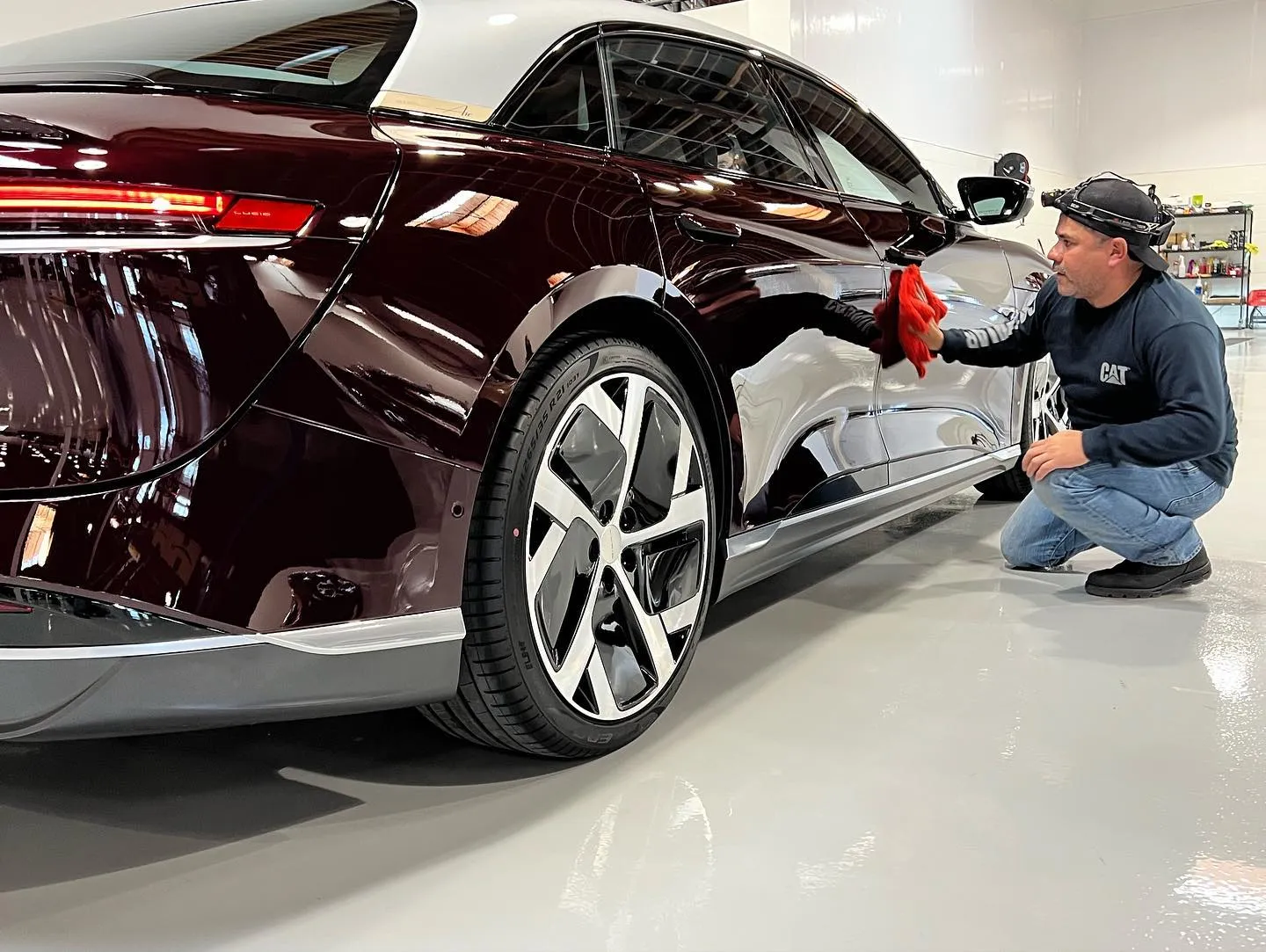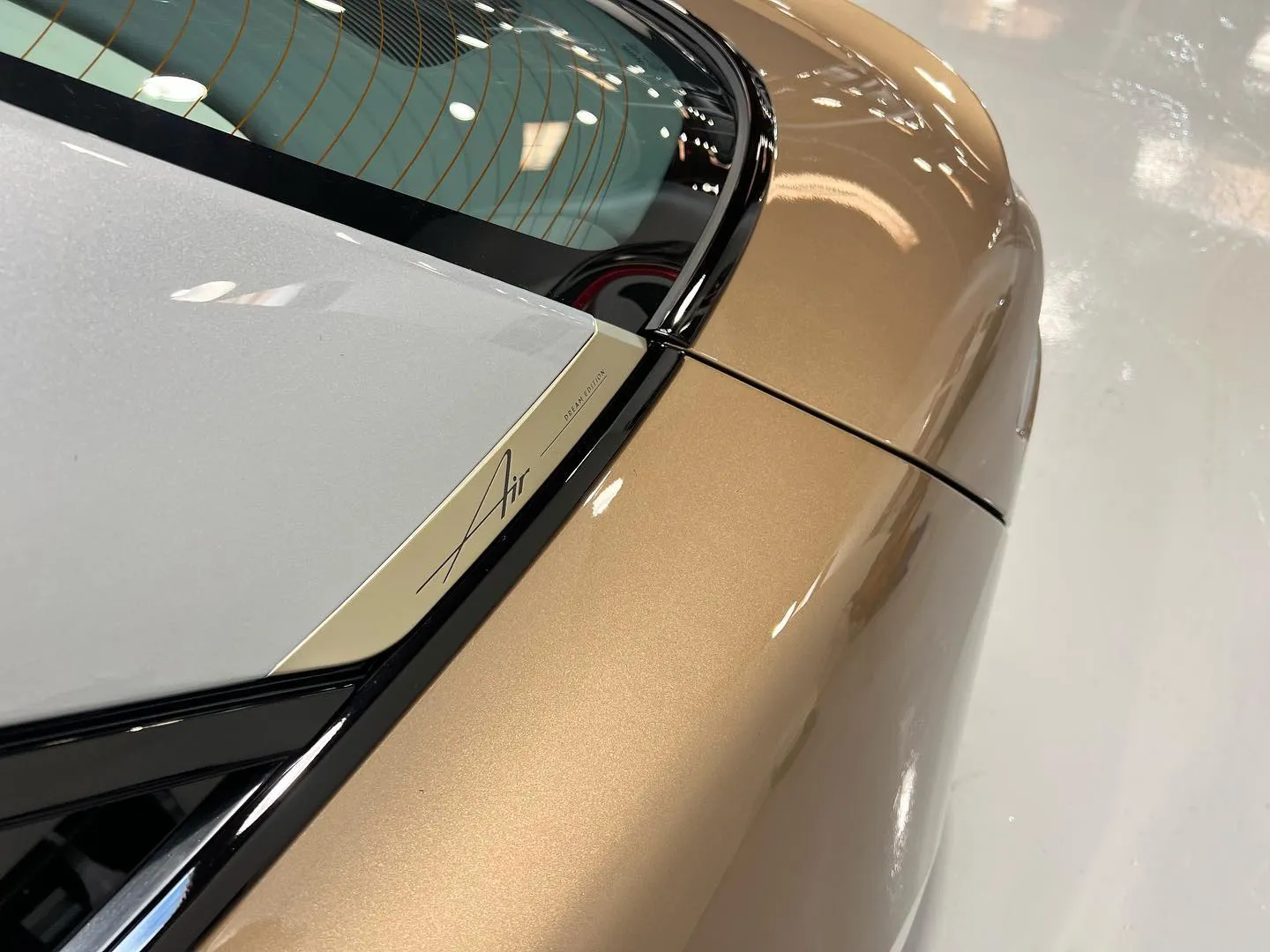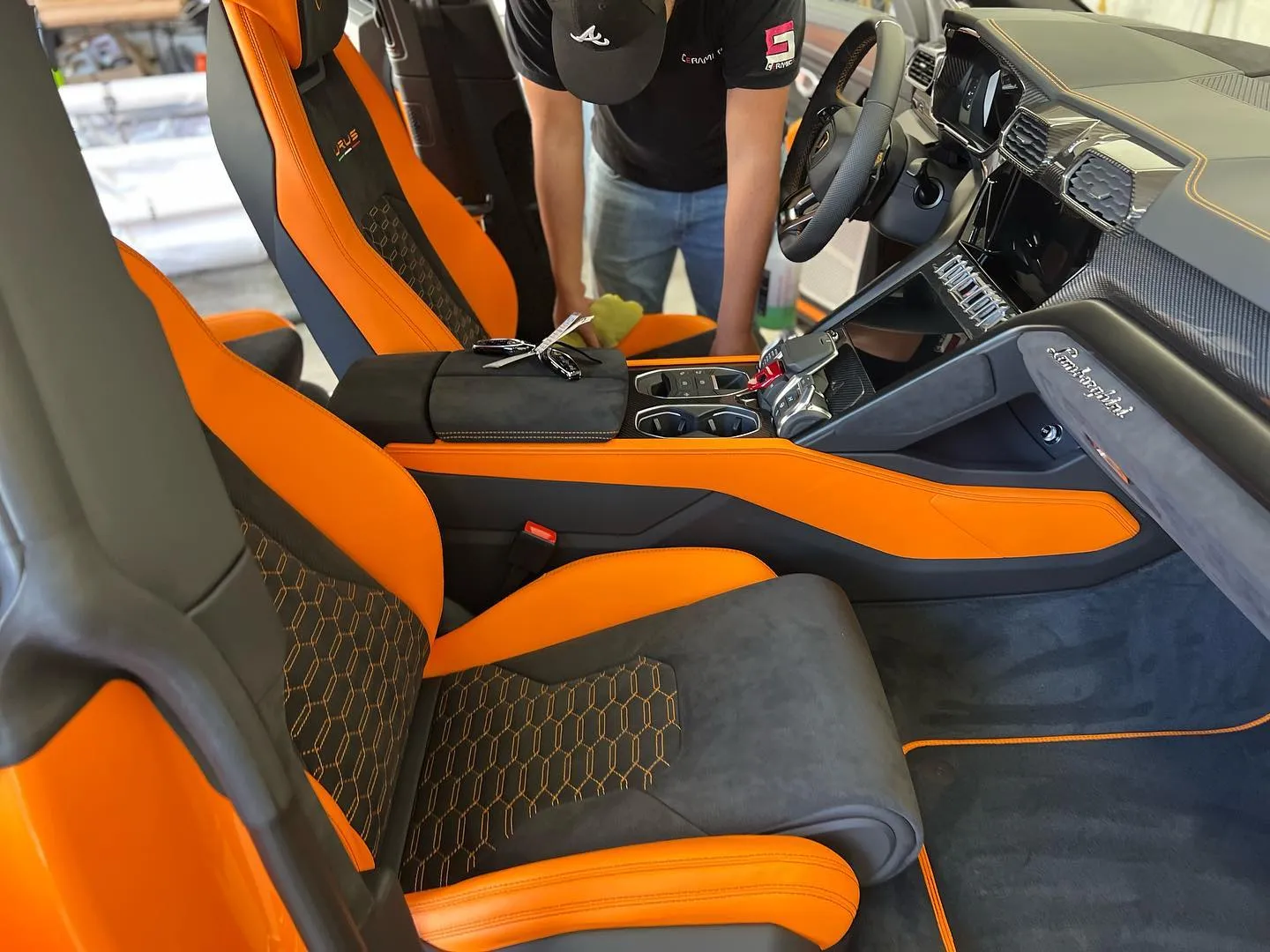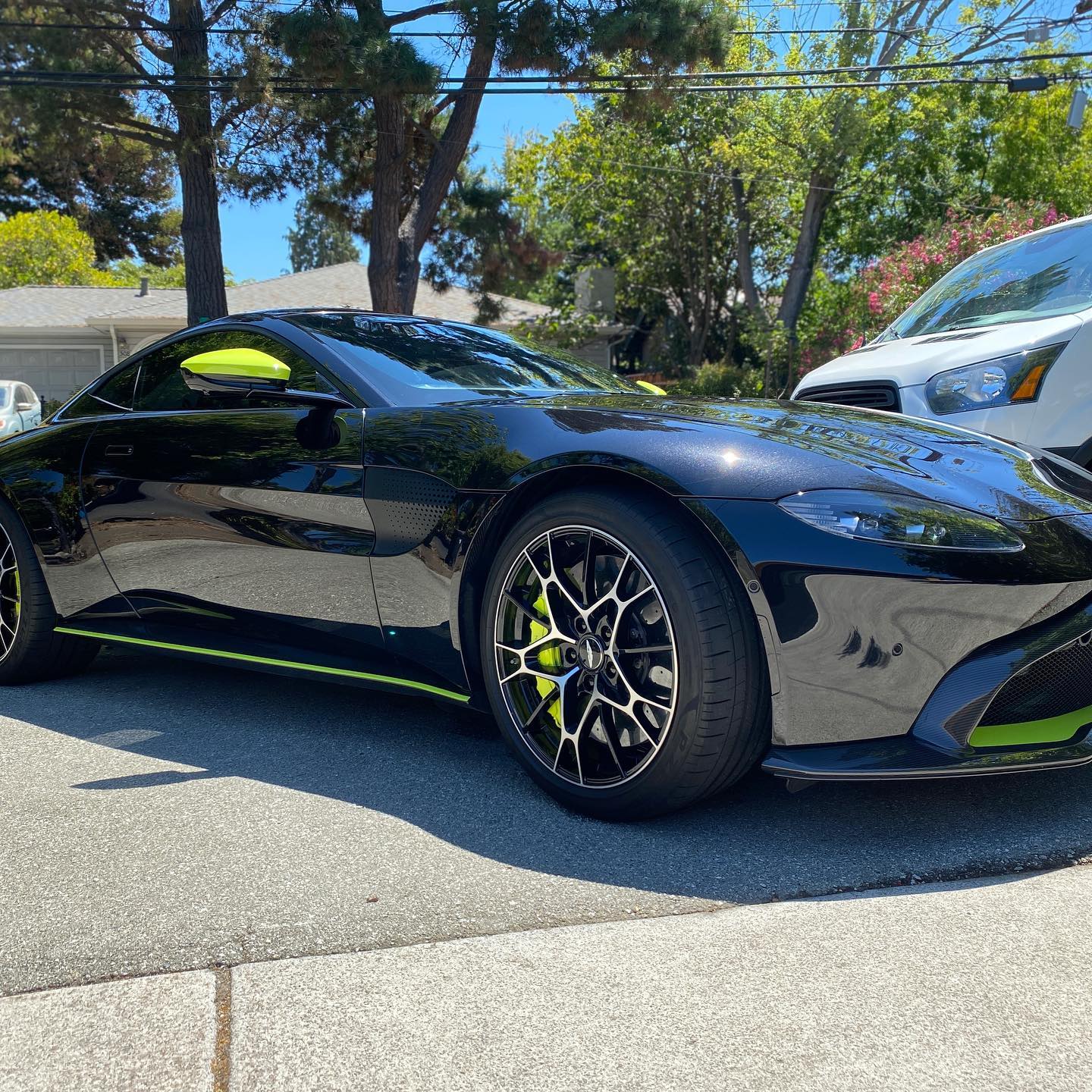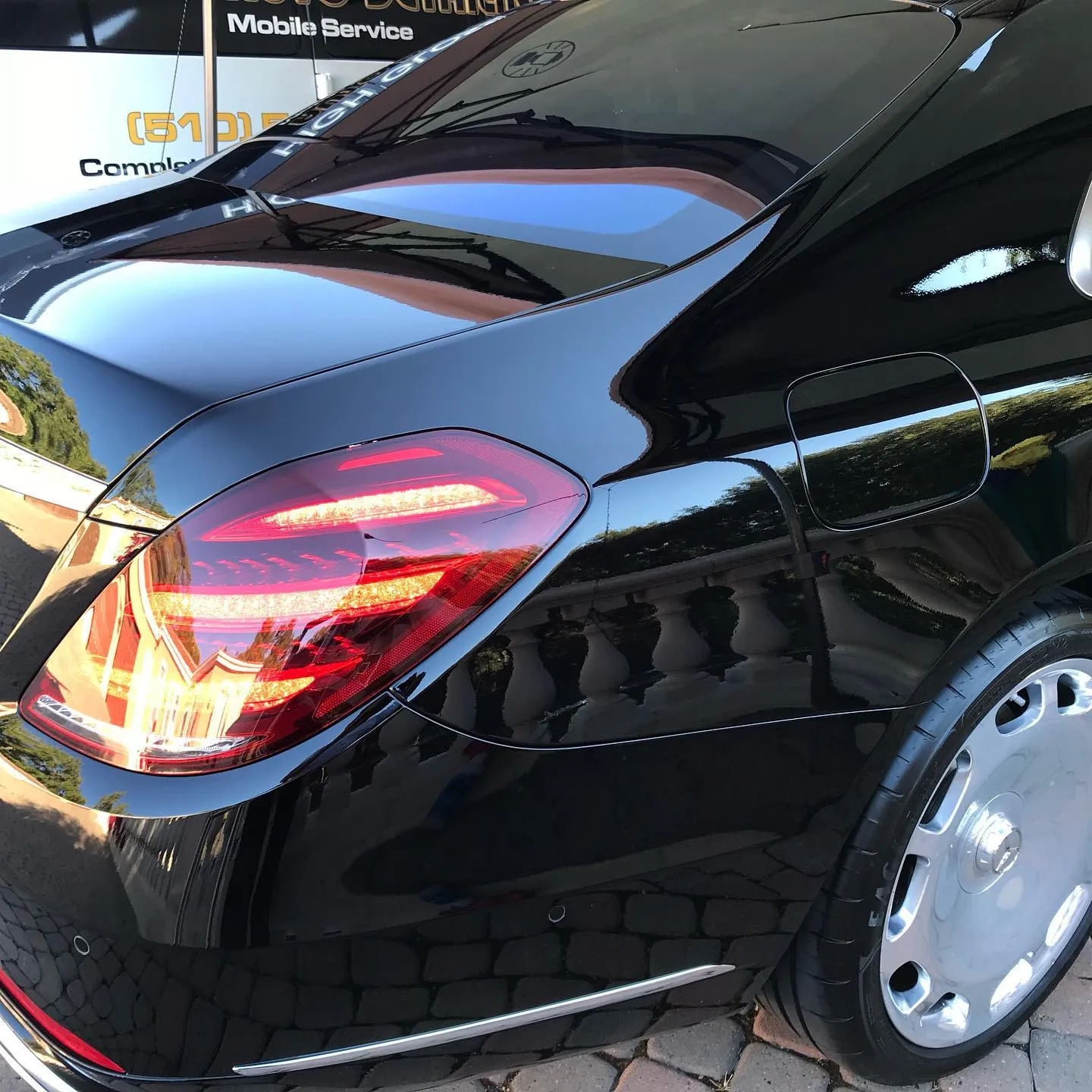
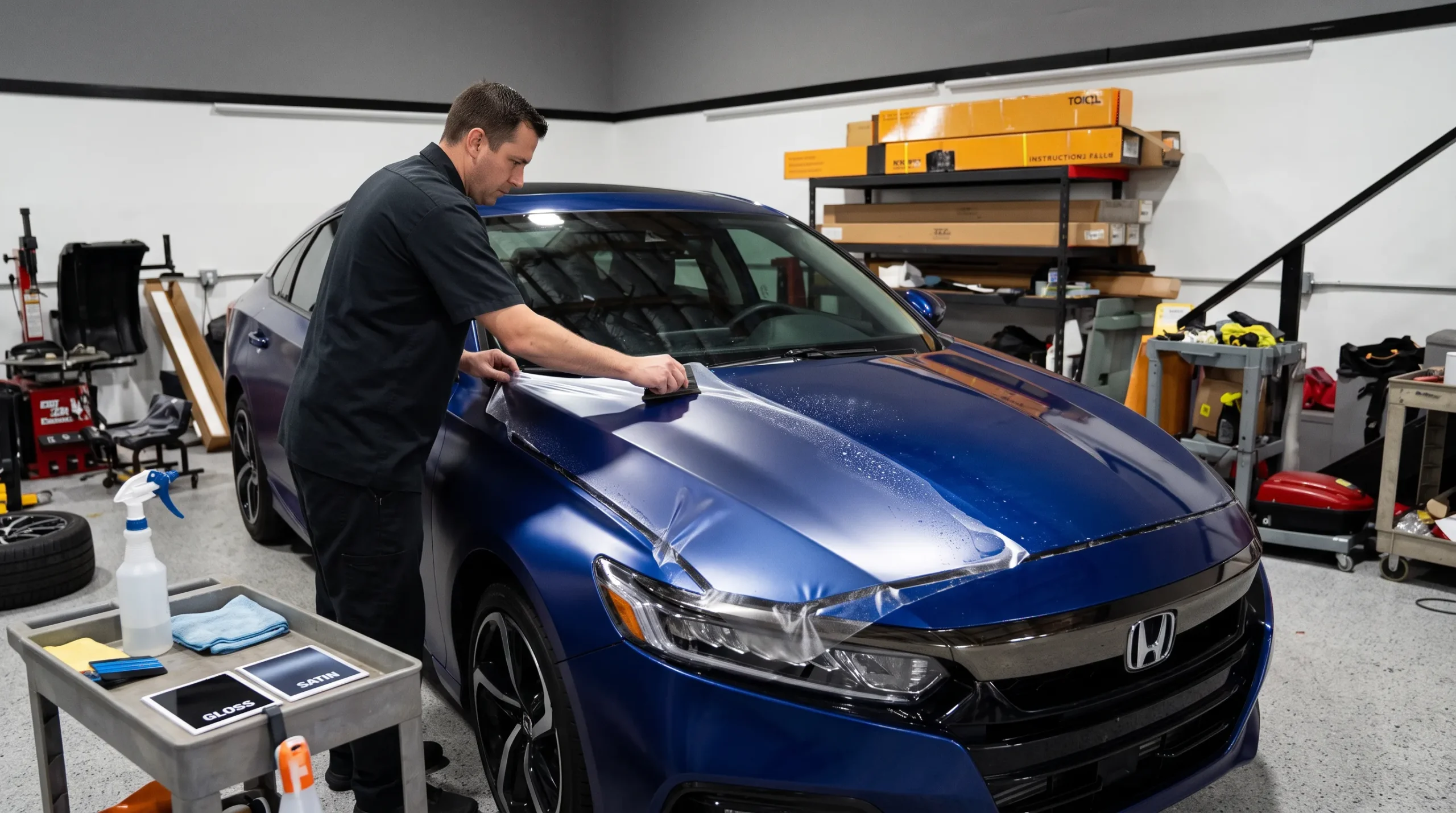
Gloss vs Satin PPF is one of the biggest appearance decisions you can make when adding paint protection film to your vehicle. Both finishes can help protect against rock chips, light scratches, and road debris, but they create noticeably different looks. One preserves the shine of your factory paint. The other gives the surface a softer, satin appearance that changes how light reflects across the body panels.
Imagine two identical black cars parked next to each other.
The first has a glossy finish that reflects nearby buildings, trees, and clouds almost like a mirror.
The second has a smooth satin finish. It’s still black, but the reflections appear softer, making the body lines stand out differently.
Both vehicles may have paint protection film installed. The difference comes from the type of film.
That appearance choice can also affect your installation quote.
If you’re considering a satin conversion, you may want the entire painted exterior covered so the finish looks consistent. If you prefer clear gloss film, you may be happy protecting only the front bumper, hood, or other high-contact areas.
The vehicle’s shape, panel coverage, surface preparation, and film product all affect the work involved.
At High Gloss Auto Detailing, we provide XPEL paint protection film services for vehicle owners in Pleasanton, CA, Dublin, CA, and surrounding East Bay communities.
Our XPEL-certified shop offers Front Bumper, Partial Front, Full Front, and Full Vehicle PPF packages.
This guide explains how gloss and satin paint protection film compare, what the finished vehicle can look like, and why the choice may affect your personalized quote.
Table of Contents
- Gloss vs Satin PPF: What’s the Difference?
- How Gloss PPF Changes Your Vehicle’s Appearance
- How Satin PPF Changes Your Vehicle’s Appearance
- XPEL ULTIMATE PLUS vs STEALTH
- How Paint Color Affects the Finished Look
- Why Partial Satin PPF Can Look Different
- How Finish Choice Affects a PPF Quote
- Vehicle Size, Body Shape, and Installation Work
- Comparing Front-End and Full-Vehicle PPF Coverage
- What About Factory Matte and Satin Paint?
- Does Satin PPF Protect as Well as Gloss PPF?
- PPF vs Vinyl Wrap for a Satin Appearance
- Paint Preparation Before Gloss or Satin Film
- What Happens During PPF Installation?
- Cleaning and Maintaining Each Finish
- Ceramic Coating Over Gloss and Satin PPF
- How to Compare Gloss and Satin PPF Quotes
- PPF Services Across the East Bay
- Frequently Asked Questions
- Request Your PPF Installation Quote
- Sources and References
Gloss vs Satin PPF: What’s the Difference?
The main difference between gloss and satin paint protection film is how the surface reflects light.
Gloss film preserves the shiny appearance of compatible glossy paint.
Satin film softens those reflections, creating a lower-gloss finish.
Both types are designed to serve as a protective layer over suitable vehicle surfaces.
What Is Gloss Paint Protection Film?
Gloss PPF is a transparent protective film designed to maintain the original glossy appearance of a vehicle’s finish.
If you like the way your car looks from the factory, clear gloss PPF may be a good match.
XPEL ULTIMATE PLUS is one of the manufacturer’s clear gloss products.
According to XPEL’s ULTIMATE PLUS product information, the film is designed to protect painted surfaces while maintaining a nearly invisible appearance.
What Is Satin Paint Protection Film?
Satin PPF has a surface that scatters light differently from glossy film.
Instead of sharp reflections, it creates a softer appearance.
XPEL STEALTH is designed to protect compatible matte and satin paint or give glossy paint a satin finish.
The manufacturer explains this on its XPEL STEALTH product page.
Is Satin the Same as Matte?
The words satin and matte are often used together, but they can describe different levels of sheen.
Satin generally has a soft reflection.
A very flat matte surface reflects less light in a distinct direction.
XPEL calls STEALTH a satin-finish PPF.
The exact appearance depends on the film, original paint color, lighting, and vehicle shape.
Gloss vs Satin PPF Comparison
| Feature | Gloss PPF | Satin PPF |
|---|---|---|
| Appearance | Shiny and reflective | Soft, lower-gloss finish |
| Effect on glossy paint | Preserves the glossy look | Creates a satin appearance |
| Common XPEL product | ULTIMATE PLUS | STEALTH |
| Rock-chip protection | Yes, within film limits | Yes, within film limits |
| Light scratch resistance | Yes | Yes |
| Self-healing topcoat | Available | Available |
| Partial-panel appearance | Usually blends more closely with gloss paint | Can create an obvious finish difference |
| Full-body appearance | Maintains a glossy vehicle | Creates a consistent satin look when suitable panels are covered |
| Cleaning | Follow gloss-film care instructions | Follow satin-film care instructions |
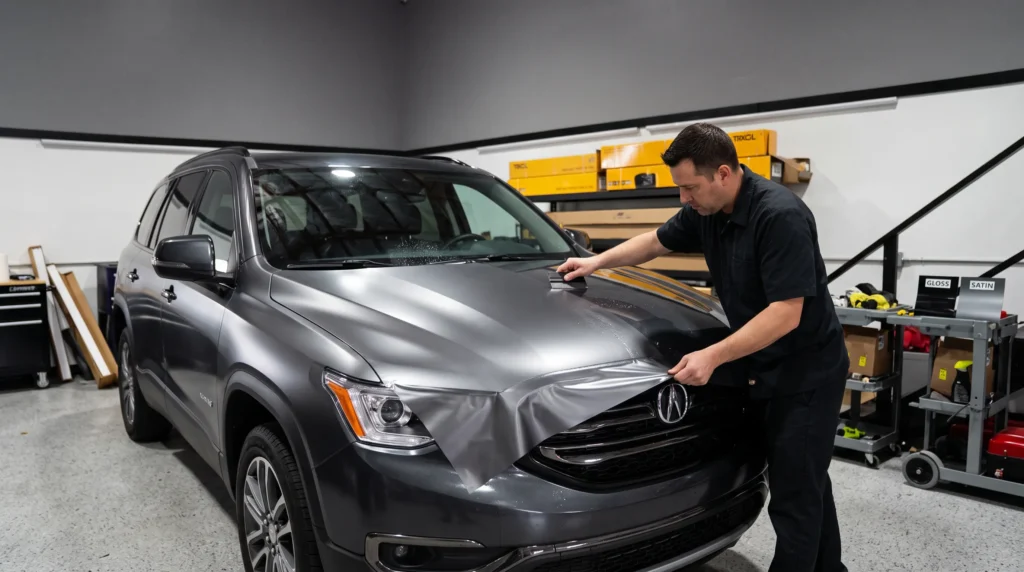
The protection goals may be similar, but the visual result can be quite different.
How Gloss PPF Changes Your Vehicle’s Appearance
Gloss PPF is designed for vehicle owners who like the original paint finish and want to help keep it looking that way.
It Preserves the Factory Shine
If you own a glossy black BMW, a pearl-white Tesla, or a metallic-blue sports car, clear gloss PPF can preserve the appearance of that finish.
The film allows the underlying color and reflections to remain visible.
Its purpose is not to repaint the vehicle or create a new color.
It Works Well for Selected Panels
Because the finish is similar to glossy paint, clear film can be a practical choice for partial coverage.
You might protect the front bumper, hood, and mirrors while leaving the rest of the painted exterior uncovered.
The protected and unprotected panels can still look similar.
Film edges may be visible at close range, and differences in paint condition can affect how well they blend.
Gloss Highlights Reflections
A glossy finish creates sharper reflections across the hood, doors, and fenders.
That can make paint defects easier to notice under certain lighting conditions.
Swirl marks and fine scratches may stand out on dark glossy paint.
For that reason, inspecting the surface before installing clear PPF is a good idea.
Who Might Prefer Gloss PPF?
Gloss film may be a good match if you:
- Like your vehicle’s factory appearance
- Want to preserve glossy paint
- Prefer front-end protection rather than a full-body finish change
- Own a vehicle with glossy metallic or pearl paint
- Want clear protection without changing the overall styling
For many owners, the goal is straightforward: protect the paint without making the car look noticeably different.
How Satin PPF Changes Your Vehicle’s Appearance
Satin paint protection film creates a different visual effect.
Instead of emphasizing sharp reflections, the film gives the surface a softer look.
Satin PPF Softens Reflections
Imagine standing beside a glossy vehicle on a sunny afternoon.
You can see reflections of nearby buildings, clouds, and people across the body panels.
With satin film, those reflections become more diffused.
The paint color remains visible, but the surface no longer looks like a mirror.
Body Lines Can Look Different
Cars with strong body creases, wide fenders, and sculpted doors may look noticeably different with satin film.
The lower-gloss surface changes how highlights appear across the panels.
That can make some contours more noticeable while reducing sharp reflected images.
Satin Film Can Change the Look Without Repainting
If you own a glossy vehicle and want a satin appearance, STEALTH may offer that look while also providing physical paint protection.
This is different from permanently repainting the vehicle.
The film sits over the original finish.
When removal is appropriate, it should be handled professionally, especially on repaired or previously repainted surfaces.
Does Satin PPF Change the Paint Color?
Satin film changes the surface finish rather than replacing the underlying paint color.
Still, a color can look different once the glossy reflections are reduced.
A black car may appear softer and less reflective.
A gray vehicle may take on a muted appearance.
Metallic paints can look different because their reflective particles are viewed through a satin surface.
Ask to see an actual film sample over a similar paint color before deciding.
XPEL ULTIMATE PLUS vs STEALTH: Comparing the Products
High Gloss Auto Detailing is an XPEL-certified installer and XPEL vendor.
Two films worth discussing are XPEL ULTIMATE PLUS and XPEL STEALTH.
Both are made for paint protection, but the finish is different.
Our main PPF service page does not list every film series currently stocked. Contact our team to confirm availability and which products suit your vehicle.
XPEL ULTIMATE PLUS: Clear Gloss Protection
ULTIMATE PLUS is a clear polyurethane-based paint protection film designed to preserve the look of glossy painted surfaces.
XPEL describes the standard film as approximately 8 mil thick.
It is designed to help protect against:
- Small rock chips
- Light surface scratches
- Minor abrasion
- Certain road debris
- Some environmental contamination
ULTIMATE PLUS also includes a self-healing topcoat.
That means some fine surface marks in the film can become less visible under suitable conditions.
It doesn’t mean deep cuts or punctures will repair themselves.
XPEL STEALTH: Satin-Finish Protection
STEALTH is designed to create or maintain a satin appearance on compatible surfaces.
XPEL describes it as a way to give glossy paint a satin finish while providing protection against everyday road hazards.
STEALTH also features self-healing properties.
It’s suitable for owners who want the protection of PPF and a noticeable change in surface appearance.
Do Both Films Have a Manufacturer Warranty?
XPEL publishes a 10-year limited manufacturer warranty for qualifying ULTIMATE PLUS and STEALTH installations.
The warranty addresses certain manufacturing defects, including yellowing, cracking, blistering, and delamination.
It is subject to written conditions and exclusions.
The manufacturer warranty is not a guarantee against every rock chip, scratch, collision, or paint issue.
Review XPEL’s warranty information before booking.
How Paint Color Changes the Gloss vs Satin PPF Look
The same satin film can appear different on different vehicles.
That’s because the underlying paint color and finish still influence the result.
Black Paint
Black paint often shows a dramatic change when covered with satin film.
Sharp mirror-like reflections become softer.
The vehicle can take on a muted black appearance.
The precise result depends on whether the original paint is solid black, metallic black, or another finish.
White Paint
A white vehicle with satin PPF may look more subdued than the same car with clear gloss film.
The difference may be easier to see when comparing the hood, fenders, and doors under direct light.
Gray and Silver Paint
Gray and silver vehicles can show a distinctive satin finish.
The reduced reflections may change how metallic particles and body contours appear.
Red, Blue, and Other Colors
Bright paint colors can also look different under satin film.
The color remains, but its apparent depth and reflection change.
That is why a photograph of someone else’s vehicle may not show exactly how your own car will look.
Ask for a Sample on the Actual Paint
If appearance is the main reason you’re considering satin PPF, ask whether the shop can demonstrate a film sample on your vehicle or show comparable completed work.
Look at the finish in outdoor light and indoor lighting.
A finish you love under showroom lighting may appear different in direct sunlight.
Why Partial Satin PPF Can Look Different From Full Satin Coverage
This is one of the biggest differences between gloss and satin film when planning coverage.
Gloss Film Can Blend With Gloss Paint
Suppose you install clear gloss film on the hood and front bumper.
The untreated doors remain glossy.
The overall vehicle still has a consistent glossy appearance, although edges and differences in surface condition may be visible.
Satin Film Changes the Look of Covered Panels
Now imagine installing satin film on the hood but leaving the fenders and doors glossy.
The hood will have a lower-gloss surface while the surrounding panels still reflect light sharply.
The difference may be intentional if you’re creating a two-tone appearance.
If you want the entire car to look satin, though, partial coverage can leave a mismatched finish.
Full-Body Satin PPF Can Create a More Consistent Appearance
A full-vehicle satin conversion aims to give compatible painted panels a similar satin finish.
That can require film across doors, hood, fenders, roof, quarter panels, trunk, and bumpers.
Exact coverage depends on the vehicle.
Can You Mix Gloss and Satin PPF?
Yes, the two finishes can be combined for a deliberate appearance.
Some owners may prefer satin on selected panels and gloss elsewhere.
The result should be planned carefully.
Ask about how the finishes will meet at panel boundaries and how the vehicle will look from different angles.
What About Carbon-Fiber Trim?
Glossy carbon-fiber trim may look different next to satin body panels.
You may want to leave it glossy as a visual contrast or discuss a compatible protective film.
XPEL also notes that film can be applied to certain non-painted surfaces, but material suitability should be checked.
A full-body satin quote should identify how these areas will be handled.
How Gloss vs Satin PPF Affects Your Installation Quote
Finish choice can influence an installation quote, but not always for the reason people expect.
It isn’t accurate to assume that satin PPF always requires more work than gloss PPF.
The difference depends on the product, coverage, and vehicle.
1. The Film Product
Different XPEL products have different constructions and finishes.
A quote should identify whether it includes ULTIMATE PLUS, STEALTH, or another film.
Comparing two quotes without checking the film type can be misleading.
2. How Much of the Vehicle Receives Film
Coverage often has a large effect on the job.
A clear gloss front-end package and a full-body satin conversion are not equivalent installations.
The second involves far more surface area.
If you prefer a consistent satin look, broader coverage may be needed.
3. The Vehicle’s Body Design
A vehicle with smooth panels may require different work from one with sharp body lines, deep bumper openings, or large spoilers.
The film must be fitted around the actual bodywork.
4. Finish Matching
With satin film, the installer may need to discuss which painted and non-painted surfaces should share the lower-gloss appearance.
If you want every visible body panel to match, the plan may be different from a standard front-end installation.
5. Panel Edges and Transitions
The installer must decide where the film ends.
Transitions between satin and gloss panels can be more noticeable than transitions between clear gloss film and glossy paint.
Edge placement can affect both the appearance and the installation work.
6. Existing Paint Condition
If the paint has swirl marks, scratches, stains, or previous repairs, preparation may be needed before either film is installed.
That work isn’t determined by the finish alone.
7. Additional Accessories
Spoilers, splitters, side skirts, mirror caps, badges, and aftermarket parts can affect the installation.
Ask which accessories are included.
Gloss vs Satin PPF Quote Factors
| Quote Factor | Gloss PPF | Satin PPF |
|---|---|---|
| Film selection | Clear gloss product | Satin-finish product |
| Partial coverage | Often chosen | May create a visible finish contrast |
| Full-body coverage | Maintains overall gloss | Creates a consistent satin look when compatible panels are covered |
| Panel complexity | Depends on vehicle | Depends on vehicle |
| Paint preparation | Based on surface condition | Based on surface condition |
| Edge fitting | Depends on body design | Finish transitions may need extra planning |
| Final appearance | Preserves original shine | Changes how paint reflects light |
| Warranty | Product-specific written terms | Product-specific written terms |
The real question is not simply which finish costs more. It’s which film, panels, and installation work are included in the quote.
Vehicle Size and Body Shape: Why the Same Finish Can Require Different Work
Two owners may request full-body satin PPF and receive different quotes.
That doesn’t necessarily mean one is getting a different level of care.
Their vehicles may require different amounts of material and installation work.
Compact Sedans
A compact sedan may have less exterior surface area than a large SUV.
That can affect material requirements.
Still, detailed bumpers and unusual body lines may require careful fitting.
SUVs
SUVs can have larger doors, hoods, roof sections, and liftgates.
Some also have extensive trim around the body.
The quote should identify which of those surfaces will receive film.
Sports Cars
Performance vehicles may have deep air openings, spoilers, sharp fender lines, and low front splitters.
These areas can require additional fitting and edge work.
A smaller sports car isn’t automatically a simpler installation.
Pickup Trucks
Trucks often have large body panels along with bed sections, mirrors, and accessories.
The cab configuration and painted bed surfaces can affect the scope.
Modified Vehicles
An aftermarket body kit may not match the original vehicle’s film pattern.
Custom fitting may be needed.
If your vehicle has aftermarket bumpers, spoilers, or side skirts, mention them when requesting a quote.
Gloss vs Satin PPF With High Gloss Auto Detailing’s Coverage Packages
High Gloss Auto Detailing publishes four PPF coverage packages on our paint protection film service page.
The package names describe coverage rather than guaranteeing a particular film series.
Ask which gloss or satin films are available for each package.
Published PPF Package Comparison
| Package | Advertised Coverage |
|---|---|
| Front Bumper | Full front bumper, headlights, fog lights |
| Partial Front | Full front bumper, headlights, front third of hood and fenders, front side mirrors |
| Full Front | Full front bumper, full hood, full fenders, front side mirrors, headlights, fog lights, door cups |
| Full Vehicle | Entire car, with exact treated surfaces to be confirmed |
Front Bumper PPF
This package focuses on the front bumper and listed lighting surfaces.
With clear gloss film, it can help protect front-facing areas while preserving the vehicle’s glossy look.
With satin film on a glossy car, the bumper would have a different sheen from untreated surrounding panels.
That difference should be discussed before installation.
Partial Front PPF
Partial Front covers the leading third of the hood and fenders.
On a glossy vehicle, clear film may blend reasonably well with the remaining paint.
Satin film across only part of the hood can create a noticeable difference between the covered and uncovered areas.
Full Front PPF
Full Front covers complete hood and front-fender panels along with the bumper, mirrors, lighting areas, and door cups.
This avoids a partial-film boundary across the hood and fenders.
If you want satin across the front end, the appearance of the untreated doors and other panels still needs consideration.
Full Vehicle PPF
Full Vehicle is the broadest package listed by the shop.
It is worth discussing if you want a consistent satin appearance across compatible painted exterior panels.
It is also available as a coverage concept for owners who prefer broad protection while maintaining a glossy look.
The final agreement should identify the exact panels included.
Do not assume Full Vehicle automatically includes glass, wheels, underside components, or every trim piece.
What If Your Vehicle Already Has Factory Matte or Satin Paint?
Not everyone considering STEALTH wants to change a glossy car into a satin one.
Some vehicles arrive from the manufacturer with matte or satin finishes.
These surfaces deserve careful product selection.
Why Finish Matching Matters
Clear gloss PPF may add unwanted shine to certain matte or satin surfaces.
If the goal is to preserve a factory matte appearance, the installer should choose a suitable film.
XPEL developed STEALTH for this kind of application as well as satin conversions.
Can Factory Matte Paint Be Polished?
Traditional abrasive polishing can change the appearance of certain matte finishes.
A polished area may become shinier than the surrounding paint.
If you own a factory matte vehicle, tell the shop before any paint preparation takes place.
The preparation should respect the finish and the vehicle manufacturer’s guidance.
What About Existing Scratches?
PPF does not repair damage beneath it.
If a factory matte panel has scratches or contamination, the installer should inspect it before film application.
Don’t assume that the film will make every defect disappear.
Should You Use Gloss Film on Matte Paint?
If preserving a matte or satin appearance is your goal, a clear gloss film may not produce the look you want.
Ask to compare the products on a similar finish before choosing.
Does Satin PPF Protect Paint as Well as Gloss PPF?
The different finishes do not mean that one product is only decorative.
Both XPEL ULTIMATE PLUS and STEALTH are designed as protective films.
They help reduce certain forms of damage where the film is installed.
Protection Against Rock Chips
Both films create a physical layer over the painted surface.
This can help absorb certain small impacts from gravel and road debris.
Large or sharp stones can still penetrate the film.
Resistance to Light Scratches
Both products feature self-healing topcoat technology.
According to XPEL’s product care guidance, certain fine surface scratches can become less visible under suitable conditions.
Self-healing does not repair deep cuts or damage beneath the film.
Environmental Contact
XPEL designs its automotive PPF to resist certain stains and contaminants.
Bird droppings, insect residue, and road grime should still be removed promptly.
Leaving contamination on the surface can affect appearance over time.
Does Satin PPF Prevent Dents?
No.
Neither gloss nor satin film can guarantee protection against dents.
PPF can help reduce some contact marks, but a strong impact can still deform the underlying body panel.
Which One Protects Better?
Compare the exact film products and their technical specifications rather than assuming the finish alone determines impact protection.
The choice between ULTIMATE PLUS and STEALTH is often about the visual result you want alongside physical paint protection.
Satin PPF vs Vinyl Wrap: Are They the Same Thing?
Satin paint protection film and satin vinyl wrap can create similar-looking finishes.
They are not identical products.
Satin Vinyl Wrap
Vinyl wraps are commonly chosen to change a vehicle’s exterior appearance.
They come in many colors and finishes.
Some provide limited surface coverage against light contact, but they are not generally designed to offer the same rock-chip protection as automotive PPF.
Satin Paint Protection Film
Satin PPF is designed for paint protection while creating or preserving a satin finish.
XPEL STEALTH combines the appearance change with a protective film construction.
Does Satin PPF Replace a Color-Change Wrap?
That depends on your goal.
If you want a completely different color, a color-change wrap or a suitable color PPF product may be more relevant.
If you want to keep your existing paint color but change the sheen, satin PPF may be a good option to discuss.
How Does This Affect the Quote?
A quote for vinyl wrapping and a quote for satin PPF are not necessarily describing the same materials or installation process.
Ask exactly which product is being installed and what protection it is designed to provide.
Paint Preparation Before Gloss or Satin PPF Installation
Both film finishes require suitable surface preparation.
PPF follows the underlying paint, so the original finish matters.
New Vehicles Still Need Inspection
New cars may have swirl marks, water spots, or handling marks.
Those defects can be present even before the first owner washes the vehicle.
An installer should inspect the paint before applying film.
Used Cars May Need Additional Work
A used vehicle may have fine scratches, oxidation, rock chips, or previous repairs.
Some defects may respond to polishing.
Others may require a separate paint repair.
Does Satin PPF Hide Scratches?
Satin film can change how the underlying surface looks.
It may make some visual irregularities less noticeable under certain lighting.
But it does not repair scratches or replace missing paint.
Don’t choose satin film as a substitute for correcting damage that bothers you.
Does Gloss PPF Need Paint Correction?
Not every vehicle needs correction.
If the paint is clean and in good condition, careful preparation may be enough.
If swirl marks or haze are visible, polishing may be worth discussing.
High Gloss Auto Detailing offers Clay and Shine, 1-Step, and 2-Step paint correction services.
The amount of work should be based on the actual paint condition.
What About Repainted Panels?
Tell the installer if your vehicle has received bodywork or refinishing.
Fresh paint may need curing time before PPF application.
Older repairs may also affect film adhesion or removal.
What Happens During Gloss or Satin PPF Installation?
Professional PPF installation involves more than laying film across the paint.
The technician must prepare the surface, fit the material, and finish the edges.
Step 1: Inspecting the Vehicle
The installer examines the paint, body panels, and any existing protection.
Scratches, chips, repainted areas, and contamination should be identified.
Step 2: Confirming the Finish
For gloss PPF, the goal may be preserving the factory appearance.
For satin PPF, the installer should confirm which panels will receive the satin finish.
This is a good time to discuss mirrors, trim, spoilers, and other areas that might remain glossy.
Step 3: Washing and Surface Preparation
The vehicle is washed to remove loose dirt.
Bonded contamination may require additional cleaning.
Polishing may be discussed if the paint has correctable defects.
Any surface residue that could affect adhesion must be removed.
Step 4: Preparing and Fitting the Film
The installer prepares film pieces for the selected body panels.
Vehicle-specific patterns may be used when available.
Complex curves, sharp corners, and aftermarket accessories may require special attention.
Step 5: Applying the Film
The film is positioned with suitable installation techniques and tools.
Moisture is worked out as the material is fitted to the surface.
Step 6: Finishing Film Edges
The technician checks the film around panel boundaries and contours.
Some edges may be wrapped when the vehicle design permits.
Others remain exposed.
On satin conversions, visible finish transitions deserve extra attention.
Step 7: Final Inspection
The installer checks the film’s placement, edges, and surface appearance.
You should also receive care instructions and information about the expected settling period.
How to Clean and Maintain Gloss vs Satin PPF
Both finishes require routine washing.
The goal is to remove dirt and contamination without damaging the film’s surface.
XPEL publishes separate guidance for ULTIMATE PLUS and STEALTH on its Product Care page.
Washing After Installation
XPEL recommends waiting at least 48 hours before washing newly installed ULTIMATE PLUS or STEALTH film.
Follow your installer’s instructions if additional curing time is needed.
Caring for Gloss PPF
For ULTIMATE PLUS, use suitable automotive cleaning products and clean washing materials.
XPEL recommends XPEL Ceramic Boost at least once every six months to help preserve the high-gloss appearance.
The manufacturer also recommends removing insect residue and other stains promptly.
Caring for Satin PPF
STEALTH can be washed regularly, but the goal is to preserve its satin appearance.
XPEL recommends Ceramic Boost at least once every six months for its STEALTH film.
Avoid using abrasive polishing methods that could change the intended finish.
Can Satin PPF Be Buffed to Remove Scratches?
Do not treat satin film like ordinary glossy paint.
Aggressive polishing can change the surface appearance and may create a shiny patch.
For a mark that doesn’t respond to approved cleaning or the film’s self-healing behavior, contact your installer.
Be Careful Around Film Edges
XPEL warns against directing concentrated high-pressure water near PPF edges.
Strong water pressure can cause lifting or damage.
Remove Contaminants Promptly
Bird droppings, bug residue, and other deposits should be cleaned before they remain on the film for long periods.
Use products suitable for the film.
What About Professional Detailing?
High Gloss Auto Detailing also provides professional auto detailing services.
Tell your detailer whether the vehicle has gloss or satin PPF.
The cleaning approach should respect the finish.
Can Ceramic Coating Be Applied Over Gloss or Satin PPF?
Yes, when the coating is compatible with the installed film.
Paint protection film and ceramic coating serve different purposes.
What PPF Does
PPF provides a physical protective layer designed to help reduce certain chips, scratches, and abrasion.
What Ceramic Coating Does
Ceramic coating adds water-repellent surface properties and can make cleaning easier.
It does not replace the impact protection provided by film.
Ceramic Coating Over Gloss PPF
A compatible ceramic coating can be applied over gloss PPF according to the product manufacturer’s instructions.
This may appeal to owners who want easier cleaning while maintaining a shiny appearance.
Ceramic Coating Over Satin PPF
XPEL states that a compatible ceramic coating can be applied over STEALTH without turning the film glossy.
The manufacturer offers FUSION PLUS coating options designed for suitable satin surfaces.
The exact coating matters.
Don’t assume every gloss-oriented coating is appropriate for a satin-finish film.
Does Ceramic Coating Affect the Installation Order?
When combining the services, PPF is normally installed first on prepared paint.
A compatible ceramic coating may then be applied after the film is ready.
High Gloss Auto Detailing offers XPEL ceramic coating services that can be discussed alongside PPF.
How to Compare Gloss and Satin PPF Quotes
If you’re comparing gloss vs satin PPF quotes from different shops, make sure you’re comparing the same installation work.
A quote should tell you more than the film finish.
Ask for the Exact Film Product
Request the manufacturer and film series.
Is the quote for XPEL ULTIMATE PLUS, XPEL STEALTH, or another product?
Confirm the Panel List
Ask which painted panels are included.
A full-front package and a full-vehicle package cover different areas.
If you want a consistent satin appearance, verify that all intended panels are included.
Ask About the Roof
Some vehicles have glass roofs, painted roof sections, or contrasting roof finishes.
Clarify which areas will receive film.
Ask How Gloss Trim Will Be Handled
Mirror caps, pillars, spoilers, and gloss-black trim may stand out next to satin-painted panels.
Decide whether you want a contrasting appearance or a more uniform finish.
Ask About Paint Preparation
Will the vehicle receive only cleaning and decontamination?
Is paint correction recommended?
Do any rock chips require repair before application?
Discuss Edges and Seams
Ask where film boundaries will remain visible.
On partial satin applications, those boundaries can affect the appearance more noticeably.
Review the Warranty
XPEL publishes a 10-year limited manufacturer warranty for ULTIMATE PLUS and STEALTH.
High Gloss Auto Detailing’s main PPF service page separately advertises a one-year installation-related warranty.
Request the current written terms for each.
A Quote Comparison Checklist
| What to Confirm | Why It Matters |
|---|---|
| Exact film series | Identifies the product being installed |
| Gloss or satin finish | Determines the intended appearance |
| Written panel list | Clarifies total coverage |
| Roof and trim treatment | Avoids unwanted finish differences |
| Paint preparation | Explains work before installation |
| Existing film removal | Accounts for previous protection |
| Edge placement | Affects appearance and fitting |
| Warranty documents | Separates product and installation coverage |
| Aftercare instructions | Helps maintain the selected finish |
For more on how film coverage and installation work affect a quote, see our PPF cost per square foot guide.
Gloss and Satin PPF Services Across the East Bay
High Gloss Auto Detailing welcomes vehicle owners who want to compare clear gloss and satin paint protection film.
Our physical shop is in Pleasanton, CA.
We also serve customers from nearby East Bay communities.
Pleasanton, CA
Our shop is located in Pleasanton, CA, where customers can discuss XPEL PPF coverage, paint preparation, and available film finishes.
Dublin, CA
Vehicle owners from Dublin, CA, can contact us about front-end protection, full-vehicle PPF, and compatible ceramic coating.
San Ramon, CA
Customers from San Ramon, CA, are welcome to discuss clear PPF for daily commuters or satin film for a different exterior appearance.
Livermore, CA
If you own a truck, SUV, Tesla, or performance car in Livermore, CA, our team can help compare film coverage and finishing options.
Fremont, CA
Vehicle owners from Fremont, CA, can ask about XPEL PPF for front-end protection or broader exterior coverage.
Walnut Creek, CA
Customers from Walnut Creek, CA, are welcome to discuss ULTIMATE PLUS, STEALTH, and the differences between glossy and satin finishes.
Oakland, CA
Vehicle owners from Oakland, CA, can contact our team about PPF for freeway travel, daily use, and protecting the painted exterior.
Our Shop Location
High Gloss Auto Detailing
7034 Commerce Cir Suite E
Pleasanton, CA 94588
Phone: (510) 542-3295
Call before your visit to confirm film availability and arrange an appointment.
Frequently Asked Questions About Gloss vs Satin PPF
1. What Is the Main Difference Between Gloss and Satin PPF?
The main difference is the finish.
Gloss PPF is designed to preserve the shiny appearance of compatible glossy paint.
Satin PPF creates or maintains a softer, lower-gloss surface.
XPEL ULTIMATE PLUS is a clear gloss film, while XPEL STEALTH is a satin-finish film.
Both are designed to protect painted surfaces from certain rock chips, light scratches, and road debris.
2. Does Satin PPF Cost More Than Gloss PPF?
The final quote depends on the film product, vehicle, panel coverage, paint condition, and installation work.
Satin PPF does not automatically require a more involved installation solely because of its finish.
A full-body satin conversion may involve more work than a partial clear-gloss package because more panels are being covered.
Ask for a written quote identifying the film and exact surfaces included.
3. Can XPEL STEALTH Make a Glossy Car Look Matte?
XPEL STEALTH is designed to give suitable glossy paint a satin, matte-like appearance.
The finish softens reflections while allowing the underlying paint color to remain visible.
The actual result depends on the original paint color and vehicle design.
For a consistent appearance across the entire car, broader coverage may be worth discussing.
4. Can I Install Satin PPF on Just the Hood or Front End?
Yes, satin film can be applied to selected compatible panels.
But if the rest of your car is glossy, the treated panels will have a different sheen.
That may be desirable for a planned two-tone appearance.
If your goal is a uniform satin finish, partial coverage may not create the look you want.
Discuss film boundaries and the final appearance before booking.
5. Does Satin PPF Protect as Well as Gloss PPF?
XPEL designs both ULTIMATE PLUS and STEALTH to help protect against certain rock chips, scratches, and road debris.
Both products have self-healing topcoat technology.
Protection depends on the exact product and the type of impact.
Neither film can guarantee prevention of dents, deep cuts, or every kind of paint damage.
6. Is Satin PPF Harder to Maintain Than Gloss PPF?
Both finishes need regular cleaning.
XPEL provides care instructions for ULTIMATE PLUS and STEALTH.
Satin film requires attention to products and techniques that could change its sheen.
Avoid aggressive polishing and use film-compatible cleaning products.
XPEL recommends waiting at least 48 hours after installation before washing either film, with additional directions from the installer as needed.
7. Where Can I Get a Gloss or Satin PPF Quote in the East Bay?
High Gloss Auto Detailing is an XPEL-certified installer serving Pleasanton, CA, and surrounding East Bay communities.
High Gloss Auto Detailing
7034 Commerce Cir Suite E
Pleasanton, CA 94588
Phone: (510) 542-3295
Business Hours:
- Monday through Friday: 9:30 AM to 6:30 PM
- Saturday: 10:00 AM to 6:30 PM
We offer Front Bumper, Partial Front, Full Front, and Full Vehicle PPF packages.
Contact our team to confirm the current availability of XPEL gloss and satin films and request a personalized quote.
Request a Gloss or Satin PPF Quote in the East Bay
Choosing between gloss vs satin PPF comes down to the appearance you want and the panels you need protected.
If you love your vehicle’s factory shine, gloss PPF may be the better visual match.
If you want softer reflections and a satin appearance, XPEL STEALTH is worth considering.
But the finish is only part of the decision.
Vehicle size, paint condition, film type, panel coverage, edge finishing, and body design all affect the installation work.
At High Gloss Auto Detailing, our XPEL-certified team can help you compare the available film options and discuss the coverage that makes sense for your vehicle.
What to Include When Requesting Your Quote
Tell us:
- Your vehicle’s year, make, model, and trim
- The original paint color
- Whether you prefer gloss or satin PPF
- Whether the paint is glossy, matte, or satin from the factory
- The panels you want protected
- Whether you want a full-body satin conversion
- Any existing PPF or ceramic coating
- Any repainted panels or aftermarket body parts
- Whether the paint has scratches or chips you’d like inspected
Ready to compare gloss and satin PPF on your vehicle?
Call (510) 542-3295 to discuss your vehicle and request a personalized XPEL paint protection film quote.
You can also contact High Gloss Auto Detailing online to request an appointment.
Visit our shop:
High Gloss Auto Detailing
7034 Commerce Cir Suite E
Pleasanton, CA 94588
Choose the finish you want, confirm the coverage you need, and get a quote based on the actual work involved.
Sources and References
The following sources support the XPEL film descriptions, finish differences, paint protection features, warranty terms, maintenance guidance, and High Gloss Auto Detailing’s advertised services.
| Source Title | Publisher | Publication Date | URL |
|---|---|---|---|
| XPEL Paint Protection Film in Pleasanton, CA & Dublin, CA | High Gloss Auto Detailing | Not listed | PPF Services and Packages |
| ULTIMATE PLUS Paint Protection Film | XPEL | Not listed | XPEL ULTIMATE PLUS |
| STEALTH Paint Protection Film | XPEL | Not listed | XPEL STEALTH |
| Frequently Asked Questions | XPEL | Not listed | XPEL Product FAQs |
| Warranty Information | XPEL | Not listed | XPEL Limited Warranty Terms |
| Product Care Instructions | XPEL | Not listed | XPEL PPF Care |
| Paint Protection Film Product Specifications | XPEL | Not listed | XPEL Technical Specifications |
| How Much Does PPF Cost Per Square Foot in the Bay Area? | High Gloss Auto Detailing | Not listed | PPF Quote Factors |
| Paint Correction in Pleasanton, CA & Dublin, CA | High Gloss Auto Detailing | Not listed | Paint Correction Services |
| Ceramic Coating in Pleasanton, CA & Dublin, CA | High Gloss Auto Detailing | Not listed | Ceramic Coating Services |
| Contact High Gloss Auto Detailing | High Gloss Auto Detailing | Not listed | Shop Contact Information |
Gloss and satin PPF are designed to reduce certain forms of paint damage, but neither prevents every chip, scratch, dent, or collision-related mark. The exact appearance depends on the paint and film. Film availability, panel coverage, warranty conditions, and installation requirements may change. Confirm the selected XPEL product and the written installation scope before booking.
Gloss vs Satin PPF: How the Finish Changes the Look and the Quote - High Gloss Auto Detailing XPEL Certified Installer

Gloss vs Satin PPF: How the Finish Changes the Look and the Quote Premier Certified XPEL Installer. Gloss vs Satin PPF is one of the biggest appearance
Product Brand: High Gloss Auto Detailing
5
Pros
- Discover the best ceramic coating services in Pleasanton, CA, with High Gloss Auto Detailing. Protect your car’s paint with Ceramic Pro, the industry leader in automotive protection. Call us today or schedule an appointment online!