Ceramic window tint in Fremont, CA, is a popular choice for vehicle owners who are tired of stepping into a hot car after a few hours in the sun. Whether you’re commuting along I-880, traveling on I-680, or crossing the Dumbarton Bridge, sunlight coming through your windows can make the cabin uncomfortable. Add afternoon glare, hot seats, and a dashboard exposed to sunlight, and it’s easy to see why so many Bay Area vehicle owners consider ceramic window tint.
But choosing the right window tint involves more than picking how dark you want your windows to look.
Not every film rejects the same amount of heat. Some films focus on appearance and privacy, while ceramic films are designed to reduce infrared heat transmission. California also has strict window tint laws, especially for windshields and the windows next to the front seats.
So what should you look for? How much heat can ceramic tint actually reject? Is a lighter shade still useful? And which tint levels are legal in California?
At High Gloss Auto Detailing, our XPEL-certified team provides professional automotive window tinting at our Pleasanton, CA, shop for customers from Fremont, CA, Dublin, CA, and surrounding East Bay communities.
We work with XPEL PRIME window films and offer carbon and ceramic window tinting options.
This guide explains how ceramic window tint works, how to compare XPEL films, what California law allows, and what to ask before scheduling your installation.
Table of Contents
- What Is Ceramic Window Tint?
- Why Fremont Vehicle Owners Choose Ceramic Tint
- How Much Heat Does Ceramic Window Tint Reject?
- XPEL PRIME Ceramic Window Tint Options
- California Window Tint Laws and Legal Shades
- Understanding Window Tint Percentages
- Window Tint Packages Available Near Fremont
- How to Choose the Right Ceramic Window Tint
- What Happens During Professional Tint Installation?
- Caring for Your Ceramic Window Tint
- Choosing a Window Tint Installer Near Fremont
- Ceramic Window Tint Services Near Fremont
- Frequently Asked Questions
- Schedule Your Ceramic Window Tint Appointment
- Sources and References
What Is Ceramic Window Tint and How Does It Work?
Ceramic window tint is an automotive window film that uses tiny ceramic particles within its construction to help reduce solar heat entering a vehicle.
Unlike traditional tint that focuses mainly on darkening glass, ceramic film is designed to reject portions of solar energy while maintaining good visibility.
The ceramic particles affect how the film handles infrared radiation, which contributes to the heat you feel when sunlight enters the cabin.
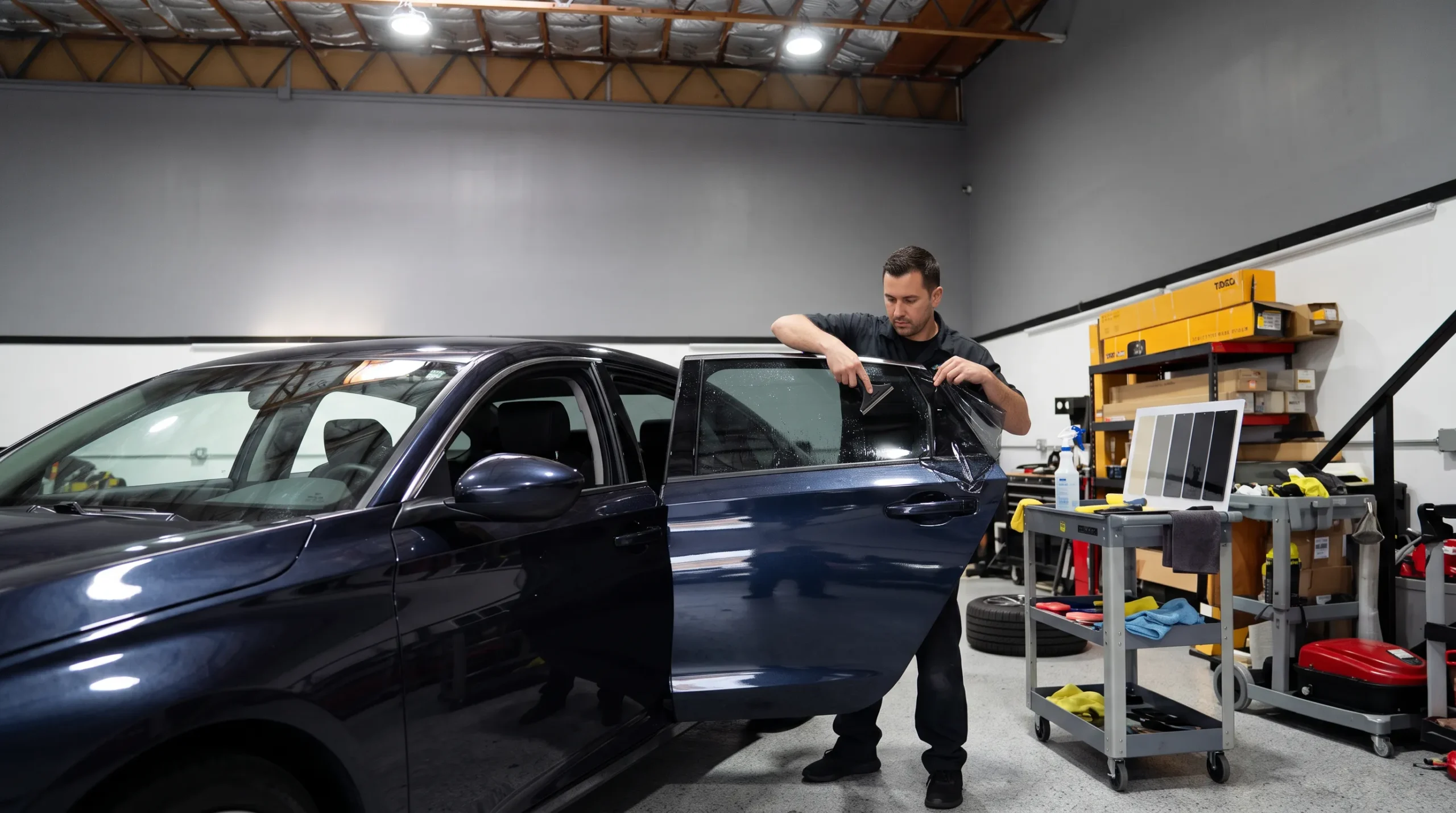
Professional products such as XPEL PRIME XR and XR PLUS use nano-ceramic film technology to help reduce heat and block ultraviolet radiation.
What Makes Ceramic Tint Different From Regular Window Tint?
Two films can look almost identical from outside a vehicle but perform differently in sunlight.
A standard dyed film can reduce brightness and provide a darker appearance.
Ceramic film can reject more infrared energy, depending on the product and shade.
This matters when heat control is your biggest concern.
Say you own a black SUV with large side windows. You want to reduce the heat entering the cabin during afternoon travel, but you don’t necessarily want very dark glass.
A suitable ceramic film may offer strong heat-rejection performance without requiring an extremely dark appearance.
The right product still needs to meet California law for each window where it will be installed.
Does Ceramic Window Tint Have Metal in It?
XPEL PRIME XR and XR PLUS use nano-ceramic film technology rather than relying on a traditional metalized tint construction.
XPEL also advertises no signal interference for these film lines.
That can be appealing for owners who use GPS, smartphones, electronic toll systems, and connected vehicle features.
Still, ask which exact product will be installed rather than assuming every ceramic film has identical construction.
Why Fremont Vehicle Owners Choose Ceramic Window Tint
Fremont, CA, vehicle owners have several reasons to consider automotive window film.
Some want better heat control during summer. Others want less glare, UV protection, or additional privacy in the rear passenger area.
Ceramic tint can address several of these concerns.
A More Comfortable Cabin During Sunny Weather
If your car spends hours in an uncovered parking lot, sunlight passes through the windows and warms the interior.
Seats, dashboards, door panels, and other surfaces can become hot to the touch.
Ceramic window tint reduces part of the incoming solar energy, which may make the interior more comfortable.
It won’t eliminate cabin heat completely.
The amount of improvement depends on the selected film, window coverage, sunlight, vehicle construction, and other conditions.
Reduced Sun Glare During Your Commute
Sunlight can be distracting when traveling toward or away from the sun.
Drivers commuting between Fremont, CA, and nearby East Bay communities may encounter bright morning or afternoon light.
Window tint can reduce glare through the treated glass.
A darker film often reduces more visible glare, but excessively dark windows can make it harder to see at night.
That’s one reason choosing legal, practical window coverage matters.
Ultraviolet Protection for Passengers and Interior Surfaces
XPEL reports that its PRIME CS, XR, and XR PLUS window films block 99% of harmful UV rays under the manufacturer’s test conditions.
That can help reduce UV exposure through treated windows.
UV exposure also contributes to changes in the appearance of certain interior materials over time.
Leather, vinyl, dashboard surfaces, and other materials can show signs of aging with extended sun exposure.
Window film adds a measure of protection, but it cannot prevent all fading or deterioration.
Greater Privacy Where Permitted
Some vehicle owners prefer a darker appearance for rear passenger windows.
Tint can reduce how easily someone outside sees into the cabin, depending on lighting and shade.
It does not make the interior completely private, and it should never be treated as a security guarantee.
California allows more flexibility for rear side windows than front side windows, so legal placement is part of the decision.
How Much Heat Does Ceramic Window Tint Reject?
When comparing ceramic window tint in Fremont, CA, one of the most useful things to understand is the difference between infrared rejection and total solar energy rejection.
These measurements sound similar, but they do not describe exactly the same thing.
What Is Infrared Heat Rejection?
Infrared rejection measures how well a film rejects infrared radiation within a defined wavelength range.
XPEL publishes infrared rejection ratings for its PRIME film lines.
Its current product overview advertises:
- PRIME CS: Up to 35% infrared rejection
- PRIME XR: Up to 85% infrared rejection
- PRIME XR PLUS: Up to 96% infrared rejection
These are manufacturer-advertised maximums, not values that apply to every shade or every test method.
More infrared rejection can help reduce solar heat entering through treated glass.
But there’s something worth knowing before choosing a film based on the largest number.
Infrared Rejection Is Not the Same as Total Heat Rejection
Sunlight includes visible light, ultraviolet radiation, and infrared radiation.
A film’s infrared rejection figure describes only part of that energy.
Total Solar Energy Rejected, often shortened to TSER, considers a broader portion of incoming solar energy.
That makes TSER another useful measurement when comparing how different films may affect cabin heat.
A product advertising 96% infrared rejection does not necessarily reject 96% of all heat from sunlight.
The manufacturer’s test range and selected shade matter.
When requesting ceramic window tint in Fremont, CA, ask your installer to explain both infrared rejection and TSER for the exact film you’re considering.
Does Darker Ceramic Tint Reject More Heat?
Not always.
The type of film matters as much as its darkness.
A high-performing ceramic film with a lighter appearance may reject more infrared energy than a darker film made with a different construction.
This is why choosing tint only from a shade sample can be misleading.
Ask to compare actual product specifications.
Will Ceramic Tint Keep a Parked Car Cool?
Ceramic tint can reduce solar heat entering through treated windows, but a parked car can still become dangerously hot.
Sunlight also heats the vehicle through the windshield, roof, and body panels.
Even with ceramic film, you should never leave children or pets in an unattended vehicle.
Window tint is a comfort and sun-control product, not a substitute for ventilation or safe parking habits.
XPEL PRIME Ceramic Window Tint Options
High Gloss Auto Detailing is an XPEL-certified business and an XPEL vendor.
Our window tinting service page advertises both standard carbon and ceramic film options.
XPEL’s PRIME automotive film lineup includes several products worth comparing.
Ask our team which film series and shades are currently available for your vehicle.
XPEL PRIME CS
PRIME CS is XPEL’s color-stable dyed window film.
It is not part of the company’s nano-ceramic film family.
According to XPEL, PRIME CS offers:
- Up to 35% infrared rejection
- 99% rejection of harmful UV rays
- Multiple shade options
- Color-stable dyed film construction
This film may appeal to owners who are focused on appearance, reducing glare, or tinting legally permitted rear glass.
It does not have the same advertised infrared performance as XPEL’s ceramic products.
XPEL PRIME XR Ceramic Window Tint
PRIME XR uses multi-layer nano-ceramic technology.
XPEL advertises infrared rejection of up to 85% and 99% rejection of harmful UV rays.
This film is worth comparing if cabin heat is a major concern.
For Fremont, CA, commuters who regularly travel through sunny areas, the ceramic construction may offer advantages over a standard dyed film.
PRIME XR is available in multiple shades.
That gives owners different appearance and visibility options for windows where the selected film is legal.
XPEL PRIME XR PLUS Ceramic Window Tint
PRIME XR PLUS is another nano-ceramic product in the XPEL PRIME lineup.
XPEL advertises infrared rejection of up to 96%, along with 99% rejection of harmful UV rays.
XR PLUS may appeal to vehicle owners who want to compare the higher infrared-rejection options within the PRIME family.
The final performance depends on the shade, glass, and published test measurements.
Don’t assume the darkest version is automatically the right choice.
Comparing XPEL PRIME Window Films
| Film Series | Film Technology | Advertised Maximum Infrared Rejection | UV Rejection |
|---|---|---|---|
| PRIME CS | Color-stable dyed film | Up to 35% | 99% |
| PRIME XR | Nano-ceramic | Up to 85% | 99% |
| PRIME XR PLUS | Nano-ceramic | Up to 96% | 99% |
Source: XPEL PRIME Window Tint.
These figures are manufacturer-advertised performance values. The ratings vary by product and test method, and a film’s appearance or performance does not determine whether it may legally be installed on a particular California vehicle window.
California Ceramic Window Tint Laws: What Shades Are Legal?
If you’re researching ceramic window tint in Fremont, CA, understanding California’s tint rules is just as necessary as comparing films.
The state places different restrictions on windshields, front side windows, and rear windows.
The rules come mainly from California Vehicle Code Sections 26708 and 26708.5.
California Window Tint Law at a Glance
| Window Location | General California Rule |
|---|---|
| Front windshield | Aftermarket film is restricted. A qualifying strip at the top is permitted, with additional narrow exceptions |
| Front driver and passenger side windows | Only qualifying clear, colorless UV-protective film under strict transmission and certification requirements |
| Rear side windows | Darker aftermarket tint is generally permitted, subject to applicable rules |
| Rear windshield | Tint is generally permitted when the vehicle has compliant exterior mirrors on both sides |
The table is a simplified guide for ordinary passenger vehicles. The exact statute and your vehicle’s equipment determine what is allowed.
Can You Tint the Front Side Windows in California?
California does not generally allow ordinary dark aftermarket tint on the front driver and passenger windows.
A specific exception allows clear, colorless, transparent UV-protective material if all statutory conditions are met.
Under Section 26708(d):
- The film itself must transmit at least 88% of visible light.
- The glass and film together must meet the applicable 70% minimum visible light transmission requirement under Federal Motor Vehicle Safety Standard No. 205.
- The material must be designed to improve UVA protection.
- The required installer or manufacturer certificate must be kept in the vehicle.
- Damaged or worn film that interferes with clear vision must be removed or replaced.
This is not the same as saying that any film labeled 70% is legal on the front windows.
A product labeled 70% VLT does not meet the 88% film requirement for this exception.
The installer must consider both the film and the existing glass.
What About Factory-Tinted Glass?
Factory glass already has its own visible light transmission.
Adding film can reduce the combined light transmission further.
That means the film’s advertised percentage is not necessarily the percentage measured through the completed window.
If you’re considering a clear front-side-window treatment, ask whether the film meets the statutory requirements and whether the finished glass can be verified.
A shop should not promise that a front-side installation is legal just because the film looks nearly transparent.
Can You Use Darker Tint on Rear Side Windows?
California generally allows darker tint on side windows behind the driver.
This gives owners more flexibility when selecting shades for rear passenger windows.
You may prefer a lighter film for visibility or a darker film for a more shaded appearance.
Choose carefully if you often travel at night.
Dark rear windows can make it harder to see pedestrians, cyclists, or other objects in low-light conditions.
A legal shade is not automatically the safest shade for every owner.
Can You Tint the Rear Windshield?
California generally permits rear-window tint when the vehicle has outside rearview mirrors on both sides that meet the legal requirements.
The mirrors must provide the required rearward view.
If your vehicle has unusual glass or mirror equipment, ask about the rules before scheduling.
Is a Windshield Tint Strip Legal in California?
California allows certain transparent material on the uppermost portion of the windshield.
You may see this described as a sun strip or windshield visor strip.
Many websites summarize the rule as allowing tint across the top four inches, but the actual statute uses a different measurement.
Section 26708(c) states that the bottom edge of the material must be at least 29 inches above the undepressed driver’s seat, using the measurement procedure specified in the law.
The material also must meet conditions involving color, lettering, and reflected glare.
A professional installer should confirm the legal placement for your vehicle rather than relying only on a generic four-inch rule.
Is Full Windshield Ceramic Tint Legal?
Full-windshield aftermarket tint is highly restricted in California.
The law includes a narrow medical exception for qualifying clear, colorless material with required transmission levels and a certificate signed by a licensed dermatologist.
This is not general permission for dark windshield tint.
High Gloss Auto Detailing lists a Full Windshield option on its service page, but that listing does not mean every available film or installation is legal for ordinary road use.
Ask our team to review what California law permits for your circumstances before requesting windshield coverage.
Do Medical Exemptions Allow Any Tint Shade?
No.
California has particular exceptions for certain medically necessary sun-screening devices and qualifying clear UV-protective materials.
The requirements depend on which exception applies.
A medical document does not automatically authorize permanently installed dark film on the front side windows or windshield.
For more information, consult the California Highway Patrol Window Tint FAQ and the current Vehicle Code.
Understanding Ceramic Window Tint Percentages
Window tint shades are usually described using visible light transmission, or VLT.
VLT measures how much visible light passes through a film or glazing system.
A higher percentage means more visible light passes through.
A lower percentage means less visible light passes through.
Common Window Tint Percentages Explained
| Nominal Film VLT | General Appearance |
|---|---|
| 5% | Very dark |
| 20% | Dark |
| 35% | Medium-dark |
| 50% | Moderately tinted |
| 70% | Light |
| 88% or higher | Very light or nearly clear, depending on the product |
These are general descriptions, not a list of shades permitted on every vehicle window in California.
Actual VLT varies by product, and the completed glass-and-film combination may transmit less light than the film alone.
Is 35% Window Tint Legal in California?
It depends on the window.
A 35% film generally does not meet California’s narrow clear-film exception for front side windows.
It may be appropriate on rear side windows or the rear windshield where the installation meets applicable rules.
The same distinction applies to 20% and 5% films.
Is 70% Ceramic Tint Legal on Front Windows?
Not merely because the film is labeled 70%.
California’s qualifying front-side-window exception requires the film itself to transmit at least 88% of visible light, among other conditions.
This is one of the most common points of confusion when comparing window tint shops.
Before booking ceramic window tint in Fremont, CA, ask how the shop verifies legal compliance.
Ceramic Window Tint Packages Available Near Fremont, CA
High Gloss Auto Detailing advertises four window tint coverage options.
Our window tinting service page lists these package names:
- Windshield Strip
- 2-Front Window Match
- Full Vehicle
- Full Windshield
The shop advertises standard carbon and ceramic film choices.
Window location, film specifications, and California law determine which applications are appropriate.
Windshield Strip
This option focuses on the upper portion of the front windshield.
A properly placed strip can help reduce bright sunlight entering near the top of the glass.
The strip must meet California’s placement and material requirements.
Ask our team to confirm the permitted dimensions for your particular vehicle.
2-Front Window Match
This advertised option concerns the front driver and passenger side windows.
Some owners want those windows to look more similar to their factory-tinted rear glass.
California’s rules do not generally permit dark front-side tint simply to match darker rear windows.
Any aftermarket treatment on those front windows must satisfy the applicable clear-film exception.
We recommend discussing legal film choices and measurement requirements before selecting this service.
Full Vehicle Window Tint
A full-vehicle package is intended for owners who want to discuss window coverage across multiple areas.
The actual legal installation may involve different film choices or coverage for different windows.
Rear glass offers more shade flexibility than front side glass.
Ask for a written list of the windows receiving film, the product used, and the legal VLT requirements for each location.
Full Windshield
Our shop also advertises a Full Windshield option.
Because California restricts full-windshield aftermarket material, this service must be evaluated against the statutory exceptions before installation on a road-use vehicle.
It should not be assumed that a clear-looking ceramic film automatically qualifies.
How to Choose the Right Ceramic Window Tint for Your Car
The right ceramic tint depends on how you use your vehicle and what you’re trying to improve.
Here are a few questions worth answering before scheduling.
Is Heat Rejection Your Biggest Concern?
If keeping the interior more comfortable is your goal, compare XPEL PRIME XR and XR PLUS specifications.
Don’t judge only by the film’s darkness.
Ask for the heat-rejection ratings associated with the exact shade you’re considering.
Do You Want More Privacy?
If privacy is a concern, look at shade choices for rear passenger windows and rear glass.
Keep nighttime visibility in mind.
A darker appearance may suit some owners, but it can make it harder to see outside after sunset.
Do You Commute Every Day?
Frequent travel on I-880, I-680, or other Bay Area roads may make heat control and glare reduction more appealing.
Think about when you travel.
An owner who regularly commutes during bright afternoon sunlight may have different concerns from someone who mostly uses their vehicle after dark.
Do You Own a Tesla or Another Vehicle With Large Glass Areas?
Vehicles with large side windows, panoramic roofs, or extensive glass surfaces can admit plenty of sunlight.
Ask which glass areas can accept aftermarket film and which products are suitable for your vehicle.
Specialty glass, roof panels, sensors, and manufacturer instructions may affect the installation.
Don’t assume all glass can receive the same film.
What About the Warranty?
XPEL advertises a transferable lifetime limited warranty for its PRIME window film lineup, subject to written conditions.
High Gloss Auto Detailing also advertises warranty support through the shop and the film manufacturer.
Ask for the applicable warranty documents before installation.
Find out what is covered, whether registration or proof of purchase is needed, and how to request service if you notice a problem.
What Happens During Professional Ceramic Window Tint Installation?
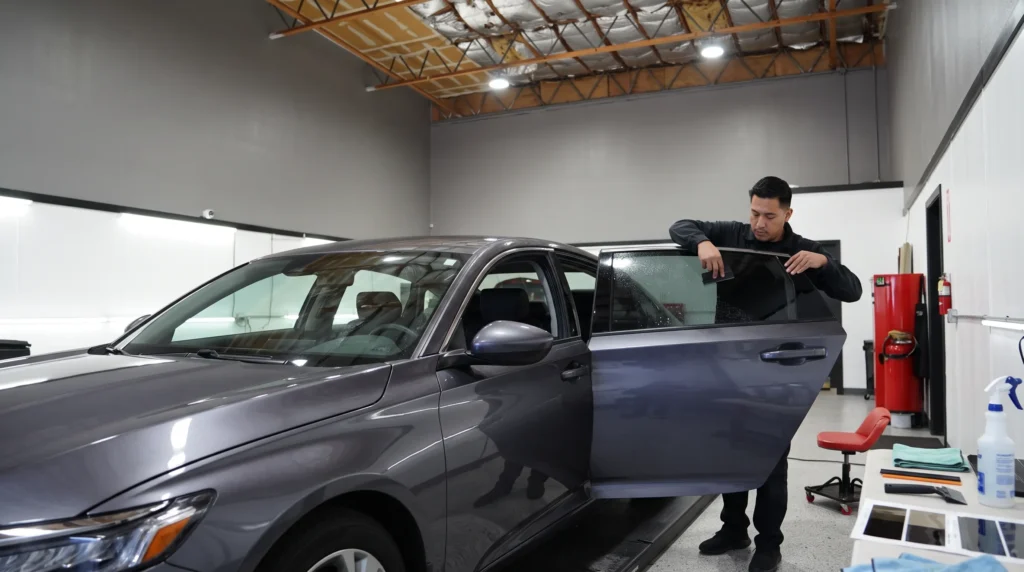
Professional window tinting requires careful cleaning, accurate film fitting, and proper application.
Even a good film can look poor if dirt or contamination becomes trapped during installation.
Step 1: Inspecting the Vehicle’s Glass
The process begins with examining the windows.
Existing tint, scratches, glass damage, rear defroster lines, sensors, and window seals can affect the work.
If your vehicle already has aftermarket tint, ask whether removal is required before new film can be installed.
Step 2: Choosing the Film and Legal Coverage
Before installation, the shop should confirm which film series and shade will be used on each window.
This is also when California legal requirements should be discussed.
The goal is to agree on a film that matches your needs and an installation that meets applicable rules.
Step 3: Cleaning and Preparing the Glass
The installer cleans the glass to remove dirt, dust, oils, and residue.
Clean glass helps reduce contamination beneath the finished film.
Our published installation process includes measuring, preparation, and film application.
Step 4: Applying the Window Film
The film is fitted and applied using suitable tools and installation solution.
The installer works to position it correctly and remove excess moisture.
Care is needed around curved glass, seals, and electronic features.
Step 5: Reviewing Curing and Aftercare
After installation, the adhesive needs time to settle and moisture needs time to leave the film.
You may initially notice slight haze or small moisture pockets.
These can be normal during the drying period.
Your installer should explain what to expect, when the windows may be lowered, and when cleaning is permitted.
How to Care for Ceramic Window Tint After Installation
Ceramic tint does not need complicated maintenance, but the first few days after installation matter.
XPEL provides window film care instructions for its PRIME automotive films.
Wait Before Lowering Your Windows
XPEL recommends waiting approximately one to five days after installation before lowering or cleaning tinted windows, depending on the climate.
Follow the instructions your installer gives you for the film and installation conditions.
Lowering windows too soon could interfere with film edges while the adhesive is settling.
Don’t Panic About Temporary Haze
Freshly applied film can have a cloudy appearance or small moisture pockets.
XPEL notes that this appearance may last up to ten days as installation moisture dries.
Actual drying time depends on environmental conditions.
If you see persistent bubbles, lifting edges, or other problems beyond the expected curing period, contact your installer.
Use Suitable Glass Cleaners
Once the film is ready for cleaning, XPEL recommends a slightly damp microfiber towel.
Mild glass cleaners without ammonia may be used when necessary.
Avoid abrasive pads, scraping tools, and harsh cleaning products.
Protect the Film From Sharp Objects
Window tint film can still be scratched.
Be careful around seatbelt buckles, jewelry, pet claws, and objects that may contact the glass.
Window film isn’t the same as automotive paint protection film.
It is designed for glass-related sun control, not to make windows resistant to every scratch.
How to Choose a Ceramic Window Tint Installer Near Fremont, CA
Choosing an installer matters just as much as choosing a film.
When comparing ceramic window tint in Fremont, CA, look for a shop that can explain the product and its legal placement.
Ask Which Film Series Is Included
A quote that simply says ceramic tint doesn’t tell you which film is being installed.
Ask for the manufacturer, product line, and shade.
If you’re comparing XPEL PRIME XR with XR PLUS, request the available specifications.
Make Sure the Installer Understands California Law
Your installer should be able to explain the difference between front and rear window rules.
Ask about the 88% clear-film requirement for front side windows and the combined 70% glazing requirement.
For qualifying front-side installations, ask about the required certificate.
A shop should not tell you that a dark front-window film is legal solely because many other cars have it.
Ask About Installation and Curing
Find out how the glass is prepared and how long the film may take to cure.
Ask what temporary haze looks like and when to contact the shop about a problem.
Review Warranty Coverage
High Gloss Auto Detailing advertises warranty support through the installer and manufacturer.
Ask what each warranty covers and keep your paperwork after installation.
Consider the Shop’s Other Services
High Gloss Auto Detailing also offers XPEL ceramic coating, paint protection film, paint correction, and auto detailing.
These services address different parts of vehicle care.
Window tint focuses on glass-related sun control. Ceramic coating helps with exterior surface maintenance, while PPF provides a physical protective layer for painted panels.
Ceramic Window Tint Services for Fremont, CA, and Nearby Communities
High Gloss Auto Detailing serves vehicle owners seeking ceramic window tint in Fremont, CA, from our shop in Pleasanton, CA.
We welcome customers from surrounding East Bay communities.
Newark, CA
Vehicle owners from Newark, CA, can contact us to compare ceramic film options for heat rejection, rear-window privacy, and legal window coverage.
Union City, CA
If you commute regularly and want to reduce sun glare or cabin heat, our team can discuss XPEL PRIME window film choices with customers from Union City, CA.
Hayward, CA
Hayward, CA, vehicle owners can visit our Pleasanton shop to explore carbon and ceramic window tint options.
Sunol, CA
For owners traveling between Sunol, CA, Fremont, CA, and the Tri-Valley, we can help explain tint performance and legal shade choices.
Dublin, CA
Our shop welcomes Dublin, CA, customers who want professional window tinting and other automotive protection services.
Pleasanton, CA
Our location is:
High Gloss Auto Detailing
7034 Commerce Cir Suite E
Pleasanton, CA 94588
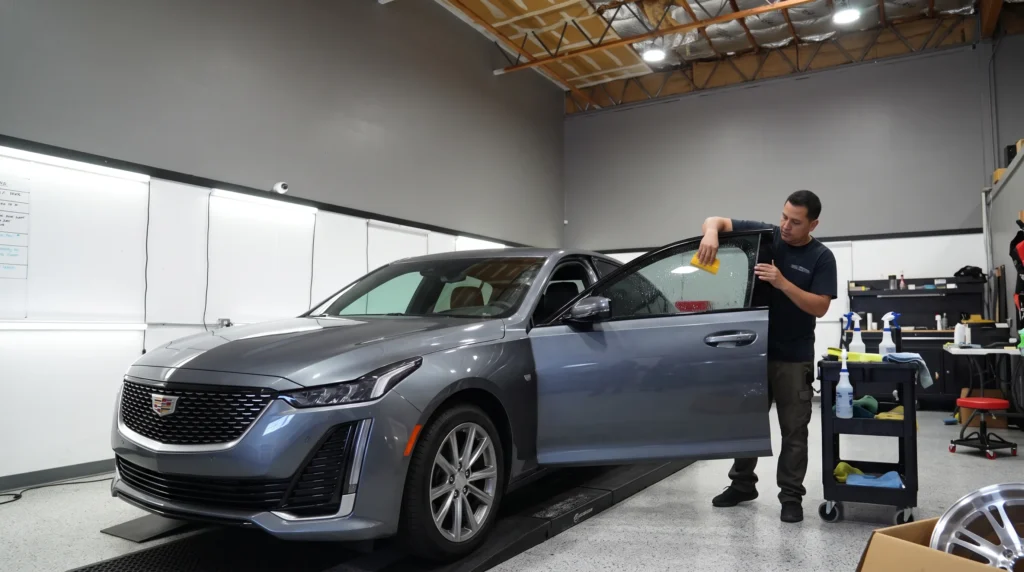
If you aren’t sure which XPEL film or window coverage makes sense for your car, call us to discuss the options.
Frequently Asked Questions About Ceramic Window Tint in Fremont, CA
1. Is Ceramic Window Tint Worth It in Fremont, CA?
Ceramic window tint can be worth considering if you want better heat rejection, less sun glare, and UV protection through your vehicle’s glass.
XPEL PRIME XR and XR PLUS use nano-ceramic technology and offer higher advertised infrared rejection than XPEL’s PRIME CS dyed film.
The amount of improvement depends on the selected product, shade, glass, and coverage.
For vehicle owners who commute regularly or park outdoors, the comfort benefits may be appealing.
2. What Is the Darkest Legal Window Tint in California?
California has different rules for different vehicle windows.
Rear side windows generally allow darker tint, while the rear windshield may be tinted when the vehicle meets the exterior mirror requirements.
Front side windows are much more restricted. Qualifying aftermarket film must be clear, colorless, and at least 88% VLT on its own, with the finished glass meeting the 70% transmission requirement and other statutory conditions.
Most ordinary dark aftermarket tint is not permitted on front side windows.
3. Does Ceramic Window Tint Really Block Heat?
Yes. Ceramic film can reject part of the infrared energy that contributes to solar heating.
XPEL advertises up to 85% infrared rejection for PRIME XR and up to 96% for XR PLUS, depending on the relevant product measurement.
These figures do not mean that the film blocks the same percentage of total solar heat.
Ask about both infrared rejection and total solar energy rejection when comparing products.
4. Can I Get Ceramic Tint on My Front Windshield in California?
Full-windshield aftermarket film is restricted in California.
The law allows certain upper windshield strips and has narrow exceptions, including specific qualifying medical circumstances.
A clear-looking ceramic film is not automatically legal for a full windshield.
Before scheduling windshield film, ask whether the intended installation meets California Vehicle Code Section 26708.
5. How Long Does Ceramic Window Tint Last?
The lifespan depends on the film, installation, sun exposure, and care.
XPEL advertises a transferable lifetime limited warranty on its PRIME automotive window films, subject to written terms.
This warranty should not be understood as a guarantee against every form of damage.
At High Gloss Auto Detailing, ask for details about manufacturer and installer warranty coverage for the film you select.
6. How Much Does Ceramic Window Tint Cost in Fremont, CA?
The quote depends on your vehicle, the number and shape of windows, the selected film series, existing film removal, and the legal coverage requested.
A two-window service involves different work than tinting multiple rear and side windows.
For an accurate quote, contact High Gloss Auto Detailing at (510) 542-3295 or use our online contact form.
We’ll help you compare the available options for your vehicle.
7. Where Can I Get XPEL Ceramic Window Tint Near Fremont, CA?
High Gloss Auto Detailing is an XPEL-certified business serving customers from Fremont, CA, and nearby East Bay communities.
High Gloss Auto Detailing
7034 Commerce Cir Suite E
Pleasanton, CA 94588
Phone: (510) 542-3295
Business Hours:
- Monday through Friday: 9:30 AM to 6:30 PM
- Saturday: 10:00 AM to 6:30 PM
We offer carbon and ceramic window tinting, along with XPEL ceramic coating, paint protection film, paint correction, and auto detailing.
Visit our window tinting service page to learn more about our advertised coverage options.
Schedule Ceramic Window Tint Near Fremont, CA
Choosing ceramic window tint in Fremont, CA, should begin with what you want from your vehicle.
If cabin heat is your biggest concern, compare the infrared and total solar energy rejection of the films available.
If privacy matters most, look at the legal shade options for rear passenger windows.
And if you’re considering film for the front windows or windshield, make sure the installation meets California’s strict requirements.
At High Gloss Auto Detailing, we’re here to help you compare XPEL PRIME window tint choices and understand which products and coverage areas may be appropriate for your vehicle.
Our XPEL-certified team serves vehicle owners throughout Fremont, CA, Dublin, CA, Pleasanton, CA, and nearby East Bay communities.
Ready to make your vehicle more comfortable in the California sun?
Call (510) 542-3295 to discuss your vehicle, compare available window films, and request a personalized quote.
You can also contact High Gloss Auto Detailing online to request an appointment.
Visit our shop:
High Gloss Auto Detailing
7034 Commerce Cir Suite E
Pleasanton, CA 94588
Get the heat control and appearance you want with window tint that fits your vehicle and California’s requirements.
Sources and References
The following sources support the window tint package descriptions, XPEL product information, heat-rejection measurements, California legal requirements, and film maintenance guidance.
| Source Title | Publisher | Publication Date | URL |
|---|---|---|---|
| Window Tinting in Pleasanton, CA & Dublin, CA | High Gloss Auto Detailing | Not listed | Window Tinting Services |
| XPEL PRIME Window Tint | XPEL | Not listed | XPEL PRIME Film Comparison |
| California Vehicle Code Section 26708 | California State Legislature | Amended effective January 1, 2026 | California Window Tint Law |
| California Vehicle Code Section 26708.5 | California State Legislature | Last amended effective January 1, 1999 | California Window Glazing Rules |
| Frequently Asked Questions, Vehicle Modification | California Highway Patrol | Not listed | CHP Window Tint FAQ |
| XPEL Product Care Instructions | XPEL | Not listed | XPEL Window Film Care |
Legal information reflects the California Vehicle Code provisions reviewed in October 2026 and is provided for general guidance, not legal advice. Window tint requirements, product specifications, package availability, and warranty terms may change. Confirm the current legal requirements and selected film’s specifications before installation.
Ceramic Window Tint in Fremont, CA: Heat Rejection and Legal Shades - High Gloss Auto Detailing XPEL Certified Installer

Ceramic Window Tint in Fremont, CA: Heat Rejection and Legal Shades Premier Certified XPEL Installer. Ceramic window tint in Fremont, CA, is a popular choice
Product Brand: High Gloss Auto Detailing
5
Pros
- Discover the best ceramic coating services in Pleasanton, CA, with High Gloss Auto Detailing. Protect your car’s paint with Ceramic Pro, the industry leader in automotive protection. Call us today or schedule an appointment online!