Window tinting in San Ramon, CA, is worth considering when your vehicle spends hours in the Tri-Valley sun. Whether you’re commuting along I-680, heading toward Dublin, CA, or leaving your car parked outside during the workday, sunlight pouring through the windows can make the cabin uncomfortable. Hot seats, a warm steering wheel, and bright afternoon glare are familiar problems for many East Bay vehicle owners.
You might be thinking about getting your windows tinted, but choosing the right film isn’t as simple as picking the darkest shade available.
Carbon and ceramic window films can look similar once installed, yet their heat-rejection performance may be quite different. One film may mainly reduce brightness, while another can reject more infrared energy without making the glass extremely dark.
There’s another factor to think about: California’s window tint laws.
The state has strict rules for front side windows and windshields. Choosing a film that looks good and meets the legal requirements takes a little planning.
At High Gloss Auto Detailing, we provide professional XPEL window tinting services for customers from San Ramon, CA, and nearby Tri-Valley communities. Our XPEL-certified shop is located in Pleasanton, CA, where we offer carbon and ceramic window film options.
This guide explains how automotive tint works, why ceramic films are popular in warm weather, which XPEL products are worth comparing, and what to expect when scheduling your installation.
Table of Contents
- Why Window Tinting Matters in San Ramon
- How Automotive Window Tint Reduces Heat
- Types of Window Tint Film Explained
- Carbon vs. Ceramic Tint for Tri-Valley Heat
- Comparing XPEL PRIME Window Films
- What Window Tint Percentages Mean
- California Window Tint Laws
- Window Tint Packages Available Near San Ramon
- Choosing Window Tint for Your Vehicle
- What Happens During Professional Installation
- Window Tint Curing and Aftercare
- What Affects a Window Tinting Quote?
- How Window Tint Fits With Other Protection Services
- Choosing an XPEL Window Tint Installer
- Window Tinting for San Ramon and Nearby Cities
- Frequently Asked Questions
- Schedule Your Window Tinting Appointment
- Sources and References
Why Window Tinting in San Ramon, CA, Makes Sense for Tri-Valley Weather
Spend an afternoon traveling around San Ramon, CA, during warm weather, and you’ll notice how much sunlight can reach your vehicle’s interior.
Large side windows, windshields, and glass roofs allow solar energy into the cabin. Seats, dashboards, and interior trim absorb some of that energy and become warm.
The longer a vehicle sits in direct sunlight, the more noticeable the heat can become.
Commuting Along I-680
Interstate 680 connects San Ramon, CA, with Danville, CA, Dublin, CA, Pleasanton, CA, and other East Bay communities.
If you commute regularly, you may encounter bright sunlight through your side windows during parts of the day.
Depending on the direction of travel and the sun’s position, glare can become distracting.
Automotive tint can help reduce brightness through treated windows, making sunny travel more comfortable.
Parking Outside During the Workday
Many vehicle owners spend their weekdays at offices, shopping centers, and other destinations around San Ramon, CA.
When your car remains outside for several hours, sunlight continues passing through the glass.
Window film designed for heat rejection can reduce some of that incoming solar energy.
It won’t keep a parked vehicle at a safe temperature, but it can reduce the amount of heat entering through treated windows.
Hot Seats and Interior Surfaces
If you’ve ever touched a dark steering wheel or climbed into a vehicle with hot leather seats, you’ve experienced how much heat interior materials can absorb.
Window tint can reduce incoming sunlight and solar energy through selected glass surfaces.
The result depends on the film, vehicle design, and surrounding conditions.
For owners researching window tinting in San Ramon, CA, cabin comfort is often a good reason to compare different film technologies.
How Does Automotive Window Tint Reduce Heat?
Not all window tint works the same way.
Some products focus on reducing visible light, while others are designed to reject more solar energy.
Understanding a few performance measurements can help you compare films without getting confused by advertising claims.
Infrared Rejection
Infrared radiation is one part of the solar energy spectrum.
It contributes to the heat you feel when sunlight enters your car.
Certain ceramic window films use particles that affect how infrared energy passes through the glass.
XPEL publishes infrared rejection ratings for its PRIME automotive window films.
The actual result depends on the product, shade, and measurement method.
Total Solar Energy Rejected
Total Solar Energy Rejected, commonly called TSER, measures how much total solar energy a glazing system rejects.
This includes more than infrared radiation alone.
It’s useful to understand because a film advertising 96% infrared rejection doesn’t necessarily block 96% of all heat from sunlight.
A film’s infrared rejection and TSER describe different aspects of its performance.
When comparing window tinting in San Ramon, CA, ask for both figures for the exact product and shade you’re considering.
Ultraviolet Rejection
Ultraviolet radiation is another part of sunlight.
Certain window films block a high percentage of UV rays passing through treated glass.
XPEL states that its PRIME CS, XR, and XR PLUS film lines block 99% of harmful UV rays under the manufacturer’s test conditions.
This adds UV protection through the windows receiving film and may help reduce sun-related fading of some interior materials.
It doesn’t eliminate every source of UV exposure or prevent all interior aging.
Visible Light Transmission
Visible Light Transmission, or VLT, measures how much visible light passes through a film or glass system.
A high VLT percentage means more light gets through.
A low VLT percentage means less visible light passes through.
VLT influences the appearance of the tint and how easily you can see through the glass, especially at night.
Heat rejection and VLT are related, but they aren’t interchangeable.
A lighter ceramic film can sometimes outperform a darker dyed film in certain heat-rejection measurements.
Types of Automotive Window Tint Film Explained
When shopping for window tinting in San Ramon, CA, you’ll commonly hear about dyed, carbon, metalized, and ceramic films.
Each technology has different characteristics.
1. Dyed Window Tint
Dyed film uses coloring agents to reduce visible light transmission and create a tinted appearance.
It can help reduce brightness and glare.
Heat-rejection performance depends on the product.
Some dyed films reject less infrared energy than higher-performing ceramic alternatives.
XPEL PRIME CS is a color-stable dyed film that provides UV protection and multiple shade choices.
It should not be confused with the manufacturer’s ceramic film products.
2. Carbon Window Tint
Carbon window film uses carbon-based technology to control its appearance and sunlight transmission.
It is commonly selected for a dark, consistent appearance and sun-control benefits.
The amount of heat rejection varies among manufacturers and products.
High Gloss Auto Detailing advertises standard carbon window tint as one of our film options.
If you’re interested in carbon tint, ask our team which exact product is available and how its performance compares with the ceramic films we carry.
3. Metalized Window Tint
Metalized films use metallic components to reflect portions of incoming solar energy.
Some products provide good heat rejection, but metallic construction can create interference concerns with certain electronic signals.
Actual behavior depends on the particular film and equipment.
Metalized film is worth knowing about when researching tint technologies, although it isn’t separately advertised as one of our standard film choices.
4. Ceramic Window Tint
Ceramic films use small ceramic particles within the film construction to help manage incoming solar energy.
Many are designed to reject substantial infrared radiation while maintaining good visibility.
XPEL PRIME XR and XR PLUS are examples of nano-ceramic products.
For vehicle owners who want strong heat rejection rather than simply dark-looking windows, ceramic films deserve a closer look.
Carbon vs. Ceramic Window Tint for San Ramon, CA, Heat
Carbon and ceramic window films can both look good on a vehicle.
The decision comes down to the particular product’s performance and what you want from the installation.
Carbon vs. Ceramic Window Tint Comparison
| Feature | Carbon Window Tint | Ceramic Window Tint |
|---|---|---|
| Construction | Carbon-based film | Ceramic particle technology |
| Heat rejection | Varies by product | Can provide high infrared rejection |
| UV protection | Depends on film specifications | Depends on film specifications |
| Glare reduction | Depends on shade | Depends on shade |
| Light shade options | Depends on product | Available in some ceramic product lines |
| Electronic signal interference | Depends on construction | Nonmetalized ceramic films are designed to avoid interference |
| Appearance | Often a consistent dark finish | Available in different shades |
When Carbon Window Tint May Be Enough
If your main goal is changing the appearance of the legally tintable rear windows, a carbon film may meet your needs.
It can also reduce visible sunlight and provide some heat control, depending on the product.
Ask about the available shades and performance specifications before choosing.
When Ceramic Window Tint Is Worth Considering
If your vehicle regularly sits in sunlight or your commute exposes you to uncomfortable solar heat, ceramic film may be a better match.
The right ceramic product can reject more infrared energy than certain standard films.
That can be useful for SUVs, sedans, trucks, and vehicles with large glass areas.
The difference is best understood by comparing actual film specifications rather than choosing based only on how dark the sample looks.
What this means: For window tinting in San Ramon, CA, the film’s measured heat rejection should matter more than its appearance alone when cabin comfort is your main concern.
Comparing XPEL PRIME Window Tint Options
High Gloss Auto Detailing is XPEL certified and an XPEL vendor.
We offer automotive window tinting services using XPEL products, with carbon and ceramic choices advertised on our website.
XPEL’s PRIME lineup includes several films with different technologies and performance ratings.
The product lines below are useful to compare. Contact us to confirm current availability, specifications, and shade choices.
XPEL PRIME CS
PRIME CS uses color-stable dyed film technology.
XPEL advertises up to 35% infrared rejection and 99% rejection of harmful UV rays.
It may appeal to owners who are focused on a tinted appearance, glare reduction, and UV protection.
PRIME CS is not a ceramic film.
XPEL PRIME XR
PRIME XR uses multi-layer nano-ceramic particle technology.
XPEL advertises up to 85% infrared rejection and 99% rejection of harmful UV rays.
For owners seeking window tinting in San Ramon, CA, with heat control as a major goal, PRIME XR is a product worth comparing.
Its actual performance depends on the selected shade and the manufacturer’s test figures.
XPEL PRIME XR PLUS
PRIME XR PLUS is another nano-ceramic product.
XPEL advertises up to 96% infrared rejection and 99% UV rejection.
It is worth discussing when you want to compare the higher heat-rejection options within the XPEL PRIME family.
The 96% infrared figure is not the same as rejecting 96% of all solar heat.
Ask our team about the total solar energy rejection of the exact film you’re considering.
XPEL PRIME Film Comparison
| Film Series | Technology | Maximum Advertised Infrared Rejection | UV Rejection |
|---|---|---|---|
| XPEL PRIME CS | Color-stable dyed | Up to 35% | 99% |
| XPEL PRIME XR | Nano-ceramic | Up to 85% | 99% |
| XPEL PRIME XR PLUS | Nano-ceramic | Up to 96% | 99% |
Source: XPEL PRIME Window Tint Product Comparison.
These are manufacturer-advertised maximums for the product lines. They do not apply equally to every shade or glass configuration.
What Do Window Tint Percentages Mean?
Window tint percentages refer to visible light transmission.
A film labeled 35% VLT allows approximately 35% of visible light to pass through the film under its rated test conditions.
Lower percentages create darker results.
Common Window Tint Percentages
| Nominal Film VLT | General Appearance |
|---|---|
| 5% | Very dark |
| 20% | Dark |
| 35% | Medium-dark |
| 50% | Moderately tinted |
| 70% | Light |
| 88% or higher | Very light or nearly clear |
These descriptions are about appearance, not legal approval for every vehicle window.
Does Darker Tint Always Reject More Heat?
No.
Different film technologies can have different infrared-rejection ratings at similar VLT levels.
A lighter ceramic film may reject more infrared energy than a darker film made with another technology.
This makes comparing XPEL product specifications useful before selecting a shade.
Does Factory-Tinted Glass Affect the Result?
Yes.
Factory glass already has a visible light transmission rating.
Adding aftermarket film can reduce the combined transmission.
The film’s labeled VLT is not necessarily the final reading for the glass and film together.
This matters when choosing film for any window with legal light-transmission requirements.
California Window Tint Laws: What’s Legal in San Ramon, CA?
Before scheduling window tinting in San Ramon, CA, it’s important to understand the rules for California road-use vehicles.
The state has different requirements for front side windows, rear side windows, rear windshields, and front windshields.
The main rules appear in California Vehicle Code Section 26708.
California Window Tint Rules at a Glance
| Window | General Rule |
|---|---|
| Front driver and passenger windows | Only qualifying clear, colorless UV-protective material under strict conditions |
| Rear passenger side windows | Darker tint is generally permitted, subject to applicable rules |
| Rear windshield | Tint is generally permitted when compliant outside mirrors are present on both sides |
| Front windshield | Aftermarket film is restricted, with limited exceptions |
Front Side Window Tint Rules
California generally prohibits ordinary dark aftermarket tint on the side windows immediately beside the front seats.
There is a narrow exception for qualifying UV-protective film.
Under Section 26708(d), the film must:
- Be clear, colorless, and transparent
- Allow at least 88% visible light transmission through the film itself
- Leave the completed glass-and-film system meeting the applicable 70% minimum visible light transmission requirement
- Be designed to improve UVA protection
- Meet the required certification conditions
The driver must keep the required signed certificate in the vehicle.
This is why a film labeled 70% VLT isn’t automatically legal for the front side windows.
The qualifying film must meet the separate 88% requirement, along with the other statutory conditions.
Rear Side Window Tint Rules
California generally allows darker aftermarket tint on side windows behind the driver.
This gives owners more flexibility when considering privacy and glare reduction for rear passengers.
You should still think about nighttime visibility.
Very dark rear side windows can make it harder to see objects outside in low-light conditions.
Rear Windshield Tint Rules
Rear windshield tint is generally permitted when the vehicle has compliant outside rearview mirrors on both sides.
The vehicle must meet the applicable equipment requirements.
If you have unusual mirror equipment or specialty glass, discuss those details before installation.
What About a Windshield Tint Strip?
California allows certain transparent material along the top portion of a windshield.
The law does not simply permit any four-inch strip.
Section 26708(c) includes a measurement requiring the strip’s lower edge to be at least 29 inches above the undepressed driver’s seat, measured using the method described in the law.
The material must also meet rules involving color, lettering, and glare.
Can the Entire Windshield Be Tinted?
Full-windshield aftermarket film is highly restricted in California.
There are narrow exceptions, including qualifying clear UV-protective material installed under particular medical conditions with the required dermatologist’s certificate.
A clear appearance alone does not make a full-windshield film legal.
California also has separate rules for certain removable medical sun-screening devices.
For more information, read the California Highway Patrol Window Tint FAQ.
The bottom line: Window tinting in San Ramon, CA, should involve checking the exact film and the window where it will be installed. A shop should never promise that a dark front-side film is legal simply because other vehicles have it.
Window Tinting Packages Available Near San Ramon, CA
High Gloss Auto Detailing advertises four window tint coverage options on our XPEL window tinting service page.
Our website also lists standard carbon and ceramic film choices.
The published package names are:
- Windshield Strip
- 2-Front Window Match
- Full Vehicle
- Full Windshield
California law determines which film and coverage options can be installed on vehicles used on public roads.
1. Windshield Strip
This option focuses on the upper portion of the windshield.
A properly installed strip can help reduce some bright sunlight entering near the top of the glass.
The material and placement must satisfy California Vehicle Code requirements.
Ask us to confirm what is permitted for your vehicle.
2. 2-Front Window Match
This advertised package concerns the front driver and passenger windows.
Some owners want those windows to match the darker appearance of factory rear privacy glass.
California does not generally permit adding ordinary dark aftermarket film to the front side windows for appearance matching.
Any film installed there must qualify under an applicable legal exception.
Our team can discuss which lawful products, if any, meet your vehicle’s requirements.
3. Full Vehicle Window Tint
The Full Vehicle package is intended for customers interested in treating multiple glass areas.
The final scope depends on the vehicle, legal restrictions, and selected product.
Different windows may require different film choices.
Rear passenger glass offers more shade flexibility than front side glass.
When requesting a quote, ask which windows are included and what film will be installed on each.
4. Full Windshield
Our service page also advertises a Full Windshield option.
Because California restricts windshield film, this package cannot be treated as a routine legal choice for every road-use vehicle.
Any proposed installation must satisfy an applicable statutory exception.
If you have questions about windshield sun control, contact our team to discuss lawful options.
How to Choose the Right Window Tint for Your San Ramon Vehicle
The right film depends on how you use your car.
Think about when you encounter sunlight, where you park, and how much time you spend traveling at night.
For Daily I-680 Commuters
If you travel regularly between San Ramon, CA, Danville, CA, and Dublin, CA, glare and cabin heat may be among your biggest concerns.
Compare ceramic film performance and consider how the selected shade affects visibility.
A product with good heat rejection may suit your needs even without an extremely dark appearance.
For SUVs and Family Vehicles
Larger vehicles often have more passenger windows.
Rear passengers may experience direct sunlight depending on seating position and time of day.
Film on legally permitted rear glass can help reduce incoming sunlight and improve passenger comfort.
Families may also appreciate the additional UV protection through treated windows.
For Tesla Owners
Some Tesla models have large glass roofs and extensive window areas.
That can make solar heat management worth discussing.
Not every glass roof or specialty panel is suitable for every aftermarket film.
Ask about compatibility with your vehicle’s glass, manufacturer guidance, and potential installation restrictions.
For Owners Who Park Outdoors
If your vehicle sits outside during the workday, a film with higher heat-rejection performance may be worth considering.
Keep your expectations realistic.
Window tint can’t stop heat from entering through every surface, and a parked vehicle can still become dangerously hot.
The National Weather Service warns that temperatures inside parked cars can rise rapidly, even during mild weather.
Never leave children or pets unattended in a parked vehicle, with or without tint.
For Frequent Nighttime Travel
If you often travel after dark, visibility deserves careful thought.
Darker rear-window film can reduce the amount of light entering the cabin, but it can also make objects harder to see through the tinted glass.
A lighter rear-window shade may be more comfortable for some owners.
For window tinting in San Ramon, CA, the best choice balances heat rejection, appearance, visibility, and legal requirements.
What Happens During Professional Window Tint Installation?
A quality film still needs careful installation.
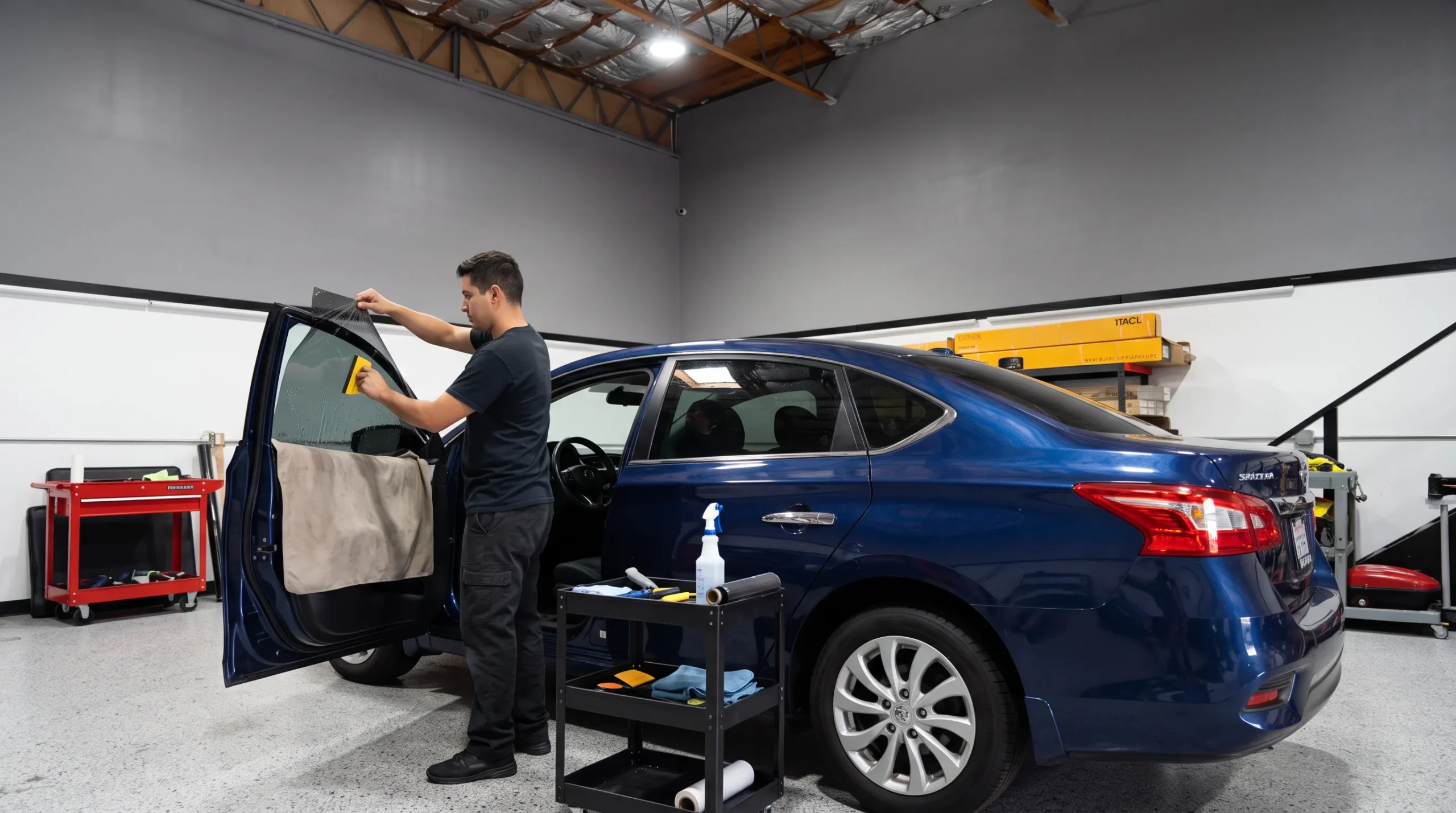
High Gloss Auto Detailing’s published window tinting process includes accurate measurements, cleaning and preparation, and film application.
Step 1: Inspecting the Glass
The technician checks the vehicle’s windows for existing tint, dirt, damage, and glass features that may affect the installation.
If old aftermarket tint is present, removal may be needed.
Tell the shop about previous tinting work or damaged glass before scheduling.
Step 2: Confirming the Film
The film series, shade, and coverage areas should be agreed upon before installation begins.
This is also when legal restrictions need to be reviewed.
Ask for the exact product name rather than relying on a general description such as ceramic tint.
Step 3: Measuring and Fitting
Automotive windows vary in size and shape.
Curved rear glass, quarter windows, and other details can make fitting more involved.
The film needs to follow the shape of the intended window.
Step 4: Cleaning the Glass
The installer carefully cleans the glass and surrounding areas.
Dust, oils, or old adhesive can become trapped beneath the new film.
Good preparation helps produce a cleaner finished appearance.
Step 5: Applying the Film
The installer applies the film using suitable application solution and tools.
Excess moisture is worked out as the film is positioned.
The film must then settle and cure according to the product’s directions.
Step 6: Final Inspection and Aftercare
The installer checks the finished work and explains what to expect during curing.
Temporary haze or moisture pockets can occur after installation.
Ask when it’s safe to lower the windows and begin cleaning them.
Window Tint Curing and Aftercare: What Should You Expect?
Once your window tint has been installed, the film needs time to settle.
Following the manufacturer’s care instructions helps avoid problems during the early curing period.
Wait Before Lowering Your Windows
According to XPEL’s Window Film Care Instructions, owners should wait approximately one to five days before lowering or cleaning newly tinted windows, depending on climate and installation conditions.
Your installer may give more detailed instructions for the product used.
Follow those directions rather than assuming the film is ready immediately.
Temporary Haze Can Be Normal
Freshly installed film may have slight haze or small moisture bubbles.
XPEL states that these conditions may remain for up to ten days as application moisture dries.
Do not try to puncture, peel, or push out the moisture yourself.
If the film still shows concerning defects after the expected curing period, contact your installer.
Use Suitable Cleaning Products
Once the film is ready for cleaning, XPEL recommends a slightly damp microfiber towel.
A mild, non-ammonia glass cleaner may be used when needed.
Avoid abrasive pads, sharp scrapers, and aggressive rubbing.
Watch for Lifted Edges
If you notice an edge lifting, don’t pull at it.
Contact your installer so the problem can be examined.
Professional attention is safer than trying to reposition the film yourself.
Keep the Interior Clean
Dust and fingerprints can still collect on tinted glass.
Careful interior cleaning helps maintain visibility and the film’s appearance.
Our auto detailing services can help you care for your vehicle’s interior and exterior surfaces.
What Affects a Window Tinting Quote in San Ramon, CA?
Window tinting quotes can vary because vehicles and requested services differ.
Rather than comparing services based only on package names, find out what work is actually included.
Number of Windows
Tinting selected rear windows requires different work than treating multiple glass areas.
The number of windows receiving film affects the service.
Film Selection
Carbon and ceramic products have different specifications and installation requirements.
The selected manufacturer, film series, and shade all matter.
Vehicle Glass Design
A compact sedan, large SUV, and vehicle with curved rear glass may require different installation work.
Specialty glass and difficult-to-access areas may also affect the appointment.
Old Tint Removal
If your vehicle already has aftermarket tint, removing old film and adhesive can require additional preparation.
Let us know about existing tint when requesting a quote.
Legal Coverage Requirements
Not every requested tint combination is permitted under California law.
Confirm the windows and products involved before finalizing the service.
For a quote on window tinting in San Ramon, CA, call High Gloss Auto Detailing at (510) 542-3295 or contact our team online.
How Window Tinting Works With Other Vehicle Protection Services
Window tint addresses sunlight entering through the glass.
Other vehicle protection services focus on painted surfaces.
If you’re considering several ways to care for your car, understanding the difference can help you decide what to discuss with the shop.
Window Tint and Ceramic Coating
Window tint can reduce glare, reject solar heat, and block UV radiation through treated glass.
Ceramic coating serves a different purpose.
Our XPEL ceramic coating services focus on exterior surface protection, water repellency, and easier washing.
Ceramic coating does not replace automotive window tint.
Window Tint and Paint Protection Film
Paint protection film, also called PPF or clear bra, protects selected painted surfaces against certain rock chips and light abrasion.
Our XPEL paint protection film packages include front-end and full-vehicle coverage options.
PPF and window tint can complement each other because they protect different vehicle surfaces.
Paint Correction Before Exterior Protection
If your paint has visible swirl marks or scratches, you may want to discuss correction before adding certain exterior protective products.
High Gloss Auto Detailing offers paint correction services for vehicles with correctable surface defects.
Window tint doesn’t correct paint damage, so each service should be selected according to the problem you want addressed.
How to Choose a Window Tint Installer Near San Ramon, CA
When comparing window tinting in San Ramon, CA, look beyond the film shade.
A knowledgeable installer should be able to explain the product, legal restrictions, installation process, and aftercare.
Ask About Installer Certification
High Gloss Auto Detailing is an XPEL-certified business and XPEL vendor.
Our team works with XPEL automotive protection products, including window tint.
You can learn more about our shop on our About Us page.
Ask for the Exact Film Name
The term ceramic tint doesn’t tell you which product is being installed.
Ask for the manufacturer, film series, and specifications.
If heat rejection matters, request the relevant performance ratings for the selected shade.
Check California Legal Requirements
Your installer should explain which tint options are permitted on each window.
Front-side and windshield applications are far more restricted than rear-window tint.
Avoid choosing a film simply because someone else has the same dark shade.
Ask About Warranty Coverage
High Gloss Auto Detailing advertises lifetime warranty support through the shop and the window film manufacturer.
XPEL also advertises lifetime warranty coverage for PRIME automotive window films, subject to its written terms.
Ask what the manufacturer covers, whether the installer provides separate workmanship coverage, and what documents you should keep.
Review XPEL’s official warranty information for the applicable terms.
Look at Previous Installations
Customer reviews and photos can help you assess a shop.
Look for clean film edges, clear glass, and careful work around curved windows.
Ask how the shop addresses concerns after installation.
Window Tinting Services for San Ramon, CA, and Nearby Tri-Valley Communities
High Gloss Auto Detailing welcomes customers seeking window tinting in San Ramon, CA, at our shop in Pleasanton, CA.
San Ramon, CA, and Pleasanton, CA, are separate cities. Our physical shop is located in Pleasanton, where we perform automotive protection and detailing services.
We also welcome vehicle owners from surrounding communities.
Danville, CA
Customers from Danville, CA, can contact us to compare carbon and ceramic window films for sun control, heat rejection, and rear-window tinting.
Dublin, CA
We serve Dublin, CA, customers looking for XPEL window film, ceramic coating, PPF, and auto detailing services.
Pleasanton, CA
Our shop is located in Pleasanton, CA, where our team performs window tint installations and other automotive appearance services.
Walnut Creek, CA
Vehicle owners from Walnut Creek, CA, are welcome to discuss XPEL PRIME window films and legally permitted tint coverage.
Alamo, CA
Customers from Alamo, CA, can contact us about ceramic window film options for reducing cabin heat and glare.
Livermore, CA
For vehicle owners in Livermore, CA, our team can explain the differences between film technologies and available shade options.
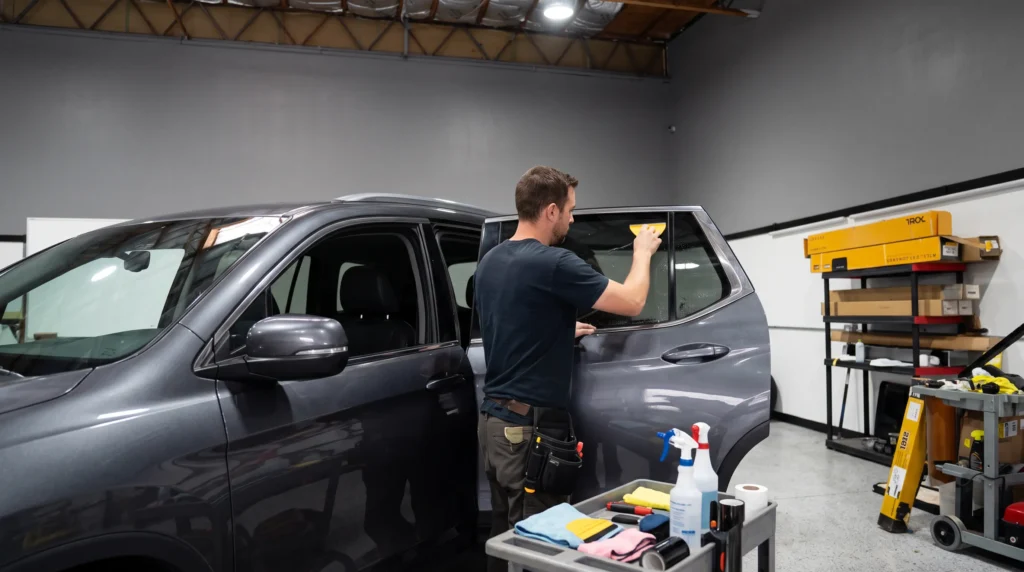
Whether you own a Tesla, luxury sedan, family SUV, sports car, or truck, we can help you discuss suitable window film and installation choices.
Frequently Asked Questions About Window Tinting in San Ramon, CA
1. Is Ceramic Window Tint Worth It for Tri-Valley Heat?
Ceramic window tint can be worth considering if reducing solar heat through your vehicle’s windows is a major concern.
Products such as XPEL PRIME XR and XR PLUS use nano-ceramic technology and advertise higher maximum infrared-rejection ratings than XPEL PRIME CS.
Actual results depend on the film, shade, and vehicle glass.
Window tint won’t prevent a parked car from becoming hot, but suitable heat-rejecting film can reduce some incoming solar energy.
2. What Type of Window Tint Is Best for San Ramon, CA?
The best film depends on your goals.
If you want a darker appearance for legally tintable rear windows, you may want to compare carbon and other film technologies.
If heat rejection is your biggest concern, consider comparing XPEL PRIME XR and XR PLUS.
Ask about infrared rejection, total solar energy rejection, and available shades.
The film’s legal placement also matters.
3. Is 35% Window Tint Legal in California?
California generally permits darker tint on rear side windows, subject to applicable requirements.
A 35% aftermarket film does not meet the state’s narrow clear UV-film exception for front side windows.
That exception requires film with at least 88% visible light transmission and other conditions.
The window location, film specifications, and completed glass-and-film combination determine whether an installation meets the law.
4. Does Ceramic Window Tint Really Keep Your Car Cooler?
Ceramic window film can reduce solar heat entering through treated glass.
XPEL advertises infrared rejection of up to 85% for PRIME XR and up to 96% for XR PLUS.
Those values are not the same as the percentage of total solar heat rejected.
Cabin comfort depends on the film, shade, sunlight exposure, and vehicle design.
A parked vehicle can still reach dangerous temperatures, even with high-performing window tint.
5. How Long Does Professional Window Tint Installation Take?
The appointment duration depends on the vehicle, window count, film choice, glass shape, and whether old tint needs removal.
Tinting a few windows involves different work from an installation across multiple glass areas.
Curved rear glass and specialty window features may require extra preparation.
Contact High Gloss Auto Detailing to discuss your vehicle and confirm the expected appointment schedule.
6. How Much Does Window Tinting Cost in San Ramon, CA?
A window tinting quote depends on the film type, number of windows, vehicle design, existing tint removal, and installation requirements.
Carbon and ceramic window films have different product specifications.
The work involved also varies between vehicles.
For a personalized quote, call High Gloss Auto Detailing at (510) 542-3295 or submit your vehicle details through our contact form.
7. Where Can I Get XPEL Window Tinting Near San Ramon, CA?
High Gloss Auto Detailing is an XPEL-certified business serving customers from San Ramon, CA, and surrounding Tri-Valley communities.
Our shop is located at:
High Gloss Auto Detailing
7034 Commerce Cir Suite E
Pleasanton, CA 94588
Phone: (510) 542-3295
Business Hours:
- Monday through Friday: 9:30 AM to 6:30 PM
- Saturday: 10:00 AM to 6:30 PM
We offer carbon and ceramic window tinting options, along with XPEL ceramic coating, paint protection film, auto detailing, and paint correction.
Visit our window tinting service page to review the advertised options.
Schedule Your Window Tinting Appointment Near San Ramon, CA
Choosing window tinting in San Ramon, CA, starts with understanding what matters most to you.
If you’re tired of uncomfortable cabin heat, compare ceramic films with strong heat-rejection ratings.
If you prefer a darker rear-window appearance, ask about the available carbon and ceramic shades.
And if you’re considering tint for the front side windows or windshield, make sure the proposed installation meets California’s requirements.
At High Gloss Auto Detailing, our XPEL-certified team can help you compare film options, discuss your vehicle’s glass, and understand what to expect during installation.
We welcome customers from San Ramon, CA, Danville, CA, Dublin, CA, Pleasanton, CA, Walnut Creek, CA, Alamo, CA, and surrounding East Bay communities.
Ready to make your vehicle more comfortable in the Tri-Valley sun?
Call (510) 542-3295 to discuss XPEL window tinting and request a personalized quote.
You can also contact High Gloss Auto Detailing online to request an appointment.
Visit our shop:
High Gloss Auto Detailing
7034 Commerce Cir Suite E
Pleasanton, CA 94588
Get window film that fits your vehicle, your comfort goals, and California’s requirements.
Sources and References
The following sources support the film specifications, advertised coverage options, California legal requirements, window film maintenance instructions, and vehicle heat-safety information in this guide.
| Source Title | Publisher | Publication Date | URL |
|---|---|---|---|
| Window Tinting in Pleasanton, CA & Dublin, CA | High Gloss Auto Detailing | Not listed | Window Tinting Services |
| XPEL PRIME Window Tint | XPEL | Not listed | XPEL PRIME Film Comparison |
| XPEL Warranty Information | XPEL | Not listed | XPEL Warranty Coverage |
| XPEL Product Care Instructions | XPEL | Not listed | XPEL Window Film Care |
| California Vehicle Code Section 26708 | California State Legislature | Amended effective January 1, 2026 | California Window Tint Law |
| Frequently Asked Questions: Vehicle Modification | California Highway Patrol | Not listed | CHP Window Tint Guidance |
| During a Heat Wave | National Weather Service | Not listed | Vehicle Heat Safety |
| Contact High Gloss Auto Detailing | High Gloss Auto Detailing | Not listed | Contact and Shop Information |
Film ratings are manufacturer-advertised values and may differ between shades or testing methods. Available packages, products, and warranty conditions can change. California legal information is general guidance based on the rules reviewed in October 2026. Confirm current requirements and film specifications before scheduling an installation.
Window Tinting in San Ramon, CA: Choosing a Film for Tri-Valley Heat - High Gloss Auto Detailing XPEL Certified Installer

Window Tinting in San Ramon, CA: Choosing a Film for Tri-Valley Heat Premier Certified XPEL Installer. Window tinting in San Ramon, CA, is worth considering
Product Brand: High Gloss Auto Detailing
5
Pros
- Discover the best ceramic coating services in Pleasanton, CA, with High Gloss Auto Detailing. Protect your car’s paint with Ceramic Pro, the industry leader in automotive protection. Call us today or schedule an appointment online!