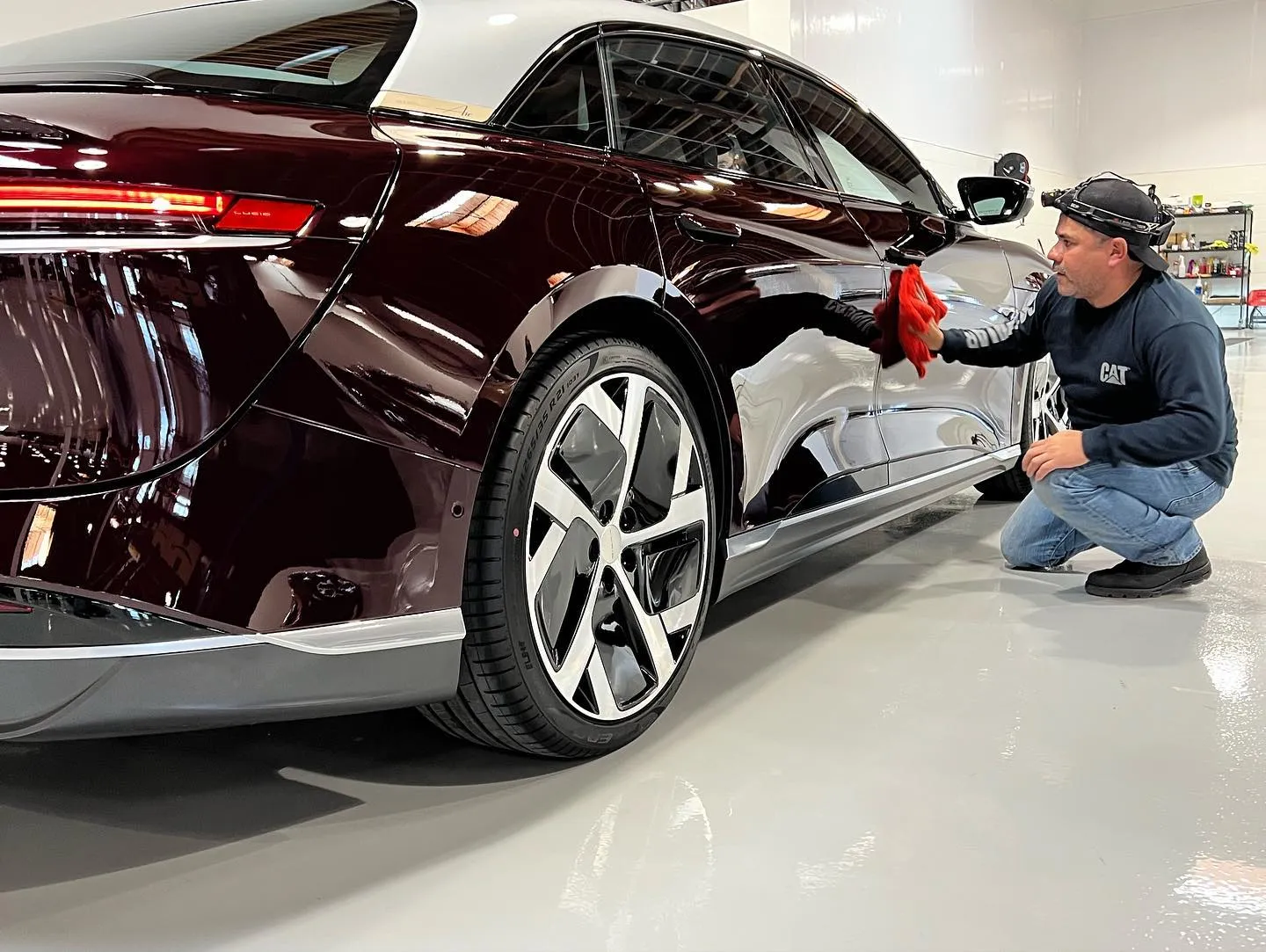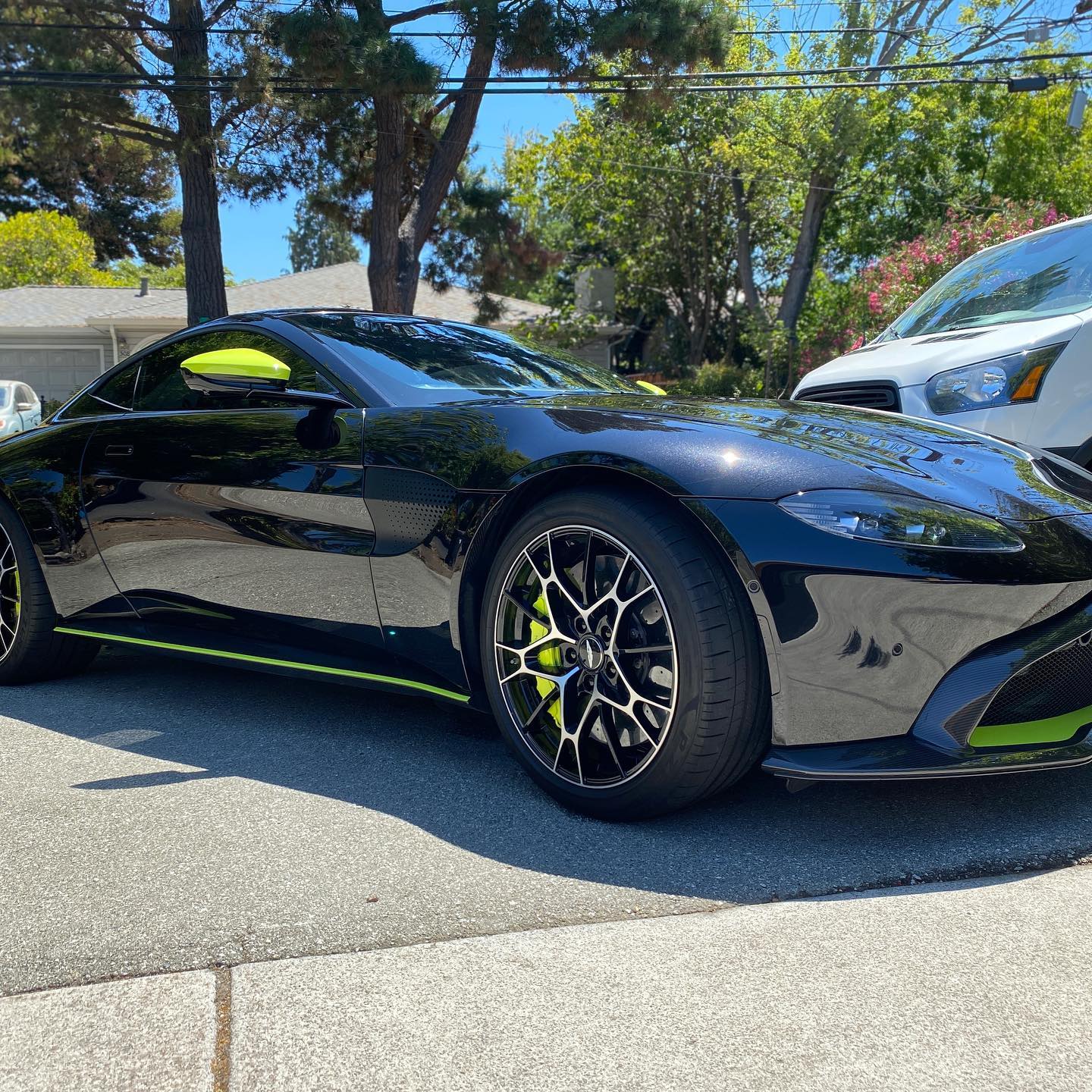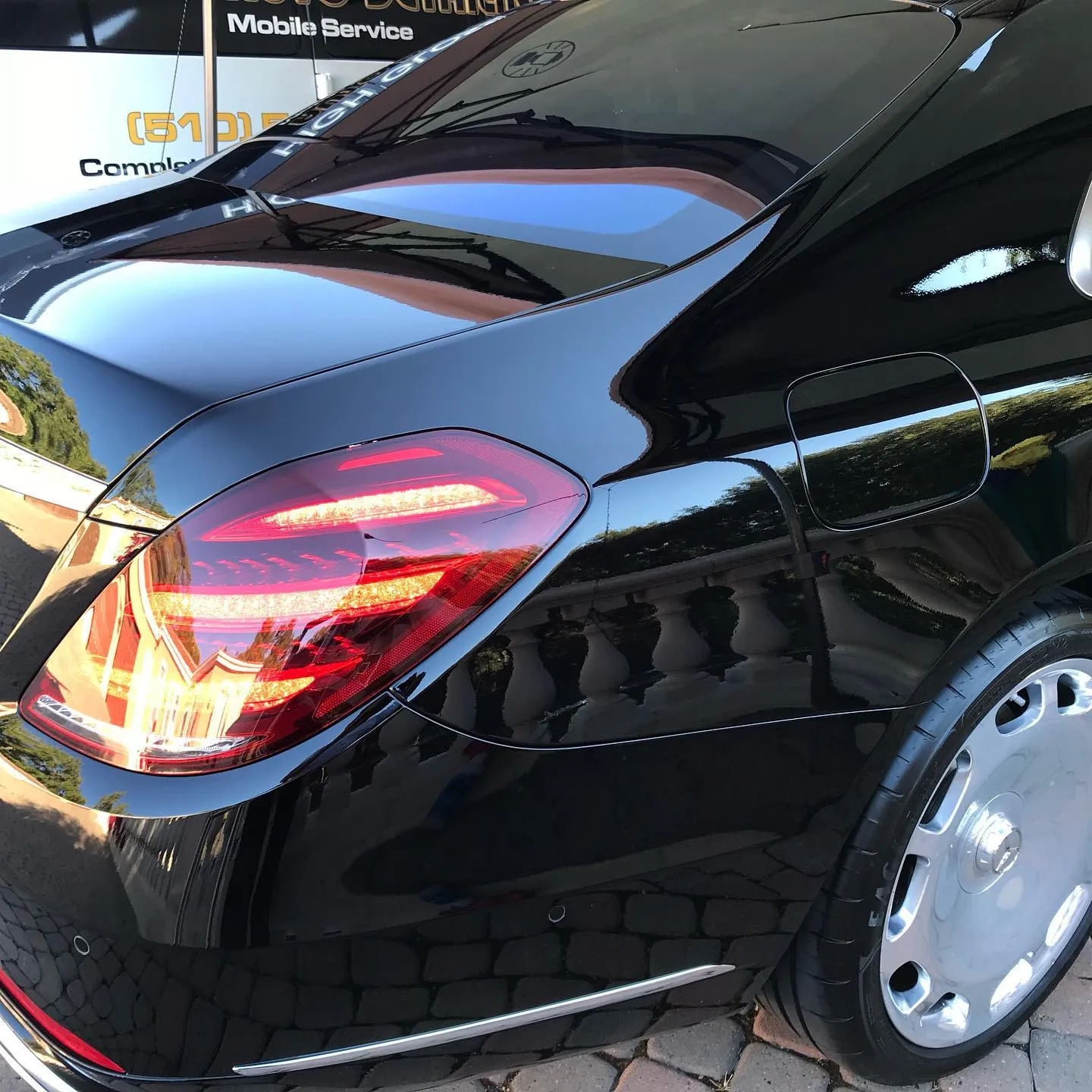
Paint correction in Union City, CA, can make a big difference when your vehicle’s paint is covered in swirl marks, light scratches, or cloudy reflections. You might wash your car regularly, keep the interior spotless, and still notice tiny circular scratches whenever the sun hits your hood. Those marks can make even a newer vehicle look worn, especially if you own a black, dark blue, or dark gray car.
If you’ve started researching professional paint correction, you’ve probably come across two terms: one-step polishing and multi-step polishing.
They sound similar, but the work involved and the results you can expect are different.
A one-step correction focuses on reducing paint defects with one main machine-polishing or compounding stage. Multi-step correction uses additional stages to address more noticeable damage and refine the finish.
The real question isn’t which package has the most steps. It’s how much correction your vehicle actually needs.
At High Gloss Auto Detailing, we provide professional paint correction services for customers from Union City, CA, and surrounding East Bay communities. Our Pleasanton, CA, shop offers Clay and Shine, 1-Step Paint Correction, and 2-Step Paint Correction packages, along with XPEL ceramic coating and paint protection film.
In this guide, we’ll compare one-step and multi-step polishing, explain what each process can accomplish, and help you understand which option makes sense before protecting your paint.
Table of Contents
- What Is Professional Paint Correction?
- What Causes Swirl Marks and Paint Defects?
- What Is One-Step Paint Correction?
- What Is Multi-Step Paint Correction?
- One-Step vs. Multi-Step Polishing Comparison
- Paint Correction Packages Near Union City
- How to Choose the Right Paint Correction Level
- Why Paint Thickness and Condition Matter
- The Professional Paint Correction Process
- Paint Correction Before Ceramic Coating or PPF
- How to Maintain Your Corrected Paint
- Choosing a Paint Correction Shop Near Union City
- Paint Correction Services in Nearby Communities
- Frequently Asked Questions
- Schedule Your Paint Correction Appointment
- Sources and References
What Is Professional Paint Correction?
Paint correction is a professional polishing process that reduces or removes visible imperfections from a vehicle’s painted surfaces.
These imperfections can include swirl marks, light scratches, polishing holograms, mild oxidation, and some types of water spot damage.
Most modern vehicles use a paint system with a transparent clear coat over the color layer.
That clear coat provides the glossy surface you see when looking at your vehicle.
Over time, small scratches can develop in the clear coat. These tiny marks scatter reflected light, leaving the paint looking cloudy or covered in circular scratches.
Professional correction carefully levels or refines the affected surface to reduce those marks.
According to 3M’s paint finishing guidance, automotive compounds and polishes serve different purposes during surface correction. Compounds remove certain scratches and defects, while finishing polishes refine the surface and reduce swirl marks.
Is Paint Correction the Same as Buffing?
You’ll often hear people use the terms buffing, polishing, and paint correction interchangeably.
They aren’t always describing the same level of work.
Buffing is a broad term for working on a surface with a polishing machine or related tool.
Professional paint correction involves evaluating visible defects, selecting the appropriate products, testing the surface, and carefully refining the finish.
A quick machine polish may improve gloss without removing many scratches.
A more involved correction process can address a greater range of defects, provided the paint has enough material to allow it.
What Does Properly Corrected Paint Look Like?
Imagine looking at your hood under bright sunlight.
Before correction, you notice circular scratches around the reflection of the sun.
After suitable polishing, those marks may be reduced considerably, giving the paint a clearer reflection.
Dark colors can show this improvement clearly, but white, silver, and other lighter finishes can benefit too.
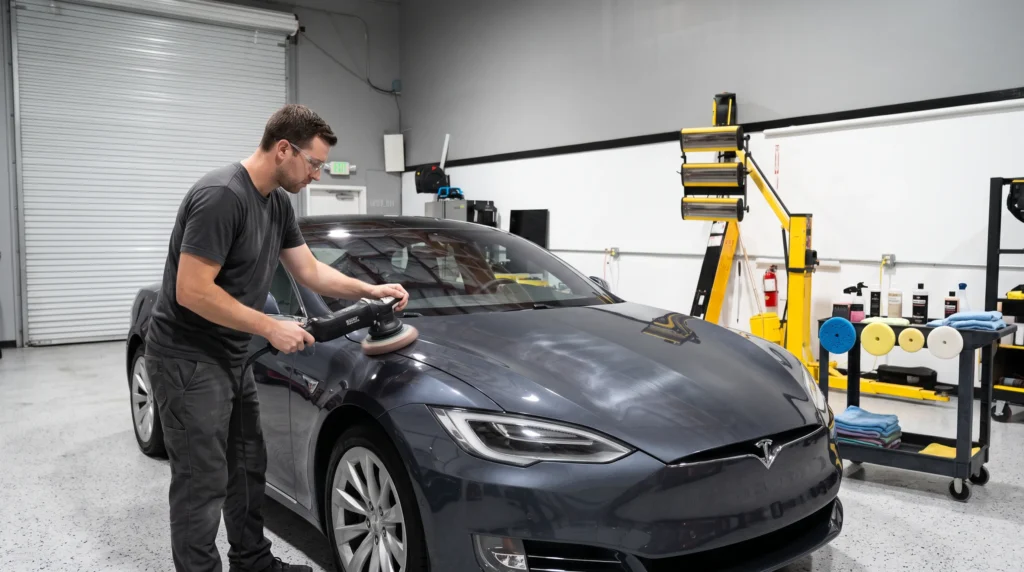
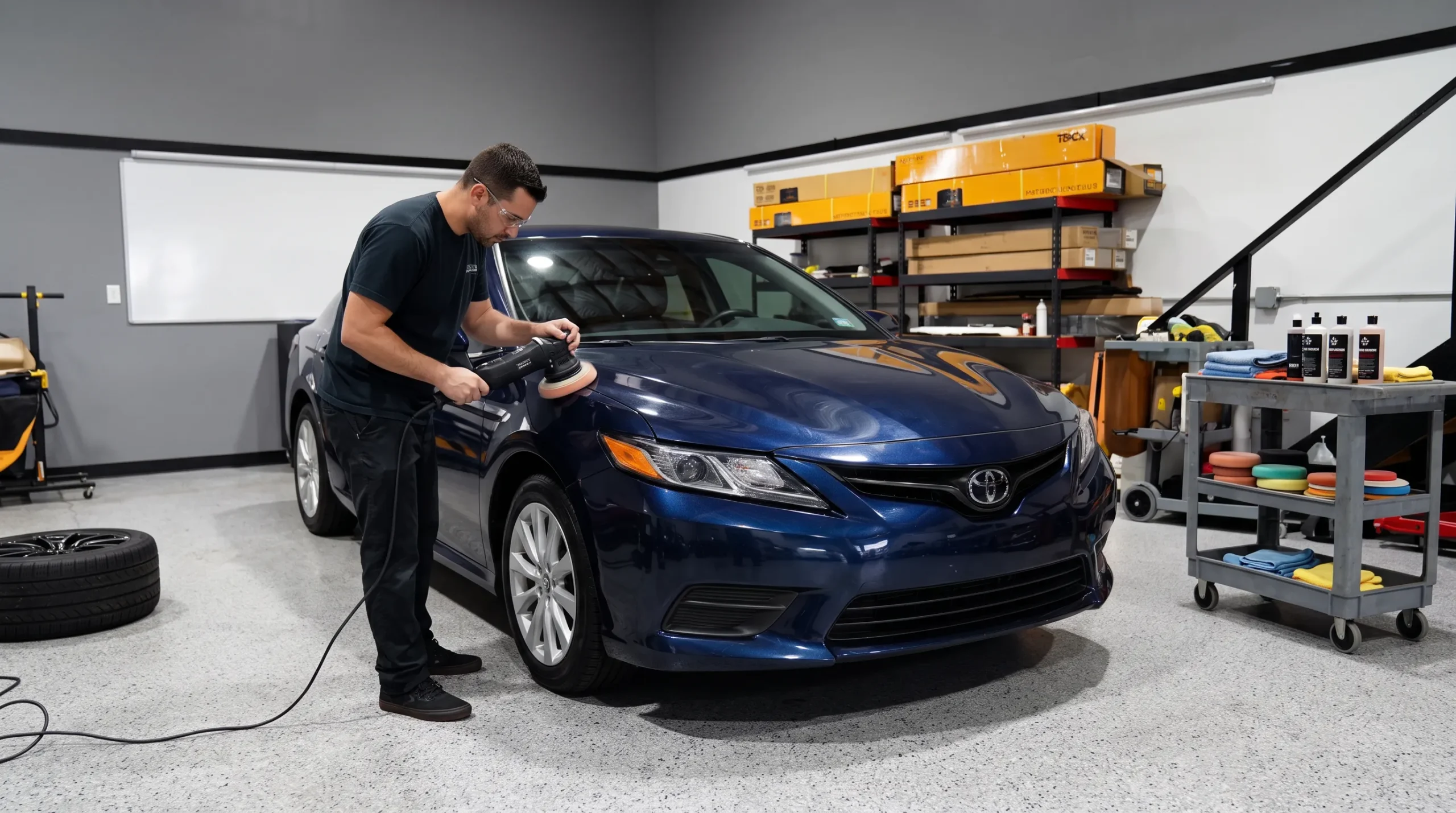
For owners considering paint correction in Union City, CA, the goal is a better-looking finish without removing unnecessary clear coat.
What Causes Swirl Marks and Paint Defects?
Swirl marks can develop even when you regularly clean your vehicle.
In fact, improper washing and drying are common sources of fine scratches.
Understanding how these marks form can help you prevent them from returning after correction.
Automatic Car Wash Brushes
Some automatic car washes use rotating brushes or other materials that physically contact your paint.
If abrasive dirt becomes trapped in those materials, repeated contact can leave fine scratches.
Over time, the marks become easier to see under direct lighting.
Dirty Wash Mitts and Towels
A wash mitt may look clean while still holding particles of road grit.
Rubbing those particles across the clear coat can create small scratches.
The same problem can happen during drying if a towel touches dirty paint.
Wiping Dust From a Dry Vehicle
Maybe you’ve noticed dust on your hood and tried wiping it away with a microfiber towel.
That seems harmless, but dust can contain abrasive particles.
Dragging those particles across dry paint can create fine surface marks.
A proper wash is usually safer than wiping a dusty vehicle without suitable lubrication.
Poor Previous Polishing
Not all polishing work leaves a clean finish.
An unsuitable machine, pad, compound, or technique can leave marks called holograms.
These may appear as curved trails or hazy patterns under sunlight.
Multi-step polishing can sometimes remove holograms left by an earlier correction stage.
Everyday Contact With Painted Surfaces
Bags, clothing, fingernails, and other objects can leave scratches when they contact dirty painted panels.
Parking outdoors, traveling regularly, and washing frequently create more opportunities for these marks to develop.
Paint correction in Union City, CA, addresses defects that are already present, but careful maintenance helps reduce new ones.
What Is One-Step Paint Correction?
One-step paint correction uses one main machine correction stage to improve the appearance of a vehicle’s finish.
Depending on the selected products and paint condition, that stage may involve a polishing compound or a combined cutting-and-finishing product.
The goal is to reduce visible defects while leaving the paint with better clarity and gloss.
A one-step process can work well when the vehicle has light to moderate swirl marks and does not require extensive refinement.
How Does One-Step Polishing Work?
A professional detailer begins by cleaning and inspecting the vehicle.
After washing and paint decontamination, the technician selects a polishing pad and abrasive product suitable for the finish.
A test section helps determine how the paint responds.
The correction stage then reduces certain scratches and haze across the treated panels.
Because only one main correction stage is performed, the chosen product must provide a useful balance between defect removal and finishing quality.
What Can One-Step Paint Correction Remove?
Depending on the condition of the vehicle, one-step correction may help reduce:
- Light to moderate swirl marks
- Fine washing scratches
- Mild surface haze
- Certain shallow clear-coat scratches
- Light polishing marks
- Some visible oxidation
The outcome depends on the paint system, defect depth, and products selected.
Some scratches may remain after the service.
When Is One-Step Correction a Good Choice?
One-step polishing may be appropriate when your vehicle looks reasonably good but has developed visible swirl marks.
It may also suit owners who want to prepare their vehicle for ceramic coating without requesting extensive paint refinement.
A professional inspection matters because two vehicles with similar-looking scratches can respond differently to polishing.
What Are the Limitations?
One-step correction can’t necessarily remove heavier scratches or address every defect.
Some finishes require a more aggressive first stage followed by a finer polishing stage.
Trying to remove every mark with one polishing combination can result in excessive clear-coat removal or an unsatisfactory finish.
If your vehicle has heavy swirls, noticeable holograms, or deeper surface damage, multi-step correction may be more appropriate.
What Is Multi-Step Paint Correction?
Multi-step paint correction involves more than one machine correction stage.
A typical two-step process begins with a compounding stage to reduce defects, followed by a finer polishing stage to refine the appearance of the finish.
This approach allows the technician to address more noticeable imperfections while working toward a cleaner final reflection.
Stage One: Compounding to Reduce Defects
The first stage usually focuses on reducing visible scratches, swirl marks, and other correctable surface defects.
A detailer selects a compound and pad suited to the condition of the paint.
The compound removes a controlled amount of surface material to reduce the depth of certain imperfections.
This stage may leave slight haze or fine polishing marks.
That’s where the next stage comes in.
Stage Two: Refining the Finish
The second stage uses a finer polishing approach.
Its purpose is to reduce remaining haze or polishing marks and improve clarity.
On some darker vehicles, this finishing stage can make a noticeable difference because fine marks become easier to see in sunlight.
3M’s professional paint finishing procedures describe compounding, polishing, and final inspection as separate parts of a more involved surface-finishing process.
Does More Polishing Always Mean Better Results?
No.
A vehicle with relatively clean paint may not need aggressive compounding.
Every abrasive correction stage removes some material from the surface.
Using more aggressive techniques than necessary can reduce the amount of clear coat available for future correction.
The right approach balances appearance with paint preservation.
Can Multi-Step Paint Correction Remove Deep Scratches?
It can reduce certain scratches that are more noticeable than ordinary swirl marks.
But there are limits.
A scratch that extends through the clear coat into the colored paint cannot be fully repaired through ordinary polishing.
Deep scratches may require touch-up paint, refinishing, or another repair.
For paint correction in Union City, CA, a technician should inspect these defects before promising any particular result.
One-Step vs. Multi-Step Paint Correction: What’s the Difference?
Both methods can improve the appearance of painted surfaces.
The biggest differences involve the number of correction stages, the degree of defect removal sought, and the amount of work needed to achieve the desired finish.
One-Step vs. Multi-Step Polishing Comparison
| Feature | One-Step Correction | Multi-Step Correction |
|---|---|---|
| Machine correction stages | One main stage | Two or more stages |
| Best suited for | Light to moderate defects | More noticeable defects |
| Swirl mark removal | Can reduce many light swirls | Can address a broader range of swirls |
| Paint clarity | Improved | Additional refinement possible |
| Heavy holograms | May not fully remove them | Additional polishing may help |
| Work involved | Less than a comparable multi-step correction | More correction and finishing work |
| Paint removal | Depends on products and technique | Depends on products and technique |
| Preparation for protection | Can be appropriate | Can be appropriate |
Is Multi-Step Correction Always More Aggressive?
Not necessarily.
The number of steps doesn’t tell you exactly how much clear coat will be removed.
A single aggressive compounding stage can remove more material than two carefully selected polishing stages.
The abrasives, pads, machine settings, paint condition, and technician’s approach all matter.
Which Method Produces More Gloss?
Either method can produce a glossy finish.
A properly selected one-step process may leave an already healthy finish looking clear and reflective.
Multi-step polishing becomes more useful when additional defect removal and refinement are needed.
The condition of the paint determines how much improvement is possible.
Bottom line: Choose the correction process based on your paint’s condition, not simply the number of steps advertised.
Paint Correction Packages Available Near Union City, CA
High Gloss Auto Detailing advertises three paint correction packages at our Pleasanton, CA, shop.
These options cover different levels of paint preparation and correction.
Our Paint Correction Package Comparison
| Package | Published Process | Advertised Defect Removal Goal |
|---|---|---|
| Clay and Shine | Paint decontamination and single-stage polish | 10% to 20% |
| 1-Step Paint Correction | Paint decontamination and single-stage machine compounding | 60% or more |
| 2-Step Paint Correction | Paint decontamination and two-stage machine compounding and polishing | 90% or more |
All three published packages include paint sealant.
These percentages are advertised goals rather than guaranteed results. Safe correction depends on the vehicle’s paint condition and the defects being treated.
Visit our paint correction package page to see the currently advertised services.
Clay and Shine: For Light Surface Improvement
Clay and Shine focuses on paint decontamination and a single polishing stage.
It is worth considering when your vehicle is relatively well maintained but has developed mild surface haze or contamination.
The published package includes paint sealant after polishing.
This service aims to improve the overall appearance without pursuing the same degree of defect removal as the more involved correction packages.
It’s not necessarily the right choice for a vehicle covered in heavy swirl marks.
1-Step Paint Correction: For Moderate Swirl Marks
Our 1-Step Paint Correction package includes paint decontamination and one stage of machine compounding.
The advertised goal is at least 60% defect removal when the paint’s condition allows.
This package may suit vehicles that have developed moderate swirl marks from washing, drying, or ordinary use.
If you’re considering paint correction in Union City, CA, for a daily commuter, our 1-Step package is worth discussing.
It can provide meaningful defect reduction without automatically moving to a second correction stage.
2-Step Paint Correction: For More Involved Paint Refinement
Our 2-Step Paint Correction package uses machine compounding and polishing in two stages.
The advertised goal is 90% or more defect removal, where safely achievable.
This service may be suitable for vehicles with heavier swirl marks, polishing holograms, and more noticeable correctable surface defects.
It may also appeal to owners who want a more refined appearance before adding ceramic coating or paint protection film.
Keep in mind that even two-step correction cannot safely remove every scratch.
Which Package Should You Book?
The best starting point is a paint inspection.
Tell us how long you’ve owned the vehicle, what bothers you about its finish, and whether you plan to add a protective coating afterward.
We’ll help you compare the available packages and discuss realistic results.
How to Choose Between One-Step and Multi-Step Paint Correction
Choosing the right level of correction comes down to a few practical questions.
How Visible Are the Scratches?
Look at your vehicle under direct sunlight or a suitable inspection light.
Do you see a few faint marks?
Or does the entire hood appear covered in circular scratches?
Light defects may respond to one-step polishing.
More widespread or noticeable damage may require additional correction stages.
What Color Is Your Vehicle?
Black and other dark paint colors often show swirl marks clearly.
This doesn’t automatically mean they need multi-step correction.
It does mean smaller defects may be more noticeable after polishing.
If you own a dark-colored Tesla, BMW, Mercedes-Benz, or another vehicle where appearance matters to you, explain what finish you want before choosing a package.
How Old Is the Vehicle?
Age alone doesn’t determine the correction level.
A carefully maintained older car may have fewer surface defects than a newer vehicle that has been washed with abrasive materials.
The actual condition of the paint matters more than the model year.
Are You Preparing for Ceramic Coating?
If you plan to apply ceramic coating, think about the finish you want underneath it.
Ceramic coating will not polish away existing scratches.
You may be satisfied with one-step correction, or you may want more work performed before applying protection.
Our XPEL ceramic coating services can be discussed alongside paint correction.
Are You Planning to Keep the Car for Years?
If long-term ownership is part of your plan, preserving clear coat deserves attention.
You may prefer a less aggressive process now and careful maintenance afterward.
If your goal is to improve a visibly damaged finish before a protective treatment, multi-step correction may be worth discussing.
For paint correction in Union City, CA, the best service is the one that produces a result you’re happy with while respecting the condition of the paint.
Why Paint Thickness Matters During Multi-Step Polishing
Paint correction is different from simply washing or waxing a vehicle.
Abrasive polishing changes the surface by removing a small amount of material.
That is why the condition of the clear coat matters.
How Much Clear Coat Can Be Removed?
There isn’t one safe amount that applies to every car.
Paint systems vary between manufacturers, models, and individual panels.
Previous polishing or body repairs can also affect the remaining finish.
A technician should consider these factors when deciding how aggressively to work.
Can Paint Correction Damage Clear Coat?
Yes, if performed incorrectly.
Excessive polishing, inappropriate abrasives, concentrated heat, or overly aggressive techniques can damage the finish.
This is one reason professional paint inspection matters.
A detailer should know when to stop rather than trying to remove a scratch at any cost.
What About Repainted Panels?
Repainted sections may behave differently from factory-finished paint.
They can vary in hardness, thickness, and condition.
If your vehicle has had bodywork or paint repairs, tell the technician before polishing begins.
A repaired panel may require different treatment.
Is Paint Correction Safe to Repeat?
It can be performed again when the paint’s condition allows, but frequent aggressive correction is not ideal.
Repeated polishing removes more material over time.
After a correction service, careful washing and regular maintenance can help preserve the finish without continually polishing away clear coat.
What Happens During a Professional Paint Correction Appointment?
The exact process depends on the package, but professional paint correction generally includes several stages.
Step 1: Exterior Cleaning
The technician begins by washing the vehicle to remove loose dirt and road grime.
This helps prevent abrasive particles from contacting the paint during later work.
Step 2: Paint Decontamination
Some particles remain attached to the finish after washing.
Paint decontamination removes suitable types of bonded material using products and methods chosen for the surface.
The goal is to prepare a cleaner finish for polishing.
Step 3: Paint Inspection
The technician checks the paint under suitable lighting.
Swirl marks, scratches, haze, and polishing holograms become easier to identify.
The inspection helps determine which correction method is appropriate.
Step 4: Test Polishing
A small test section may be polished before treating the rest of the vehicle.
This helps establish how the paint responds to the selected abrasive product and pad.
Step 5: Machine Correction
The technician performs the polishing or compounding stages included in the selected package.
For one-step correction, this involves one main machine correction stage.
For two-step correction, a second stage refines the surface after the initial defect-removal work.
Step 6: Final Inspection
The finish is checked again for remaining marks and polishing haze.
3M’s paint finishing instructions discuss inspecting the surface between compounding and polishing stages to identify remaining defects.
This final inspection helps assess the completed correction.
Step 7: Surface Protection
High Gloss Auto Detailing’s standard published correction packages include paint sealant.
If you’re planning ceramic coating or PPF, tell our team before booking.
A coating or film installation requires suitable surface preparation, so the finishing steps should be coordinated with the protective product rather than automatically applying a sealant that may need to be removed later.
Paint Correction Before Ceramic Coating or PPF: What Should You Know?
Paint correction can be part of preparing your vehicle for long-term exterior protection.
But it isn’t the same as a protective coating.
Correction improves the appearance of the existing paint.
Ceramic coating and PPF help protect that finish afterward in different ways.
Why Correct Paint Before Ceramic Coating?
Ceramic coating creates a treated surface over the existing finish.
If your paint has visible swirl marks before coating, those marks can remain visible afterward.
In its Paint Correction 101 guide, XPEL explains how polishing and surface preparation can improve the paint before ceramic coating application.
At High Gloss Auto Detailing, we work with XPEL FUSION ceramic coatings.
Our team can discuss whether one-step or multi-step correction is appropriate before your coating appointment.
Does Paint Protection Film Require Correction?
Not always.
A new or well-maintained vehicle may need only suitable cleaning and preparation.
A car with visible swirl marks or scratches may benefit from polishing before film installation.
PPF can conceal some very minor surface marks, but it doesn’t repair damaged paint.
If you’re interested in XPEL paint protection film, ask which panels should be inspected or corrected before installation.
Should You Choose Ceramic Coating or PPF?
That depends on what you’re trying to protect against.
Ceramic coating helps with water repellency, cleaning, and surface appearance.
PPF adds a physical protective film that helps resist certain rock chips and abrasions.
Some owners choose both services.
For paint correction in Union City, CA, tell the shop which protective products you’re considering before the correction work begins.
How to Keep Swirl Marks From Returning After Paint Correction
A corrected finish can look much better, but it can still develop new scratches.
Keeping your vehicle looking good comes down to careful maintenance.
Wash With Clean Materials
Use a suitable automotive shampoo and clean washing equipment.
Rinse away loose dirt before touching painted surfaces.
Avoid dragging grit across the finish.
Dry With Soft Microfiber Towels
Use clean, soft drying towels or a suitable air blower.
Apply gentle pressure rather than rubbing aggressively.
Never use a towel that has fallen onto dirty pavement.
Avoid Wiping Dust Off Dry Paint
A dusty vehicle may look easy to clean with a quick wipe.
But rubbing dry dirt across the finish can create more fine scratches.
Use a suitable cleaning method instead.
Remove Contaminants Promptly
Bird droppings, insect residue, and tree sap should not remain on the finish longer than necessary.
Use products appropriate for your paint and any installed protective coatings.
Follow Ceramic Coating Care Instructions
If your vehicle receives XPEL FUSION ceramic coating after correction, follow the manufacturer’s recommendations.
XPEL’s product care instructions discuss regular washing, gentle drying, and avoiding aggressive polishing on coated surfaces.
Ask your installer for the care instructions that apply to your product.
Consider Periodic Exterior Detailing
Professional auto detailing can help remove dirt and contamination before buildup becomes more difficult to manage.
For Union City, CA, commuters traveling through the East Bay, routine cleaning can help preserve the appearance of freshly corrected paint.
How to Choose a Paint Correction Shop Near Union City, CA
Before booking paint correction in Union City, CA, ask a few questions about the shop’s process.
Does the Shop Inspect Your Paint First?
A vehicle with light swirl marks shouldn’t automatically receive the same recommendation as one with heavy scratching.
Look for a shop that discusses paint condition and expected results.
Can They Explain One-Step vs. Multi-Step Polishing?
The installer should be able to explain why a particular correction level suits your vehicle.
Ask what can realistically be removed and which defects may remain.
Do They Provide Clear Package Descriptions?
Compare the correction stages and included services.
Don’t assume every shop uses the same definition of one-step or two-step polishing.
Can They Show Examples of Completed Work?
Before-and-after photographs may help you assess the appearance of a corrected finish.
Look for comparable lighting and vehicles with similar paint colors.
Do They Understand Paint Protection Products?
If you want ceramic coating or PPF afterward, choosing a shop that also installs protective products can help you coordinate the work.
High Gloss Auto Detailing is an XPEL-certified business and XPEL vendor.
Along with paint correction, our team provides XPEL ceramic coating, paint protection film, window tinting, and vehicle detailing.
Learn more about our business on our About Us page.
Paint Correction Services for Union City, CA, and Nearby Communities
High Gloss Auto Detailing welcomes vehicle owners seeking paint correction in Union City, CA, at our shop in Pleasanton, CA.
Our services are also available to customers traveling from surrounding East Bay communities.
Fremont, CA
If your vehicle has developed visible swirl marks from regular washing or everyday use, our team can help you compare correction options.
Newark, CA
We welcome Newark, CA, customers looking to reduce light scratches, restore paint gloss, or prepare their vehicle for ceramic coating.
Hayward, CA
Vehicle owners from Hayward, CA, can contact us about one-step and two-step correction packages for a range of passenger vehicles.
Dublin, CA
We serve Dublin, CA, customers who want professional paint polishing, exterior detailing, and XPEL protection services.
Pleasanton, CA
Our shop is located in Pleasanton, CA, where we perform paint correction and other automotive appearance services.
San Leandro, CA
Customers from San Leandro, CA, can also contact us about vehicle paint correction and exterior protection options.
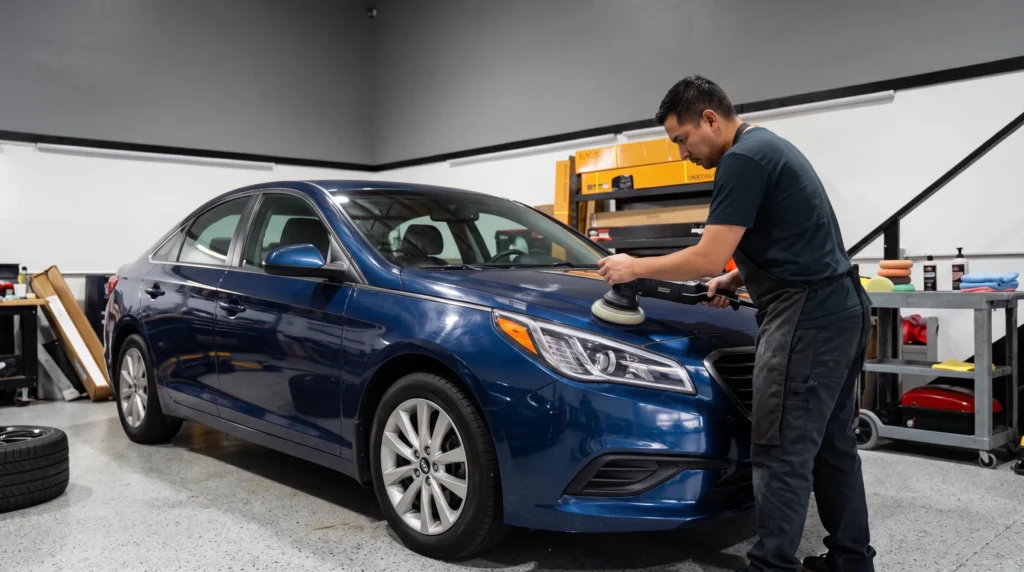
Whether you own a Tesla, luxury sedan, family SUV, sports car, or truck, we’re happy to discuss the condition of your finish and the level of correction that makes sense.
Frequently Asked Questions About Paint Correction in Union City, CA
1. Is One-Step Paint Correction Enough to Remove Swirl Marks?
One-step correction can remove or reduce many light and moderate swirl marks.
The result depends on the paint’s condition, defect depth, and polishing method.
At High Gloss Auto Detailing, our 1-Step Paint Correction package has an advertised goal of 60% or more defect removal when safely achievable.
If your vehicle has heavier scratches or polishing holograms, a multi-step service may produce a more refined finish.
A paint inspection can help determine which option suits your vehicle.
2. What Is the Difference Between One-Step and Two-Step Paint Correction?
One-step correction uses one main machine correction stage to reduce defects and improve gloss.
Two-step correction generally includes a compounding stage followed by finer polishing.
This gives the technician another opportunity to refine the finish after reducing visible defects.
Two-step correction may be appropriate for paint with more noticeable swirl marks, haze, or holograms.
More steps don’t automatically guarantee better results. The condition of the paint and the products selected matter.
3. Can Paint Correction Remove Deep Scratches?
Paint correction can reduce many scratches that remain within the clear coat.
Deep scratches that reach the colored paint or underlying layers cannot be fully removed through ordinary polishing.
Trying to remove them aggressively can damage the surrounding finish.
Some defects may require touch-up paint or professional refinishing.
Before scheduling paint correction in Union City, CA, ask the technician to inspect any scratches you’re concerned about.
4. Does a New Car Need One-Step or Multi-Step Polishing?
Not every new vehicle needs paint correction.
A new car may have a clean finish requiring only suitable preparation, or it may have swirl marks caused by transportation, storage, or previous washing.
The right correction level depends on the actual condition of the paint.
If you’re planning ceramic coating or PPF on a new vehicle, an inspection can help determine whether polishing is needed.
5. Should I Get Paint Correction Before Ceramic Coating?
If your paint has visible swirl marks, scratches, or haze, correction is worth considering before applying ceramic coating.
Ceramic coating doesn’t remove existing defects.
Polishing first can improve the appearance of the finish before the protective coating goes on.
High Gloss Auto Detailing offers paint correction and XPEL ceramic coating services.
Contact us to discuss whether the services should be scheduled together.
6. How Much Does Paint Correction Cost in Union City, CA?
A paint correction quote depends on your vehicle’s size, paint condition, existing damage, and the correction level needed.
A vehicle with mild swirl marks may require less work than one with heavy defects across several body panels.
The difference between one-step and two-step correction also affects the amount of labor involved.
For a personalized quote, call High Gloss Auto Detailing at (510) 542-3295 or submit your details through our contact form.
7. Where Can I Get Professional Paint Correction Near Union City, CA?
High Gloss Auto Detailing serves Union City, CA, and surrounding East Bay communities from our Pleasanton, CA, location.
High Gloss Auto Detailing
7034 Commerce Cir Suite E
Pleasanton, CA 94588
Phone: (510) 542-3295
Business Hours:
- Monday through Friday: 9:30 AM to 6:30 PM
- Saturday: 10:00 AM to 6:30 PM
We offer Clay and Shine, 1-Step Paint Correction, and 2-Step Paint Correction packages.
Visit our paint correction service page to compare available options.
Schedule Paint Correction Near Union City, CA
Choosing between one-step and multi-step paint correction doesn’t have to be confusing.
If your vehicle has light to moderate swirl marks, one-step correction may provide the appearance improvement you’re looking for.
If your finish has heavier scratches, polishing haze, or widespread defects, multi-step correction may be worth discussing.
And if you’re planning ceramic coating or paint protection film, correcting visible defects first can help you get the finish you want before adding protection.
At High Gloss Auto Detailing, we provide professional paint correction in Union City, CA, through our Pleasanton, CA, shop.
Our team can inspect your vehicle, explain our available correction packages, and help you choose an appropriate level of polishing.
Whether you want to refresh your daily commuter, improve the appearance of a newly purchased car, or prepare your vehicle for XPEL ceramic coating, we’re ready to help.
Ready to get those swirl marks out of your paint?
Call (510) 542-3295 to discuss your vehicle and request a personalized paint correction quote.
You can also contact High Gloss Auto Detailing online to request an appointment.
Visit our shop:
High Gloss Auto Detailing
7034 Commerce Cir Suite E
Pleasanton, CA 94588
Let’s get your paint looking clear, glossy, and ready for protection.
Sources and References
The following sources support the paint correction package descriptions, polishing methods, surface inspection recommendations, ceramic coating preparation, and maintenance information discussed in this guide.
| Source Title | Publisher | Publication Date | URL |
|---|---|---|---|
| Paint Correction in Dublin, CA & Pleasanton, CA | High Gloss Auto Detailing | Not listed | Paint Correction Services and Packages |
| Paint Correction 101: Understanding the Process of Ceramic Coating | XPEL | August 13, 2023 | XPEL Paint Correction Guide |
| Compounds, Polishes and Glazes | 3M | Not listed | 3M Paint Finishing Products |
| Paint Finishing and Detailing How To’s | 3M | Not listed | 3M Professional Paint Finishing Guidance |
| Standard Operating Procedure for 3M Perfect-It Random Orbital Polishing System | 3M | Not listed | 3M Polishing Procedures |
| XPEL Product Care Instructions | XPEL | Not listed | XPEL Product Care |
Paint correction results depend on paint condition, defect depth, existing clear-coat thickness, and the treatment performed. High Gloss Auto Detailing’s published defect-removal percentages are package goals rather than guaranteed outcomes. Confirm the selected package, preparation steps, and finishing products before scheduling.
Paint Correction in Union City, CA: One-Step vs Multi-Step Polishing - High Gloss Auto Detailing XPEL Certified Installer

Paint Correction in Union City, CA: One-Step vs Multi-Step Polishing Premier Certified XPEL Installer. Paint correction in Union City, CA, can make a big
Product Brand: High Gloss Auto Detailing
5
Pros
- Discover the best ceramic coating services in Pleasanton, CA, with High Gloss Auto Detailing. Protect your car’s paint with Ceramic Pro, the industry leader in automotive protection. Call us today or schedule an appointment online!