PPF cost per square foot in the Bay Area sounds like an easy way to compare paint protection film shops. Measure the panels, multiply the area by a square-foot rate, and choose the installer with the lowest total.
Paint protection film usually does not work that way at the retail level.
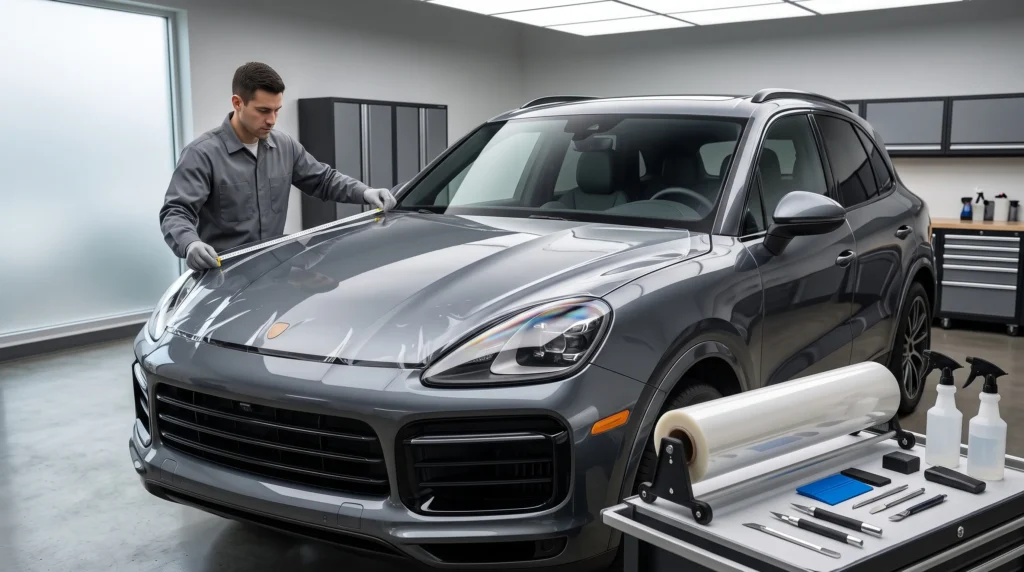
The amount of film matters, but a professional PPF quote also accounts for the shape of the vehicle, the panels being covered, paint preparation, pattern design, installation difficulty, edge work, film choice, and the time needed to finish the vehicle cleanly.
High Gloss Auto Detailing installs XPEL Paint Protection Film from our Pleasanton, CA shop and serves drivers throughout the Bay Area. We are XPEL certified and an XPEL vendor.
Rather than publishing a generic square-foot price that may have little connection to what your vehicle will cost, this guide explains how PPF shops build quotes and why two cars using a similar amount of film may still receive different estimates.
Table of Contents
- Is PPF Really Priced Per Square Foot?
- Why Square-Foot Pricing Can Be Misleading
- Film Material Is Only Part of the Quote
- How Coverage Changes PPF Cost
- Partial Front PPF
- Full Front PPF
- Full Body PPF
- Why Vehicle Shape Affects Labor
- Why Film Waste Matters
- Precut Patterns vs Custom Edge Work
- How Paint Preparation Changes the Quote
- Does Paint Correction Add to the Job?
- Does XPEL Film Type Affect the Quote?
- Why Installer Skill Matters
- How to Compare Bay Area PPF Quotes
- When Square-Foot Pricing Is Useful
- A Better Way to Request a PPF Quote
- PPF Services in Pleasanton, CA and the Bay Area
- Frequently Asked Questions
- Sources
Is PPF Really Priced Per Square Foot?
A PPF cost per square foot figure can describe the raw amount of film used, but it does not reliably describe the price of a finished automotive installation.
Professional installers usually quote by vehicle and coverage package.
Common coverage choices include:
- Front bumper
- Partial front
- Full front
- Hood
- Front fenders
- Mirror caps
- Rocker panels
- Door edges
- Door cups
- Rear loading areas
- Full body
High Gloss Auto Detailing explains on its PPF service-area pages that film cost changes with vehicle size, areas covered, film type, and installer labor.
Those factors matter because PPF is not laid onto flat rectangular sheets of metal.
Automotive body panels have curves, edges, vents, sensors, trim, emblems, and tight transitions.
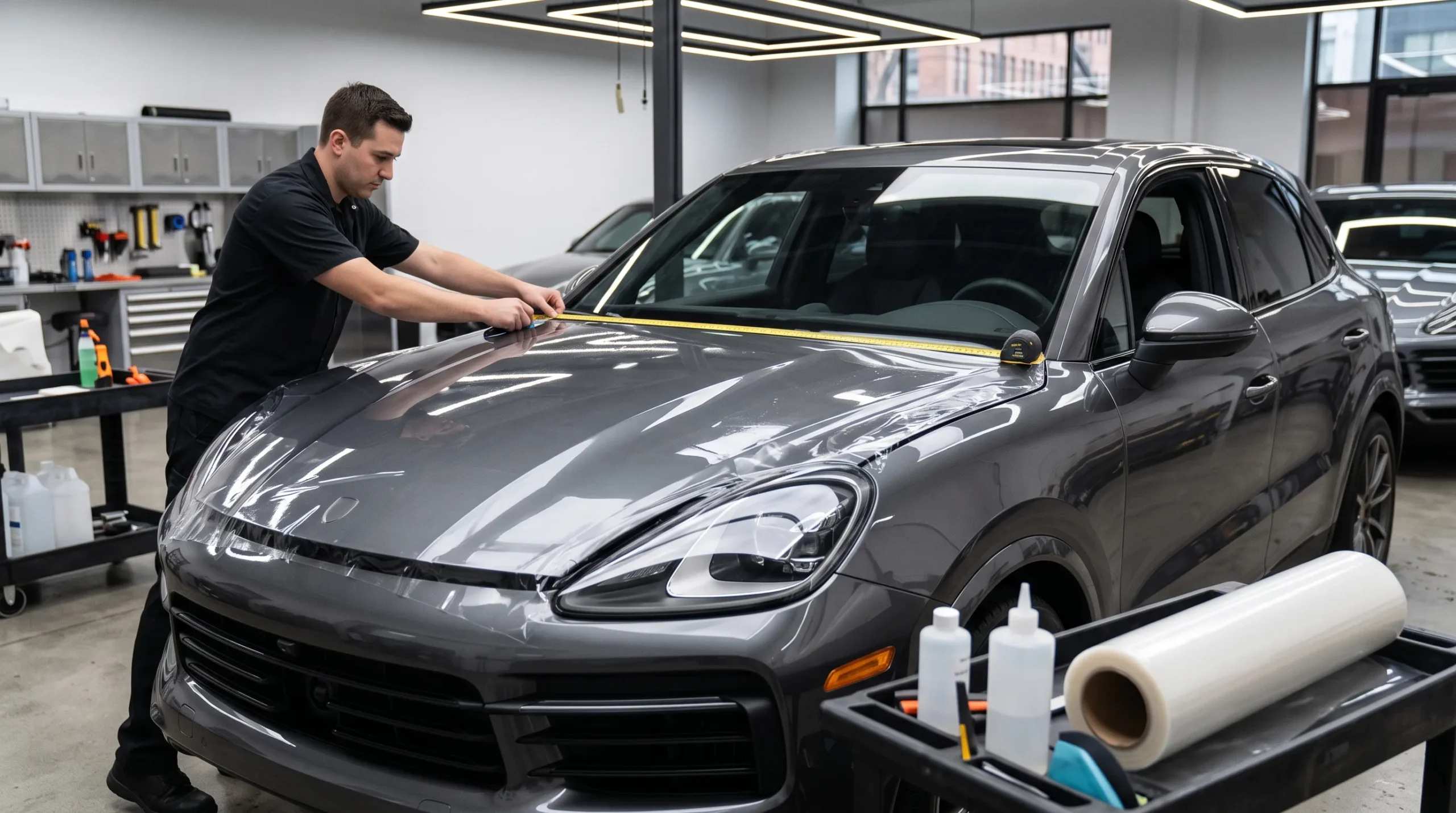
A square foot of film on a flat hood can involve very different work from a square foot wrapped around a complicated bumper.
Why PPF Cost Per Square Foot Can Be Misleading
Imagine two vehicles that require a similar total amount of PPF.
Vehicle A has a wide, fairly open hood with simple body lines.
Vehicle B has a bumper with several air openings, sharp corners, sensors, trim inserts, and tight curves.
The material area may not be dramatically different.
The installation time can be.
That is why comparing PPF cost per square foot in the Bay Area without asking what the installation includes can create the wrong impression.
Retail PPF pricing can reflect:
- Film used
- Film discarded during trimming or pattern setup
- Panel preparation
- Pattern preparation
- Installation labor
- Edge finishing
- Disassembly when appropriate
- Reassembly
- Final inspection
- Warranty administration
- Shop operating costs
A low square-foot number does not tell you whether those steps are part of the quote.
Film Material Is Only Part of the PPF Quote
XPEL ULTIMATE PLUS is a multi-layer automotive film.
XPEL’s technical sheet describes a clear coat, polyurethane layer, acrylic adhesive, and release liner. The installed film is designed to protect automotive surfaces from stone chips and abrasion.
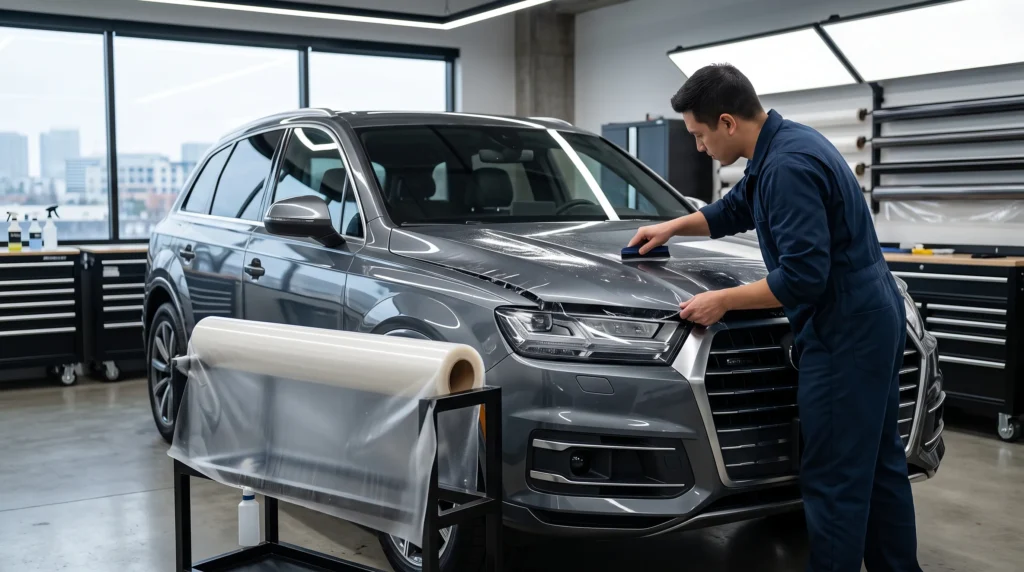
Buying the material is only the beginning of an installation.
The installer still has to get that material onto the car cleanly.
That can involve:
- Washing the vehicle
- Removing surface contamination
- Inspecting the paint
- Preparing panel edges
- Loading or preparing vehicle patterns
- Positioning film
- Working the film around curves
- Finishing edges
- Checking for trapped contamination
- Inspecting the completed panel
This is why a consumer quote cannot be understood simply by finding the wholesale or raw-film price and multiplying it by vehicle area.
You are paying for installed PPF, not a loose roll of polyurethane.
How Coverage Changes PPF Cost
Coverage has a large effect on a PPF quote.
Protecting a bumper is a smaller job than protecting the entire front end.
Protecting the complete vehicle requires far more material and labor.
When comparing shops, ask for the exact panel list.
A term such as “front package” can mean different things at different shops.
One installer may include the full hood and fenders.
Another may cover only sections of those panels.
Understanding the coverage makes the quote much easier to compare.
Partial Front PPF
Partial-front coverage is meant to protect selected front-facing sections while using less film than a full-front package.
It may include:
- Front bumper
- Front portion of the hood
- Front portion of the fenders
- Mirror caps
Package definitions can differ.
One thing to consider is the film line.
If the hood is covered only partway, the film will normally end somewhere across that panel.
Some drivers do not mind seeing that edge.
Others prefer full-panel coverage for a cleaner appearance.
If you are asking about PPF cost per square foot, this is a good example of why area alone does not answer the question.
Partial coverage uses less film, yet it still requires careful placement and finishing.
Full Front PPF
Full-front PPF covers more of the areas facing traffic.
A typical package can include:
- Full front bumper
- Full hood
- Full front fenders
- Mirror caps
Ask the installer to confirm the panel list.
Full-front coverage avoids a film line across the middle of the hood or fenders.
It also puts protection over more of the painted surface exposed to rocks, grit, bugs, and road debris.
For Bay Area drivers who spend a lot of time on I-580, I-680, I-880, I-80, Highway 24, or other busy roads, full-front protection is often one of the first coverage levels worth discussing.
Full Body PPF
Full-body PPF extends film across nearly all painted exterior panels.
Depending on the vehicle and requested work, that can include:
- Front bumper
- Hood
- Front fenders
- Doors
- Rear quarter panels
- Rocker panels
- Mirrors
- Rear bumper
- Trunk or hatch
- Roof
This type of installation uses much more film than front-end coverage.
It also involves many more panel edges, body curves, door openings, and finishing points.
The amount of installation work grows along with the coverage.
That is why full-body PPF should be quoted using the exact vehicle rather than a universal PPF cost per square foot figure.
Why Vehicle Shape Affects PPF Labor
Automotive paint protection film has to follow the shape of the body.
A vehicle with simple panels may be easier to film than one with:
- Deep bumper vents
- Sharp body creases
- Large spoilers
- Splitters
- Wide fenders
- Complex mirrors
- Sensors
- Cameras
- Trim inserts
- Sculpted doors
Stretching and positioning film around these areas takes time.
The installer also needs to control tension so the film remains properly seated.
Two cars with similar overall dimensions may have very different installation requirements.
This is one reason vehicle make, model, year, and trim should be included whenever you request a PPF quote.
Why Film Waste Matters When Calculating PPF Cost Per Square Foot
A vehicle panel does not necessarily use every square inch of the rectangular film section cut for it.
There can be unused film around a pattern.
Curved pieces may require a larger starting section than the final protected surface area suggests.
Some parts may also need to be recut during an installation if contamination or another issue makes a piece unsuitable.
That means measuring the visible square footage of your hood, bumper, and fenders will not tell you exactly how much material the shop must use.
Raw panel area and installed film usage are different measurements.
For consumers, coverage packages tend to provide a more useful comparison.
Precut Patterns vs Custom Edge Work
Professional PPF installers can use computer-designed patterns made for the vehicle.
XPEL has its own pattern software and vehicle pattern library for installers.
Patterns help the film fit specific panels without requiring extensive cutting directly on the vehicle.
There can still be choices around how the edges are finished.
Depending on the vehicle and panel, an installer may be able to extend or wrap certain edges.
Other areas may need an exposed edge because of the body design or available access.
Ask:
- Which edges will be wrapped?
- Which edges will remain visible?
- Are emblems removed or worked around?
- Are trim pieces moved when needed?
- Will the installer use a vehicle-specific pattern?
These details can affect labor even when the film area stays similar.
How Paint Preparation Changes the PPF Quote
PPF is transparent.
The condition underneath it still matters.
A vehicle with clean, smooth paint may require less preparation than one with bonded contamination and visible defects.
Preparation can involve:
- Hand washing
- Paint decontamination
- Clay treatment
- Edge cleaning
- Spot cleaning
- Machine polishing
- Paint inspection
If the vehicle has tar, iron contamination, tree sap, water spots, or other material stuck to the paint, that should be addressed before film installation.
The film should be installed on properly prepared panels.
This preparation is another reason a simple PPF cost per square foot in the Bay Area number can leave out a large part of the job.
Does Paint Correction Add to PPF Installation?
It can.
PPF does not remove swirl marks or scratches already present in the paint.
If those defects bother you, paint correction may be discussed before PPF installation.
Correction can address defects such as:
- Swirl marks
- Light scratches
- Haze
- Oxidation
- Past machine-polishing marks
Not every vehicle needs correction.
A new car may need only surface preparation.
An older dark-colored vehicle may show defects that the owner wants fixed before film goes on.
Ask whether paint correction is part of the PPF quote or a separate service.
Does XPEL Film Type Affect PPF Cost?
Yes, film choice can change the job.
High Gloss Auto Detailing installs XPEL Paint Protection Film.
XPEL currently offers several automotive film types, including:
- ULTIMATE PLUS
- ULTIMATE PLUS 10
- ULTIMATE FUSION
- STEALTH
- COLOR PPF
These films are made for different appearances and uses.
ULTIMATE PLUS is a clear gloss film designed to protect paint from chips and abrasion.
STEALTH provides a satin appearance.
Other XPEL products can provide different thicknesses, finishes, or visual effects.
When requesting a quote, name the film you want or ask which one fits your vehicle.
A quote for one film should not automatically be compared with another film as though the materials are identical.
Why PPF Installer Skill Matters
A square-foot price says nothing about how the finished installation will look.
Look closely at the installer’s work.
Pay attention to:
- Film alignment
- Edge placement
- Dirt under the film
- Stretch marks
- Finger marks
- Lifted corners
- Seams
- Bumper details
- Wrapped edges
- Finish around sensors and trim
PPF is supposed to protect the vehicle without drawing unnecessary attention to itself.
High Gloss Auto Detailing is XPEL certified and an XPEL vendor.
If you are comparing PPF installers, ask to see finished vehicles and look closely at areas with complicated shapes, not just the middle of a flat hood.
How to Compare Bay Area PPF Quotes
Do not compare two quotes until you know they cover the same work.
Use questions like these:
- Which PPF brand and film are included?
- Which panels are covered?
- Is the hood partial or full?
- Are the fenders partial or full?
- Are mirrors included?
- Are rocker panels included?
- Are door cups or door edges included?
- What paint preparation is included?
- Is paint correction separate?
- Which edges can be wrapped?
- Is old film removal included if needed?
- What warranty applies?
- Who registers the warranty?
- What happens if one film section becomes damaged?
- What aftercare does the film require?
Once those details match, the quotes become much easier to evaluate.
A lower number may simply represent less coverage or less preparation.
When PPF Cost Per Square Foot Is Useful
Square-foot pricing can still be useful in some settings.
Film manufacturers, distributors, and installation businesses may track material costs by roll size or area.
Shops also need to understand how much material an installation consumes.
For the vehicle owner, though, that information does not translate neatly into a finished retail rate.
A raw material figure does not include all of the work required to turn film into a finished bumper, hood, fender, or full-body installation.
This is why you may see discussions online about film cost per square foot that are aimed at shop owners rather than consumers.
Do not treat a wholesale material figure as the amount you should expect to pay for installed PPF.
They measure two different things.
A Better Way to Request a PPF Quote
Instead of asking, “What is your PPF cost per square foot?” give the installer information about the actual vehicle.
Send:
- Year
- Make
- Model
- Trim
- Paint color
- Current paint condition
- Coverage you want
- Film preference
- Photos when requested
Then ask for a quote for a defined package.
You could request:
- Front bumper only
- Partial front
- Full front
- Rocker-panel coverage
- High-wear areas
- Full body
This gives you a quote tied to the vehicle rather than an area estimate that may not account for the work.
Bottom line, PPF cost per square foot in the Bay Area is better viewed as a material concept than a dependable consumer-shopping metric.
For a retail installation, panel coverage and vehicle-specific labor tell you much more.
PPF Services in Pleasanton, CA and the Bay Area
High Gloss Auto Detailing installs XPEL Paint Protection Film from our shop at:
High Gloss Auto Detailing
7034 Commerce Cir Suite E
Pleasanton, CA 94588
We serve Pleasanton, CA, Dublin, CA, and drivers throughout nearby Bay Area communities.
Our other services include:
If you are trying to estimate PPF cost per square foot, the better next move is to tell us what vehicle you have and which areas you want protected.
We can then discuss a vehicle-specific quote based on real coverage rather than a generic area calculation.
Call (510) 542-3295 or visit the High Gloss Auto Detailing contact page to request a quote and schedule an appointment.
Frequently Asked Questions About PPF Cost Per Square Foot
1. How much does PPF cost per square foot in the Bay Area?
There is no single consumer square-foot price that accurately represents every PPF installation. Shops have to account for coverage, vehicle shape, film choice, paint preparation, pattern use, edge work, material usage, and installation labor. Contact High Gloss Auto Detailing for a quote based on your vehicle rather than relying on a generic square-foot figure.
2. Why do PPF shops quote by vehicle instead of square foot?
Automotive panels are not flat rectangles. Bumpers, mirrors, fenders, vents, sensors, and curved panels require different amounts of installation work. Quoting by vehicle and coverage better reflects the actual job.
3. Does a larger vehicle always cost more to PPF?
A larger vehicle often requires more material, but size is not the only factor. Panel shape, coverage, paint condition, film choice, and installation work also affect the quote.
4. Is full-front PPF cheaper than full-body PPF?
Full-front protection covers fewer panels and uses less film than a full-body installation. Contact the shop for current pricing because the exact difference depends on your vehicle and chosen film.
5. Does paint correction cost extra before PPF?
It can if the paint needs correction beyond normal PPF preparation. Vehicles with swirl marks, scratches, haze, or oxidation may benefit from paint correction before film installation. Ask for an inspection and quote.
6. Does the type of XPEL PPF change the price?
It can. XPEL offers several film products with different thicknesses, finishes, and surface properties. Ask which XPEL film is included when comparing PPF quotes.
7. How do I get an accurate PPF quote in the Bay Area?
Provide the year, make, model, trim, current paint condition, and panels you want protected. High Gloss Auto Detailing can then discuss a quote for your actual vehicle. Call (510) 542-3295 or use the contact page.
Sources
High Gloss Auto Detailing
Publisher: High Gloss Auto Detailing
Publication Date: Not listed
URL: https://highglossautodetailing.com/
Paint Protection Film Cost Factors
Publisher: High Gloss Auto Detailing
Publication Date: Not listed
URL: https://highglossautodetailing.com/service/paint-protection-film-in-walnut-creek-ca/
XPEL Product Specifications
Publisher: XPEL
Publication Date: Current page accessed September 2026
URL: https://www.xpel.com/product-specifications
XPEL ULTIMATE PLUS Paint Protection Film Technical Data Sheet
Publisher: XPEL
Publication Date: Revised April 28, 2023
URL: https://www.xpel.com/web-assets/downloads/XPEL-ULTIMATE-PLUS-TDS-82019-V1-1.pdf
How Much Does PPF Cost Per Square Foot in the Bay Area? - High Gloss Auto Detailing XPEL Certified Installer
How Much Does PPF Cost Per Square Foot in the Bay Area? Premier Certified XPEL Installer. PPF cost per square foot in the Bay Area sounds like an easy way to
Product Brand: High Gloss Auto Detailing
5
Pros
- Discover the best ceramic coating services in Pleasanton, CA, with High Gloss Auto Detailing. Protect your car’s paint with Ceramic Pro, the industry leader in automotive protection. Call us today or schedule an appointment online!