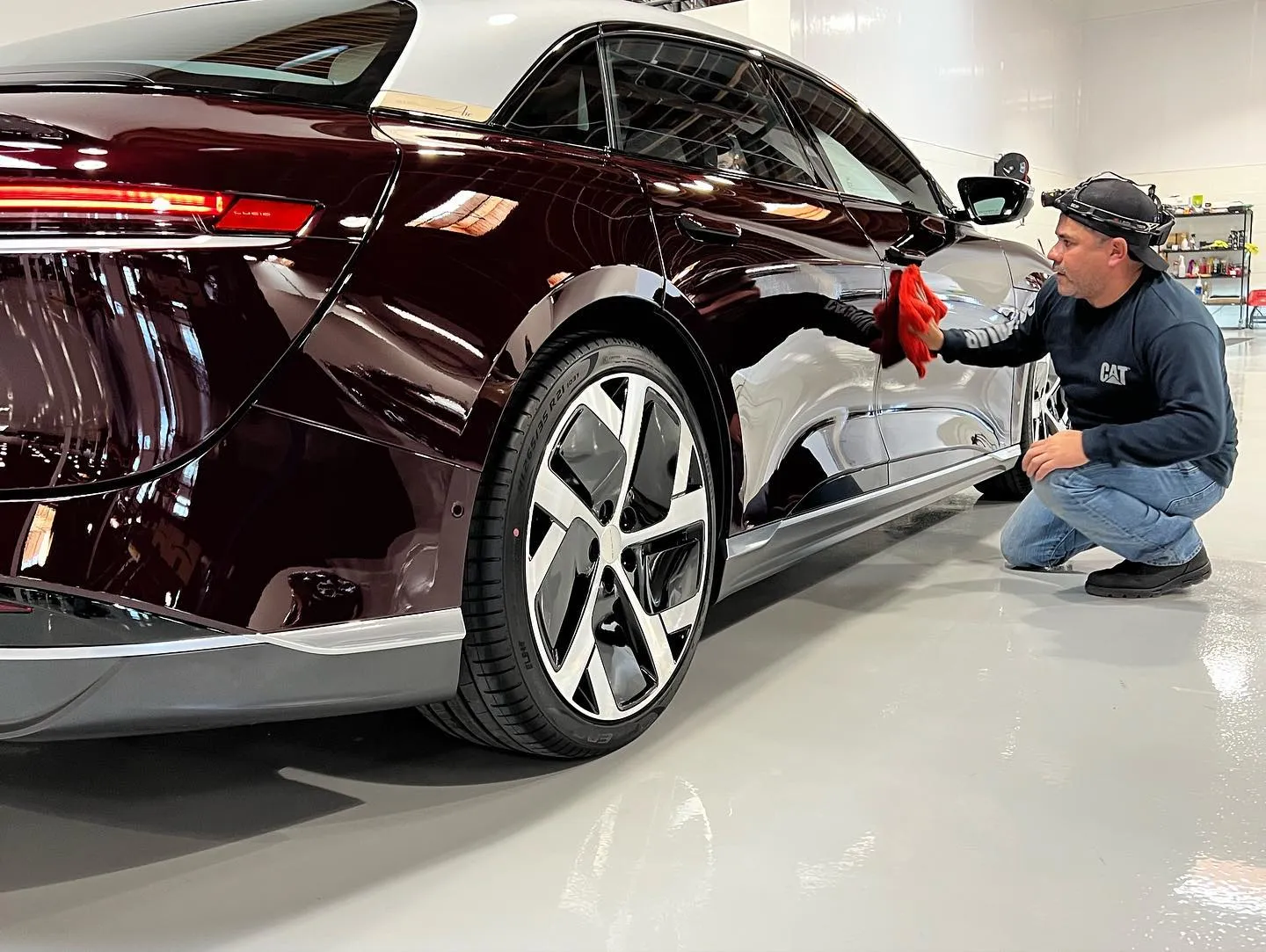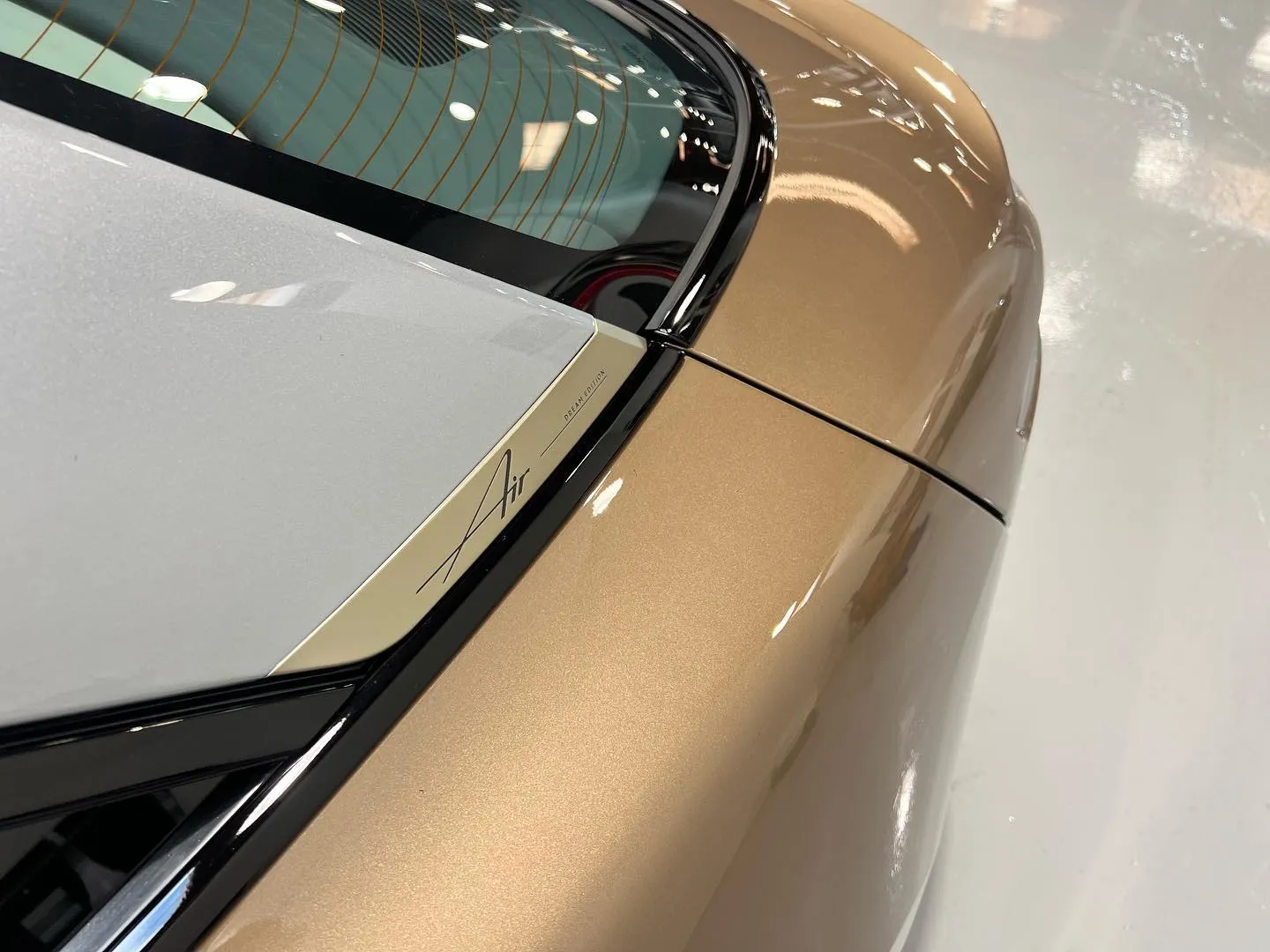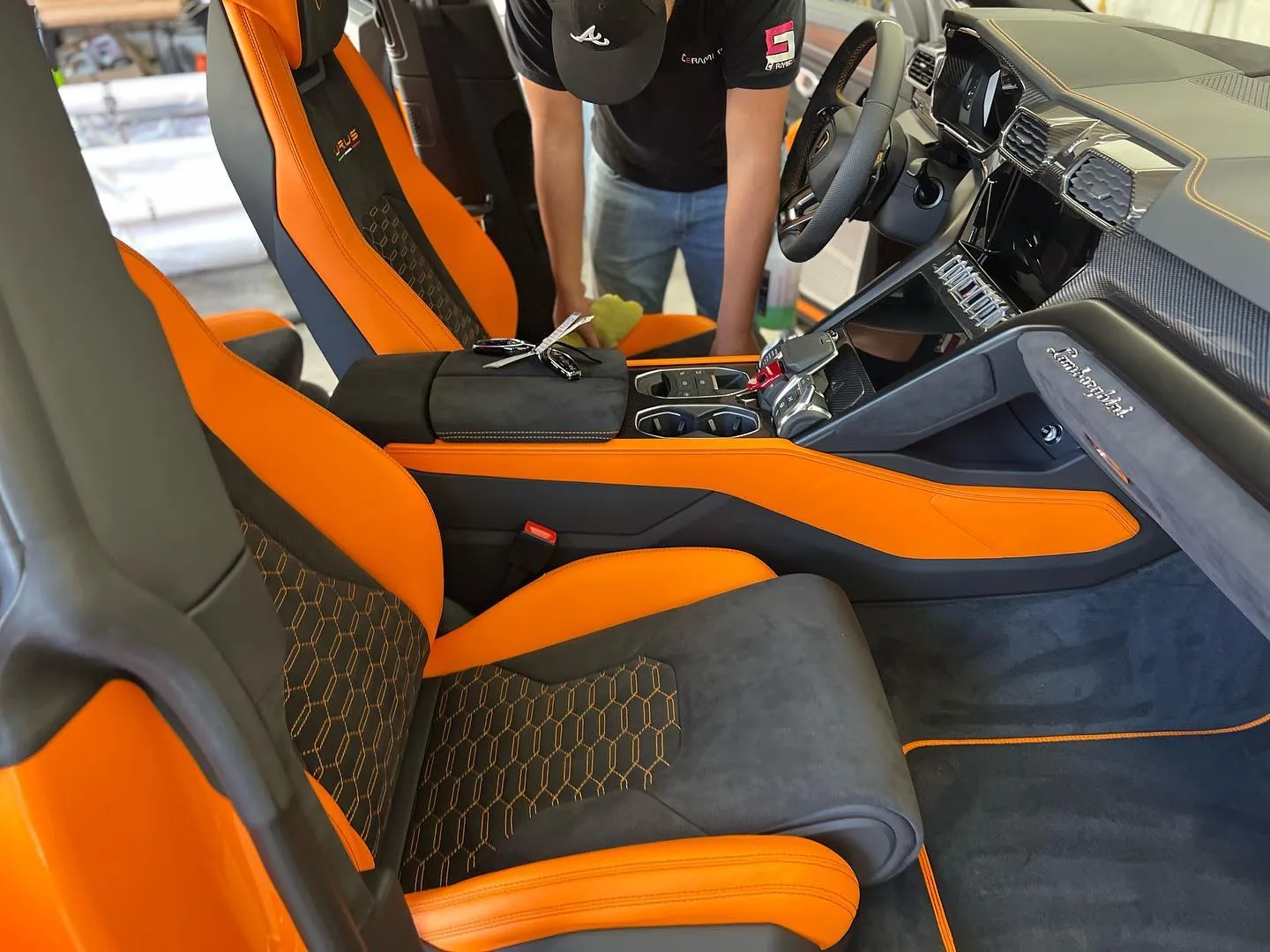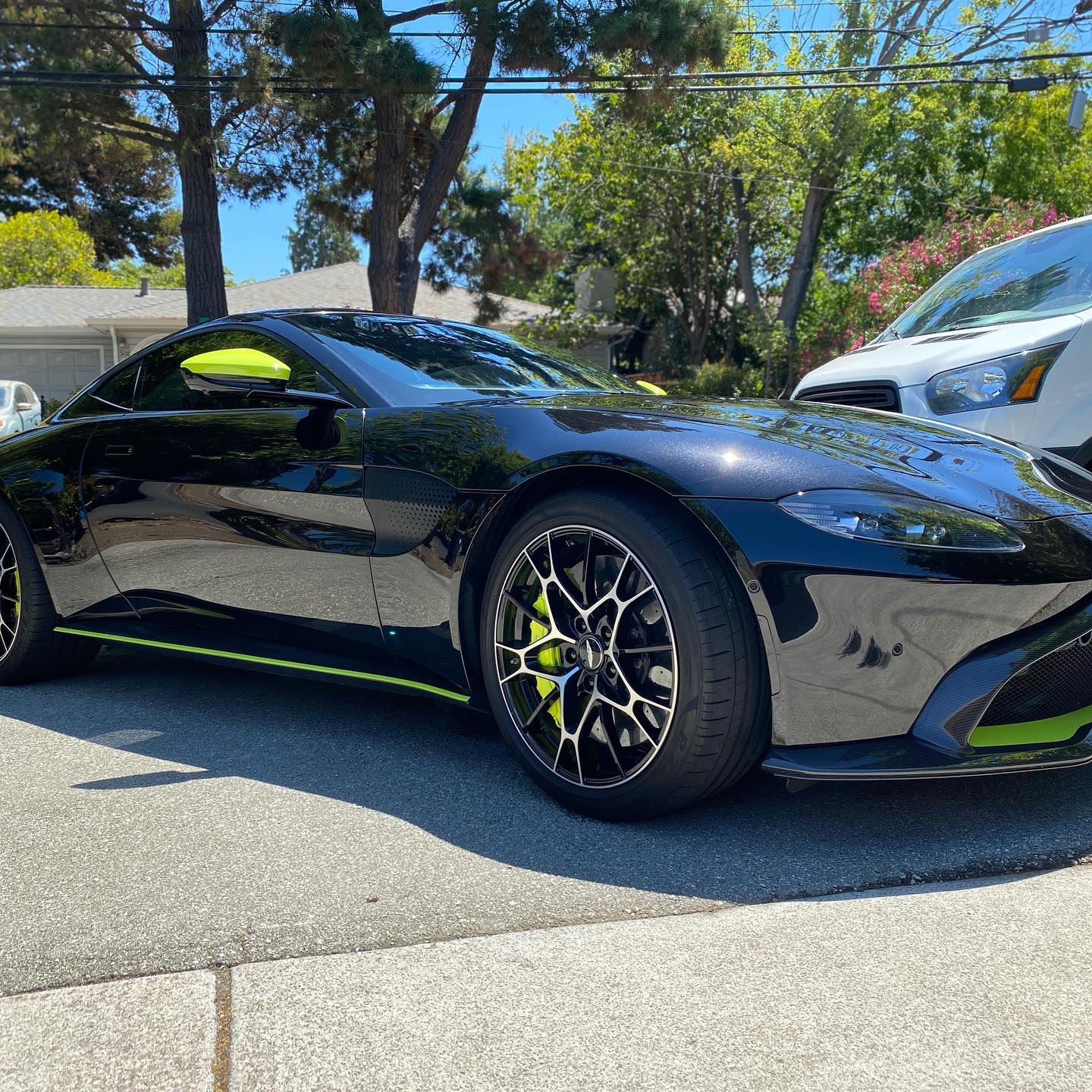
3M vs Ceramic Pro PPF is a comparison Bay Area drivers may make when looking for paint protection film for a new car, daily commuter, luxury vehicle, sports car, or weekend vehicle. Both companies offer films built to shield automotive paint from common road wear, yet their current product lines differ in surface technology, finish choices, warranty structure, and manufacturer claims.
3M’s current Scotchgard Paint Protection Film Pro Series 200 is made to protect against rock chips, scratches, bug damage, road tar, stains, and outdoor exposure. It comes in gloss and matte finishes, uses self-healing technology, and carries a 10-year consumer warranty under 3M’s stated terms.
Ceramic Pro offers Ceramic Pro and KAVACA paint protection films. Its current warranty material covers several film families, including Ceramic Pro PPF, Ceramic Pro Matte PPF, KAVACA Ceramic Coated PPF, KAVACA Matte PPF, and Ceramic Pro Urban. Warranty length varies by film and maintenance history.
For Bay Area drivers, neither brand should be judged from the logo alone. Film selection, installer skill, panel preparation, coverage, edge placement, vehicle shape, and long-term care all affect how a PPF installation looks and performs.
High Gloss Auto Detailing is an XPEL-certified shop in Pleasanton, CA, so we do not install 3M or Ceramic Pro PPF as our main film line. We install XPEL Paint Protection Film. This guide gives drivers a neutral look at 3M and Ceramic Pro so they can understand what those films advertise before comparing them with XPEL or another film.
Table of Contents
- 3M vs Ceramic Pro PPF at a Glance
- What 3M Paint Protection Film Offers
- What Ceramic Pro Paint Protection Film Offers
- 3M vs Ceramic Pro PPF for Rock Chip Protection
- How Self-Healing Differs
- Gloss and Matte Finish Options
- Hydrophobic Surface Properties
- 3M vs Ceramic Pro PPF Warranty Comparison
- Why Annual Service Matters With Ceramic Pro
- Why Installer Skill Matters as Much as Film Brand
- How Paint Preparation Changes the Result
- Partial Front vs Full Front Coverage
- Full Body PPF
- Which Film Is Better for Bay Area Driving?
- How 3M and Ceramic Pro Compare With XPEL
- Questions to Ask Before Choosing PPF
- Schedule XPEL PPF in Pleasanton, CA
- Frequently Asked Questions
- Sources
3M vs Ceramic Pro PPF at a Glance
The 3M vs Ceramic Pro PPF discussion starts with what each company currently sells.
3M’s newer automotive film is Scotchgard Paint Protection Film Pro Series 200. According to 3M, it is available in gloss and matte finishes and has a smooth hydrophobic surface. The film also uses heat-activated self-healing technology for light scratches and marks.
Ceramic Pro has several PPF products under the Ceramic Pro and KAVACA names. Current Ceramic Pro warranty documents distinguish between Ceramic Pro PPF, Ceramic Pro Matte PPF, KAVACA Ceramic Coated PPF, KAVACA Matte PPF, and Ceramic Pro Urban.
Here is a simple comparison:
| Feature | 3M Scotchgard Pro Series 200 | Ceramic Pro / KAVACA PPF |
|---|---|---|
| Clear gloss film | Yes | Yes |
| Matte film | Yes | Yes |
| Self-healing | Yes | Yes on applicable films |
| Hydrophobic surface | Yes | Yes on ceramic-coated options |
| Rock-chip protection | Yes | Yes |
| Certified installer required for warranty | Authorized installer used | Yes |
| Published warranty | 10 years | Varies by current film and service history |
| Annual service tied to warranty | Not stated as a standard 3M requirement on product page | Yes for certain Ceramic Pro warranty terms |
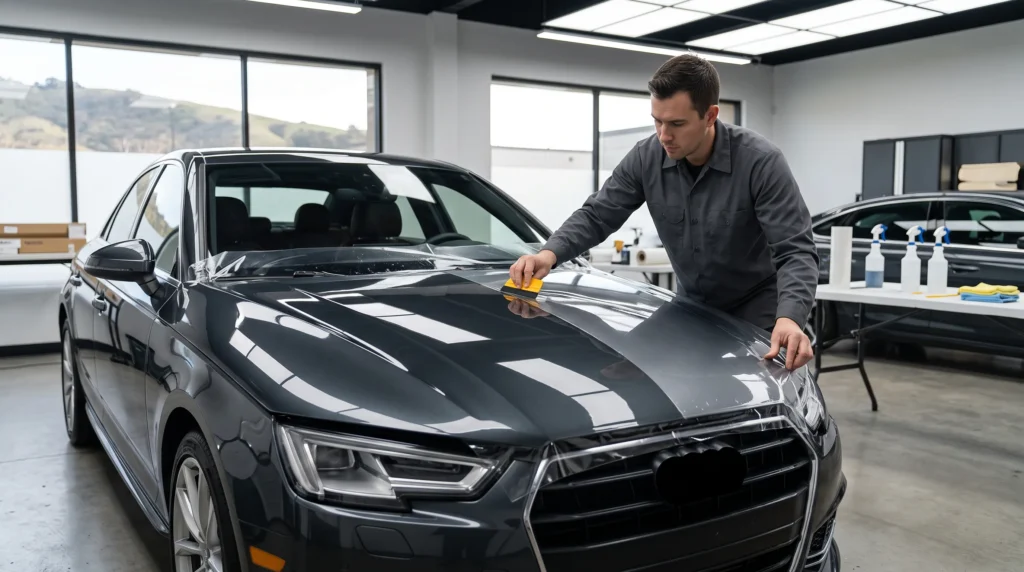
The film itself is only one part of the finished installation.
What 3M Paint Protection Film Offers
3M has been involved with automotive protective films for many years.
Its current Scotchgard Paint Protection Film Pro Series 200 is designed for exterior automotive surfaces and is available in gloss and matte versions.
3M lists protection against:
- Stone chips
- Scratches
- Bug damage
- Road tar
- Stains
- Automotive fluid stains
- UV exposure
- Outdoor weathering
The manufacturer also describes Pro Series 200 as having low orange peel and a smooth top surface.
Orange peel refers to visible surface texture that can make clear film look less glass-like when viewed across reflected light.
A smoother film surface can help maintain a cleaner view of the paint underneath.
3M also offers wide film sizes, including material designed to cover larger areas such as a full hood without creating a seam across the panel.
What Ceramic Pro Paint Protection Film Offers
Ceramic Pro’s PPF family has changed over time, so shoppers may see both Ceramic Pro and KAVACA names when researching the product.
KAVACA became known for film options such as Ceramic Coated PPF and Matte PPF.
Ceramic Pro’s current warranty paperwork now references both Ceramic Pro and KAVACA films.
The listed families include:
- Ceramic Pro PPF
- Ceramic Pro Matte PPF
- KAVACA Ceramic Coated PPF
- KAVACA Matte PPF
- Ceramic Pro Urban
KAVACA Matte PPF is described by Ceramic Pro as having a matte surface, heat-assisted self-healing for small scratches, and a nano-ceramic top coat.
The ceramic-coated surface is one of the traits that helped distinguish KAVACA from many older PPF products.
Ceramic Pro’s current warranty terms vary depending on which of these films is installed.
That makes it worth asking for the exact product name before comparing warranty claims.
3M vs Ceramic Pro PPF for Rock Chip Protection
Rock-chip protection is one of the main reasons Bay Area drivers buy PPF.
Both 3M and Ceramic Pro market their films as protective barriers for automotive paint.
3M states that Pro Series 200 is designed to protect against stone chips, scratches, and road debris.
Ceramic Pro states that its PPF protects painted surfaces from road debris and common exterior damage.
Neither film should be treated as indestructible.
A large stone or severe impact can damage PPF and may still reach the paint beneath it.
Think of paint protection film as a sacrificial layer.
The film receives the contact first.
This can make sense for drivers who regularly travel on:
- I-580
- I-680
- I-880
- Highway 24
- Highway 4
- I-80
- Other Bay Area freeways and local roads
Road debris can come from traffic ahead, construction areas, tire contact with loose grit, or material already sitting on the road.
The amount of PPF coverage can matter as much as the film brand.
How Self-Healing Differs Between 3M and Ceramic Pro PPF
Both brands advertise self-healing properties.
3M says Pro Series 200 uses self-healing technology that removes minor scratches or marks when heat is applied to the film surface.
Ceramic Pro describes KAVACA Matte PPF as self-healing for small scratches when heat is applied.
That does not mean cuts and punctures disappear.
Self-healing PPF is aimed at lighter surface marks.
Examples can include:
- Fine wash marks
- Light swirls
- Minor surface scratches
Damage that passes through the film may require panel replacement.
When comparing self-healing claims, ask the installer what kind of damage the manufacturer actually considers self-healing.
Avoid treating the term as a promise that the PPF cannot be permanently damaged.
3M vs Ceramic Pro PPF: Gloss and Matte Finish Options
Both brands give drivers gloss and matte choices.
3M Gloss PPF
3M Pro Series 200 Gloss is made to preserve the appearance of glossy factory paint.
The company describes the film as having strong clarity and low orange peel.
3M Matte PPF
3M also sells a matte version of Pro Series 200.
Matte film can be used on compatible vehicles where the owner wants a satin appearance or needs protection for a factory matte finish.
Ceramic Pro Clear PPF
Ceramic Pro and KAVACA offer clear film choices for conventional glossy paint.
Ceramic Pro Matte PPF
KAVACA Matte PPF has a satin-style appearance with a ceramic top coat.
Ceramic Pro describes the surface as smooth and designed to retain a matte look while adding PPF protection.
Matte film deserves extra thought because it changes how the vehicle looks.
Ask to see a sample before covering large portions of a glossy car.
Hydrophobic Surface Properties
A hydrophobic film causes water to bead and release more readily.
3M describes Pro Series 200 as having hydrophobic surface properties for easier maintenance.
Ceramic Pro’s KAVACA Ceramic Coated PPF uses a ceramic-treated surface designed for slickness and water behavior.
That creates more overlap between the two brands than older comparisons may suggest.
It would be inaccurate to say Ceramic Pro is the only option with a water-repelling PPF surface.
Modern 3M Pro Series 200 also advertises hydrophobic characteristics.
The strength and longevity of that behavior can depend on the film, care routine, exposure, and added coating products.
If water behavior matters to you, ask whether a separate ceramic coating is recommended over the chosen film.
3M vs Ceramic Pro PPF Warranty Comparison
Warranty terms are one of the biggest differences in the 3M vs Ceramic Pro PPF comparison.
3M currently lists a 10-year consumer warranty for Scotchgard Pro Series 200.
Its older Pro Series material also states a 10-year warranty against manufacturer defects such as yellowing, bubbling, or cracking under the stated warranty terms.
Ceramic Pro’s current 2025 warranty document has a more layered structure.
It lists Ceramic Pro PPF and Ceramic Pro Matte PPF with warranty coverage tied to the lifetime of the vehicle’s original factory paint, subject to the company’s conditions.
The same document lists KAVACA Ceramic Coated PPF and KAVACA Matte PPF with lifetime-related coverage under stated conditions.
Ceramic Pro Urban carries a 10-year term.
There is an extra detail drivers need to know.
Ceramic Pro’s warranty length can change when annual service requirements are missed.
That makes annual maintenance part of the warranty discussion rather than an optional footnote.
Why Annual Service Matters With Ceramic Pro PPF
Ceramic Pro’s current warranty paperwork ties certain warranty terms to annual service.
The manufacturer states that annual service can include:
- Exterior washing
- Decontamination
- Visual film inspection
- Booster or coating service where applicable
Missing annual service can change the length of warranty coverage depending on the film.
For Ceramic Pro and Ceramic Pro Matte PPF, the 2025 warranty states that missed annual service can change the warranty to a 16-year term based on the stated dates.
For KAVACA Ceramic Coated PPF and KAVACA Matte PPF, the paperwork states that missed annual service can change the term to 12 years.
Ceramic Pro Urban has separate conditions.
If you are comparing warranties, ask what you must do each year to keep the advertised term.
A longer warranty is not necessarily simpler if it comes with more maintenance requirements.
Why Installer Skill Matters as Much as Film Brand
A strong film can still look poor when the installation is poor.
PPF needs to follow complex automotive surfaces.
Modern vehicles can have:
- Deep bumper openings
- Parking sensors
- Cameras
- Sharp panel curves
- Spoilers
- Vents
- Wide fenders
- Tight edges
- Mirror housings
Film needs to sit cleanly around these areas.
The installer also needs to control contamination under the film and avoid problems such as excessive stretch, trapped debris, poor edge placement, or visible adhesive marks.
3M says Pro Series 200 should be professionally installed by 3M authorized installers.
Ceramic Pro requires installation by certified Ceramic Pro or KAVACA installers for warranty coverage.
When comparing shops, ask how often they install the film on your make and model.
How Paint Preparation Changes the Result
PPF is transparent.
That means the paint underneath remains visible.
A dirty or badly swirled panel does not become repaired simply because film is placed over it.
Ceramic Pro’s current warranty document strongly recommends machine polishing for vehicles more than three months old. It also recommends addressing chips, scuffs, and scrapes before installation.
The same idea applies regardless of film brand.
Preparation may include:
- Washing
- Paint decontamination
- Clay treatment
- Paint inspection
- Machine polishing
- Paint correction when needed
- Panel cleaning before film installation
A newer car may need little correction.
An older vehicle may need more work before film is applied.
Ask whether paint preparation is included in the PPF quote or listed separately.
Partial Front vs Full Front PPF
Film brand is only one decision.
Coverage can change how much protection the vehicle receives.
Partial Front Coverage
Partial-front PPF may include:
- Front bumper
- Part of the hood
- Part of the front fenders
- Mirror caps
This approach uses less material but may leave an exposed film line across the hood or fenders.
Full Front Coverage
Full-front PPF commonly covers:
- Full hood
- Full front bumper
- Full front fenders
- Mirror caps
This places film over a larger portion of the areas facing traffic and road debris.
For many Bay Area drivers, the difference between partial and full-front coverage can matter more than small differences between reputable film brands.
Full Body PPF
Full-body PPF extends protection across nearly all painted exterior panels.
That can include:
- Hood
- Bumpers
- Front fenders
- Doors
- Rear quarter panels
- Rocker panels
- Mirror caps
- Hatch or trunk
- Roof when requested
Full-body coverage may make sense for a luxury, performance, enthusiast, or collector vehicle where preserving the exterior finish is a major goal.
Both 3M and Ceramic Pro offer films suited to broad vehicle coverage.
The finished result depends heavily on installation quality.
Ask the shop which edges can be wrapped and where seams may be required on your vehicle.
Which Film Is Better for Bay Area Driving?
There is no fair way to call either 3M or Ceramic Pro the winner for every Bay Area driver.
Both companies currently advertise:
- Rock-chip protection
- Scratch protection
- Clear film choices
- Matte film choices
- Self-healing properties
- Professional installer programs
- Manufacturer warranty coverage
The differences become more noticeable in the details.
3M Pro Series 200 has a straightforward published 10-year warranty and comes with hydrophobic surface properties.
Ceramic Pro offers several current film families with different warranty structures, and some KAVACA products use a ceramic-coated surface.
The installer may matter more than the logo printed on the film box.
A well-installed film with clean edges and good paint preparation can be more satisfying than a poorly installed film carrying a name you recognize.
How 3M and Ceramic Pro Compare With XPEL PPF
Bay Area shoppers will probably encounter more than just 3M and Ceramic Pro.
High Gloss Auto Detailing installs XPEL rather than 3M or Ceramic Pro.
XPEL Paint Protection Film is another established film family with clear and satin options, self-healing technology, and manufacturer warranty coverage.
That gives shoppers three broad paths to research:
- 3M Scotchgard Paint Protection Film
- Ceramic Pro / KAVACA PPF
- XPEL Paint Protection Film
Instead of asking which brand has the strongest marketing claim, ask which installer can show you the exact film, explain the warranty, prepare your paint correctly, and provide the coverage you want.
High Gloss Auto Detailing is XPEL certified and an XPEL vendor, which is why our own installations use XPEL products.
Questions to Ask Before Choosing PPF
Whether you are deciding between 3M vs Ceramic Pro PPF or comparing either one with XPEL, ask the installer direct questions.
- What exact film product are you installing?
- Is the film gloss or matte?
- Does it have self-healing properties?
- Does the surface have hydrophobic properties?
- What warranty comes with it?
- Does the warranty require annual service?
- Who registers the warranty?
- What manufacturer defects are covered?
- Which panels are included in the quote?
- Are film edges wrapped where possible?
- Does the paint need correction first?
- Is paint preparation included?
- Can ceramic coating be added over the film?
- What happens if one panel of PPF is damaged?
- How should the film be washed?
These questions can expose differences that are easy to miss when comparing brand names alone.
Schedule XPEL PPF in the Bay Area
High Gloss Auto Detailing does not need to tell Bay Area drivers that every competing PPF product is poor in order to explain why we use XPEL.
3M and Ceramic Pro both offer legitimate paint protection films backed by manufacturer programs.
Our shop specializes in XPEL.
High Gloss Auto Detailing is located at:
7034 Commerce Cir Suite E Pleasanton, CA 94588
We serve vehicle owners throughout Pleasanton, CA, Dublin, CA, and surrounding Bay Area communities.
Our services include:
If you are comparing 3M vs Ceramic Pro PPF and want to see how XPEL fits into the same decision, we can discuss film coverage, paint preparation, warranty, finish, and the areas of your vehicle you want protected.
Call (510) 542-3295 or visit the High Gloss Auto Detailing contact page to request an appointment.
Frequently Asked Questions About 3M vs Ceramic Pro PPF
1. Is 3M PPF self-healing?
Yes. 3M states that Scotchgard Paint Protection Film Pro Series 200 uses self-healing technology for minor scratches or marks when heat is applied to the film surface.
2. Is Ceramic Pro PPF self-healing?
Ceramic Pro lists self-healing properties for applicable KAVACA films, including KAVACA Matte PPF. The manufacturer describes small scratches as able to heal with applied heat.
3. What warranty does 3M PPF have?
3M currently lists a 10-year consumer warranty for Scotchgard Paint Protection Film Pro Series 200 under its stated warranty conditions.
4. What warranty does Ceramic Pro PPF have?
It depends on the exact film. Ceramic Pro’s 2025 warranty paperwork lists different terms for Ceramic Pro PPF, Ceramic Pro Matte PPF, KAVACA Ceramic Coated PPF, KAVACA Matte PPF, and Ceramic Pro Urban. Annual service can affect the term, so check the paperwork for the product being installed.
5. Does 3M PPF come in matte?
Yes. 3M Scotchgard Pro Series 200 is available in gloss and matte finishes.
6. Is Ceramic Pro PPF ceramic coated?
Some KAVACA films use ceramic-treated top surfaces. KAVACA Ceramic Coated PPF is designed around that feature. Do not assume every Ceramic Pro PPF product has exactly the same surface construction.
7. Which PPF does High Gloss Auto Detailing install?
High Gloss Auto Detailing is XPEL certified and installs XPEL Paint Protection Film rather than 3M or Ceramic Pro as its main PPF line. Call (510) 542-3295 or use the contact page to discuss XPEL coverage for your vehicle.
Sources
Scotchgard Paint Protection Film Pro Series 200
Publisher: 3M
Publication Date: Not listed
URL: https://www.3m.com/3M/en_US/p/d/b5005352002/
Scotchgard Paint Protection Film Pro Series
Publisher: 3M
Publication Date: Not listed
URL: https://www.3m.com/3M/en_US/p/d/v100610139/
3M Auto Films Support and PPF FAQ
Publisher: 3M
Publication Date: Not listed
URL: https://www.3m.com/3M/en_US/car-personalization-us/support/
Ceramic Pro / KAVACA Paint Protection Film Warranty
Publisher: Ceramic Pro
Publication Date: June 2025
URL: https://ceramicpro.com/wp-content/uploads/2025/06/PPF-Aftercare-Warranty-2025-V.4.pdf
KAVACA Matte Paint Protection Film
Publisher: Ceramic Pro
Publication Date: Not listed
URL: https://ceramicpro.com/kavaca/paint-protection-film/matte-finish-ppf/
Ceramic Pro Warranty
Publisher: Ceramic Pro
Publication Date: Not listed
URL: https://ceramicpro.com/warranty-2/
XPEL Paint Protection Film at High Gloss Auto Detailing
Publisher: High Gloss Auto Detailing
Publication Date: Not listed
URL: https://highglossautodetailing.com/services/paint-protection-film/
3M vs Ceramic Pro PPF: How Bay Area Films Compare - High Gloss Auto Detailing XPEL Certified Installer

3M vs Ceramic Pro PPF: How Bay Area Films Compare Premier Certified XPEL Installer. 3M vs Ceramic Pro PPF is a comparison Bay Area drivers may make when
Product Brand: High Gloss Auto Detailing
5
Pros
- Discover the best ceramic coating services in Pleasanton, CA, with High Gloss Auto Detailing. Protect your car’s paint with Ceramic Pro, the industry leader in automotive protection. Call us today or schedule an appointment online!