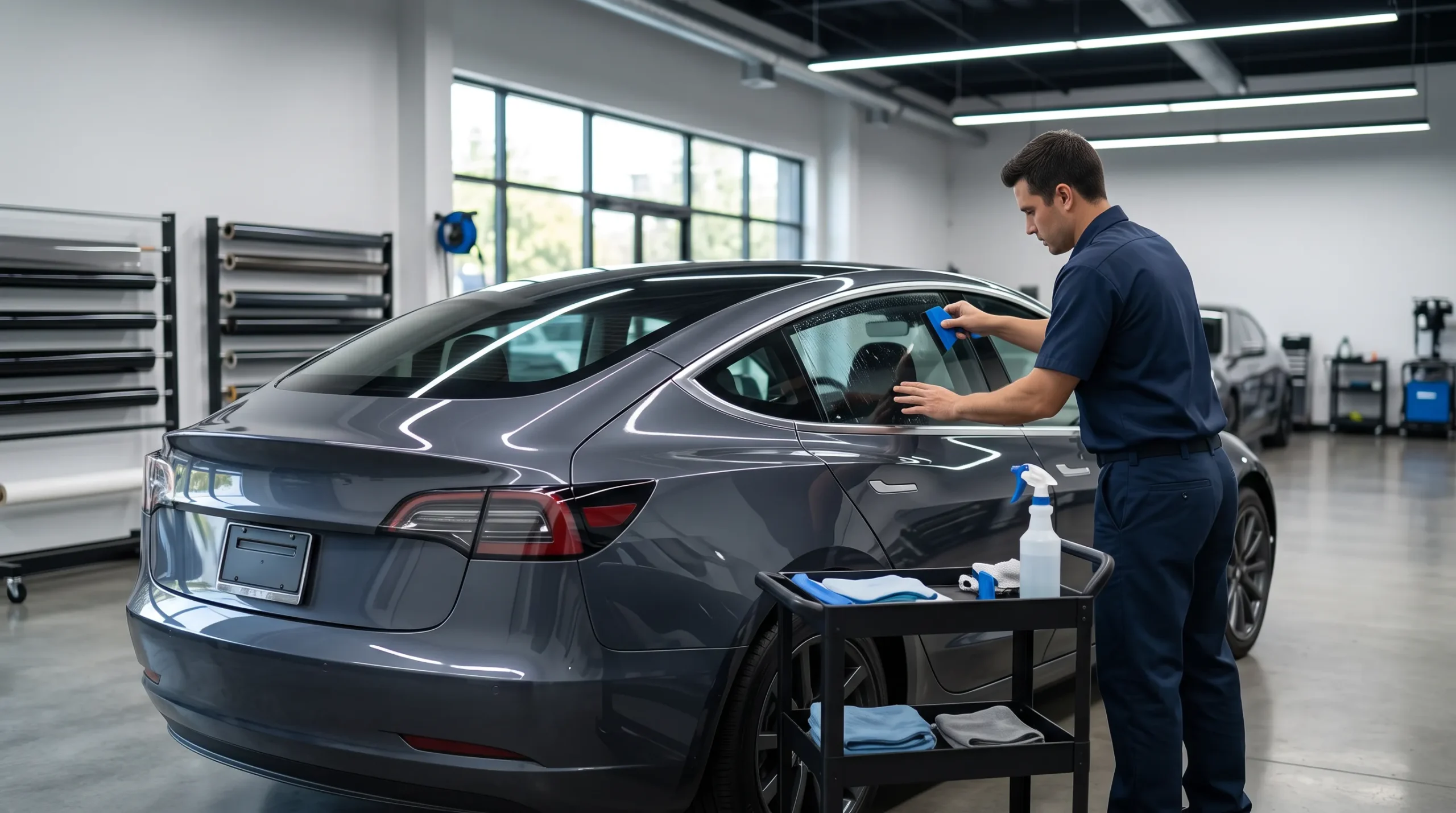
Window tint in Oakland, CA can help cut glare, reduce UV exposure, manage heat inside the cabin, and give your vehicle a cleaner appearance. The harder part is choosing the right film while staying within California law.
Not all tint performs the same way.
A dark film can reduce visible light, yet darkness alone does not tell you how well the film handles infrared heat or UV rays. XPEL offers several PRIME automotive films with different construction, heat rejection, visible light transmission, and shade choices.
California also places limits on where aftermarket tint can be applied. The rules for front side windows and the windshield are much tighter than the rules for windows behind the driver.
High Gloss Auto Detailing serves Oakland, CA drivers from our Pleasanton, CA shop. We are XPEL certified, an XPEL vendor, and install XPEL carbon and ceramic automotive window film.
This guide covers the XPEL tint options available to drivers, what the performance numbers mean, and what California law currently says about tinted windows.
Table of Contents
- What Window Tint in Oakland, CA Can Do
- XPEL Window Tint Options
- XPEL PRIME CS
- XPEL PRIME XR
- XPEL PRIME XR PLUS
- Carbon vs Ceramic Window Tint
- What VLT Means
- Does Darker Tint Block More Heat?
- How Much UV Does XPEL Tint Block?
- How Window Tint Helps With Glare
- California Window Tint Law
- California Rules for Front Side Windows
- California Rules for Rear Side Windows
- California Rules for the Rear Window
- California Rules for Windshield Tint
- Medical Exceptions and Window Tint
- Choosing Tint for an Oakland, CA Daily Driver
- How to Compare Window Tint Shops
- Window Tint for Oakland, CA Drivers
- Schedule XPEL Window Tint Near Oakland, CA
- Frequently Asked Questions
- Sources
What Window Tint in Oakland, CA Can Do
Drivers looking for window tint in Oakland, CA usually have more than one reason for getting it installed.
Common goals include:
- Reducing cabin heat
- Cutting bright glare
- Blocking UV rays
- Adding privacy
- Giving the vehicle a darker appearance
- Helping protect interior materials from sun exposure
- Matching lighter front windows to darker rear glass
XPEL says its PRIME automotive window film blocks 99% of harmful UV rays across its current PRIME CS, XR, and XR PLUS lines.
Heat performance changes by film.
XPEL lists PRIME CS with infrared rejection up to 35%, PRIME XR up to 85%, and PRIME XR PLUS up to 96%, depending on the shade and test measurement.
That difference is one reason drivers should ask which film series is included in a tint quote.
Two vehicles can look similarly dark from outside while using films with very different heat performance.
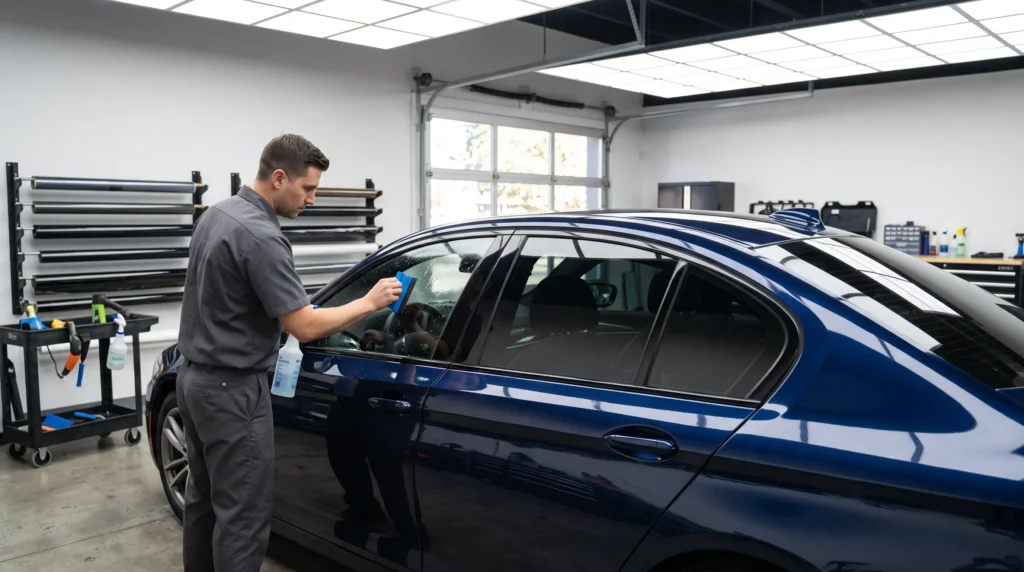
High Gloss Auto Detailing offers XPEL window tinting in carbon and ceramic film choices.
XPEL Window Tint Options
XPEL’s PRIME automotive tint family includes several film lines.
The three commonly compared choices are:
- PRIME CS
- PRIME XR
- PRIME XR PLUS
They differ mainly in film construction and heat performance.
XPEL lists PRIME CS as a color-stable dyed film.
PRIME XR and PRIME XR PLUS use nano-ceramic film technology.
All three are designed to block 99% of harmful UV rays, and all are available in multiple shades.
That means the decision is not only about whether you want light, medium, or dark tint.
You should also think about how much heat rejection matters to you.
XPEL PRIME CS Window Tint
XPEL PRIME CS is the company’s color-stable dyed automotive film.
XPEL lists PRIME CS with:
- Up to 35% infrared heat rejection
- 99% UV rejection
- Multiple shade choices
- Color-stable dyed film construction
PRIME CS can make sense for an Oakland, CA driver who mainly wants glare reduction, UV protection, privacy, and a tinted appearance.
It is different from ceramic tint.
The ceramic options in the PRIME lineup provide higher published infrared rejection.
That distinction matters when heat control is one of your main reasons for tinting the vehicle.
Ask High Gloss Auto Detailing which PRIME CS shades are available for your vehicle and which windows can legally receive them in California.
XPEL PRIME XR Ceramic Window Tint
PRIME XR moves into XPEL’s ceramic film family.
XPEL lists PRIME XR with nano-ceramic technology and infrared rejection of up to 85%.
It also blocks 99% of harmful UV rays.
This type of film may appeal to drivers who want stronger heat performance without choosing the highest tier in the PRIME family.
For an Oakland, CA commuter, that can matter during sunny drives when heat enters through the side and rear glass.
PRIME XR is available in several visible light transmission levels.
That means drivers can choose between lighter and darker film options while still using the same film family.
The legal choice depends on which window is being tinted.
XPEL PRIME XR PLUS Window Tint
PRIME XR PLUS sits at the higher end of XPEL’s PRIME automotive tint lineup.
XPEL lists infrared rejection of up to 96% for XR PLUS and 99% UV rejection.
The film uses multi-layer nano-ceramic technology.
XR PLUS may be worth considering when cabin heat control is a major goal.
XPEL’s current specification sheet lists several XR PLUS shades with different visible light transmission figures.
That gives owners a range of appearance choices.
A lighter film can still provide strong infrared rejection.
Here is why that matters: a film does not need to look extremely dark to provide strong heat performance.
Film technology and shade both affect the finished result.
Carbon vs Ceramic Window Tint
High Gloss Auto Detailing lists both standard carbon and ceramic tint packages.
The two can provide similar-looking shades, but they are not the same product type.
Carbon Window Tint
Carbon film can be a good fit when your goals include:
- UV protection
- Reduced glare
- Added privacy
- A darker appearance
- Some heat reduction
Ceramic Window Tint
Ceramic tint may be a better fit when heat control carries more weight.
XPEL’s XR and XR PLUS films use nano-ceramic technology and carry higher published infrared rejection than PRIME CS.
That can be useful for drivers who spend a lot of time commuting throughout Oakland, CA, Berkeley, CA, San Leandro, CA, and other East Bay communities.
Do not choose only from appearance.
Ask how the carbon and ceramic films differ in heat performance, shade, and warranty.
What VLT Means
VLT stands for visible light transmission.
It tells you how much visible light passes through the glass and film.
A higher VLT allows more visible light through.
A lower VLT allows less light through and usually looks darker.
A 70% VLT film is much lighter than a 20% VLT film.
VLT becomes especially relevant because California restricts tint on glass near the driver.
XPEL publishes VLT values for its PRIME films so customers and installers can compare shades.
One detail to remember is that the finished glass-and-film combination matters.
Factory automotive glass is not always perfectly clear before film is applied.
That means a film’s standalone VLT does not automatically equal the final VLT of the window after installation.
Does Darker Window Tint Block More Heat?
Not always.
This is one of the most common misunderstandings when shopping for window tint in Oakland, CA.
A very dark dyed film may allow less visible light through while rejecting less infrared heat than a lighter ceramic film.
XPEL’s published specifications show why.
PRIME XR and XR PLUS can provide high infrared rejection across several shades, including lighter versions.
That means a driver interested mainly in heat control may not need to choose the darkest-looking film.
Ask about both VLT and infrared rejection.
They measure different things.
VLT is about visible light.
Infrared rejection deals with part of the heat-producing solar energy.
How Much UV Does XPEL Window Tint Block?
XPEL states that PRIME CS, PRIME XR, and PRIME XR PLUS block 99% of harmful UV rays.
That is useful for both vehicle occupants and interior materials.
Sun exposure can affect:
- Dash surfaces
- Leather
- Vinyl
- Upholstery
- Door panels
- Plastic trim
- Other cabin materials
Window film does not mean the interior can never age or fade.
Heat, visible light, material type, care habits, and vehicle age can also play a role.
Still, cutting UV transmission through treated glass gives drivers another layer of sun protection.
How Window Tint Helps With Glare
Visible sunlight can create glare during morning and evening drives.
Reflections from pavement, buildings, vehicles, and glass can add to it.
Tint film reduces the amount of visible light entering through treated windows.
XPEL publishes glare-reduction data across the PRIME family, with the amount varying by shade.
A darker film generally reduces more visible glare because less visible light passes through.
The catch is that darker is not always legal on every window.
California treats front-facing and rear glass differently.
That makes legal placement part of the film-selection process.
California Window Tint Law
Anyone shopping for window tint in Oakland, CA should understand that California has stricter rules for the windshield and front side windows than it does for rear windows.
The California Highway Patrol states that aftermarket tint is generally not allowed on the windshield or the driver and passenger front side windows, subject to limited exceptions.
California law is more permissive for side windows located behind the driver.
Rear-window tint is also allowed when the vehicle has outside rearview mirrors on both sides.
The tint rules come from California Vehicle Code sections including 26708 and 26708.5.
Tint law can change, so always confirm the current rule before installation.
A professional installer should also discuss what can legally be placed on each window of your vehicle.
California Rules for Front Side Windows
California places tight limits on aftermarket material applied to the front driver’s and front passenger’s side windows.
The California Highway Patrol states that those windows generally cannot receive ordinary aftermarket tint.
There is a limited exception for certain clear, colorless, transparent material used for UV reduction.
That exception should not be confused with permission to install dark privacy tint on the front side windows.
The glass also has to meet applicable light-transmission requirements.
This is an area where online tint charts can cause confusion.
Some websites reduce California law to a simple percentage without explaining the restrictions around aftermarket film.
For an Oakland, CA driver, the safer approach is to ask what film is legal on the exact front glass of your vehicle.
California Rules for Rear Side Windows
California gives drivers more freedom on side windows located behind the driver.
CHP guidance states that tinting material may be applied to side windows behind the driver at any density, except for prohibited colors such as red, yellow, or blue.
That means rear side windows can often be much darker than front side windows.
This is common on:
- SUVs
- Crossovers
- Vans
- Sedans
- Trucks
Some vehicles already have darker factory privacy glass in the rear.
A driver may still choose to add an aftermarket ceramic film over that glass for heat and UV performance.
Factory privacy glass and ceramic window film are not the same thing.
Ask what the existing glass already does before choosing the added film.
California Rules for the Rear Window
California also allows tint on the rear window under certain conditions.
CHP guidance states that rear-window tint may be used when the vehicle is equipped with exterior rearview mirrors on both the left and right sides.
That mirror requirement matters because darker rear glass can reduce the driver’s direct view through the back window.
If your vehicle already has both exterior mirrors, the rear window may have far more tint flexibility than the front side windows.
Film color still matters.
California rules do not permit certain tint colors such as red, yellow, or blue in these applications.
Ask the installer to explain any restrictions that apply to your vehicle.
California Rules for Windshield Tint
The windshield receives some of California’s tightest treatment.
Ordinary dark aftermarket tint across the windshield is generally not permitted.
California does allow a narrow strip at the top of the windshield under specified conditions.
CHP guidance recognizes this upper windshield strip as an allowed area.
High Gloss Auto Detailing lists both a windshield strip and a full-windshield film option on its window tinting page.
For any full-windshield film, the film and installation need to fit California’s legal requirements.
That may mean discussing clear or nearly clear heat- and UV-control film rather than a dark tint.
Do not assume a full-windshield service means a dark windshield.
Ask what film is proposed and why it complies with California law.
Medical Exceptions and Window Tint
California has a medical exception for certain sun-shading devices.
CHP guidance says a person may use qualifying screening devices on front side windows when they have documentation from a licensed physician and surgeon, or in some cases a licensed optometrist, stating that shading is needed because of a medical or visual condition.
CHP also notes that the screening device may not be used during hours of darkness.
That means permanent dark film does not automatically qualify under the medical screening-device exception.
If you are considering tint because of a medical condition, review the current California requirements before booking.
Keep the required documentation with you when the law calls for it.
Choosing Window Tint for an Oakland, CA Daily Driver
The right tint choice depends on how you use the vehicle.
An Oakland, CA commuter may care most about heat and glare.
Someone with a vehicle that already has dark rear privacy glass may mainly want stronger heat rejection and more consistent appearance.
A driver who spends long hours on the road may place more weight on UV control.
Ask yourself:
- How much heat bothers me?
- Do I want a darker appearance?
- Do I want more privacy in the rear?
- Is glare my main concern?
- Do I want carbon or ceramic film?
- Do I have factory privacy glass?
- Am I tinting only rear glass?
- Am I interested in a legal light film for front-facing glass?
Then compare XPEL PRIME film families.
PRIME CS may fit a driver focused on tint appearance and UV control.
PRIME XR may fit someone who wants stronger ceramic heat performance.
PRIME XR PLUS may make sense when stronger infrared rejection is high on the list.
How to Compare Window Tint Shops in Oakland, CA
When comparing shops for window tint in Oakland, CA, ask what product you are getting.
“Premium ceramic tint” does not tell you much by itself.
Ask:
- Which XPEL film series are you installing?
- Is it PRIME CS, XR, or XR PLUS?
- What shade is being installed?
- What is the film’s VLT?
- What heat-rejection figures does XPEL publish?
- Does it block 99% of UV rays?
- Which windows are included?
- Is windshield film included or separate?
- What does California law allow on my front side windows?
- Can my rear side windows be darker?
- What warranty comes with the film?
- What workmanship coverage does the shop provide?
- How long should I wait before rolling down the windows?
- How should I clean the film after installation?
High Gloss Auto Detailing states that its tint services carry warranty coverage through both the shop and the film manufacturer.
The shop offers windshield strips, front-window matching, full-vehicle tinting, and full-windshield film choices.
Window Tint for Oakland, CA Drivers
High Gloss Auto Detailing serves Oakland, CA vehicle owners from our Pleasanton, CA shop.
Our location is:
High Gloss Auto Detailing
7034 Commerce Cir Suite E
Pleasanton, CA 94588
Oakland, CA is listed among our service areas.
We also serve drivers from Berkeley, CA, San Leandro, CA, Alameda-area communities, Castro Valley, CA, Dublin, CA, and Pleasanton, CA.
High Gloss Auto Detailing is XPEL certified and an XPEL vendor.
Along with XPEL window tinting, we provide:
If you are not sure which XPEL tint fits your vehicle, tell us which windows you want treated and whether heat, glare, privacy, or appearance matters most.
Schedule XPEL Window Tint Near Oakland, CA
If you are researching window tint in Oakland, CA, High Gloss Auto Detailing can help you compare carbon and ceramic XPEL film choices.
The right package depends on the windows being tinted, the film family, shade, heat performance, and California’s legal requirements.
We can discuss options such as:
- Windshield strips
- Front-window matching where legally allowed
- Full-vehicle tint
- Full-windshield film that fits applicable California requirements
- Carbon film
- Ceramic film
- XPEL PRIME film choices
Before installing tint, ask which product and shade will go on each window.
That gives you a clearer picture of appearance, heat rejection, UV blocking, and legal fit.
Call (510) 542-3295 or visit the High Gloss Auto Detailing contact page to request a quote and schedule an appointment.
Frequently Asked Questions About Window Tint in Oakland, CA
1. What types of window tint does High Gloss Auto Detailing offer?
High Gloss Auto Detailing lists standard carbon and ceramic automotive window film. XPEL’s PRIME family includes PRIME CS, PRIME XR, and PRIME XR PLUS, with different film technology and heat-rejection performance.
2. Is ceramic window tint better for heat?
Ceramic film can provide much stronger infrared rejection than a standard dyed film. XPEL lists PRIME XR with up to 85% infrared rejection and PRIME XR PLUS with up to 96%, depending on the film and measurement.
3. Does XPEL window tint block UV rays?
Yes. XPEL states that PRIME CS, PRIME XR, and PRIME XR PLUS block 99% of harmful UV rays.
4. Can I legally put dark tint on my front side windows in California?
California generally does not allow ordinary dark aftermarket film on the front driver’s and front passenger’s side windows. There is a limited exception for qualifying clear, colorless UV-reducing material. Ask your installer about current California requirements for your vehicle.
5. How dark can my rear windows be in California?
CHP guidance states that side windows behind the driver may use tint of any density, except prohibited colors such as red, yellow, or blue. Rear-window tint is also permitted when the vehicle has outside rearview mirrors on both sides.
6. Can I tint my entire windshield in California?
Ordinary dark tint across the full windshield is generally not permitted. California allows a narrow strip near the top under stated conditions, and some clear or nearly clear films may fit legal exceptions or requirements. Confirm the current rule and exact film before installation.
7. Where can I get XPEL window tint near Oakland, CA?
High Gloss Auto Detailing serves Oakland, CA drivers from our shop at 7034 Commerce Cir Suite E, Pleasanton, CA 94588. We install XPEL window film and offer carbon and ceramic tint choices. Call (510) 542-3295 or use the contact page to request a quote.
Sources
Window Tinting in Pleasanton, CA & Dublin, CA
Publisher: High Gloss Auto Detailing
Publication Date: Not listed
URL: https://highglossautodetailing.com/services/window-tinting/
XPEL PRIME Window Tint
Publisher: XPEL
Publication Date: Not listed
URL: https://lp.xpel.com/xpel-prime-window-tint
XPEL Product Specifications
Publisher: XPEL
Publication Date: Not listed
URL: https://www.xpel.com/product-specifications
California Highway Patrol FAQ: Aftermarket Window Tint
Publisher: California Highway Patrol
Publication Date: Not listed
URL: https://www.chp.ca.gov/faq/
California Highway Patrol General Order 100.5: Regulated Devices
Publisher: California Highway Patrol
Publication Date: Current document accessed September 2026
URL: https://www.chp.ca.gov/siteassets/policy/go/go-100.5-regulated-devices.pdf
California Vehicle Code, Windshields and Mirrors
Publisher: California Legislative Information
Publication Date: Current code accessed September 2026
URL: https://leginfo.legislature.ca.gov/
Window Tint in Oakland, CA: Film Options and California Tint Law - High Gloss Auto Detailing XPEL Certified Installer

Window Tint in Oakland, CA: Film Options and California Tint Law Premier Certified XPEL Installer. Window tint in Oakland, CA can help cut glare, reduce UV
Product Brand: High Gloss Auto Detailing
5
Pros
- Discover the best ceramic coating services in Pleasanton, CA, with High Gloss Auto Detailing. Protect your car’s paint with Ceramic Pro, the industry leader in automotive protection. Call us today or schedule an appointment online!