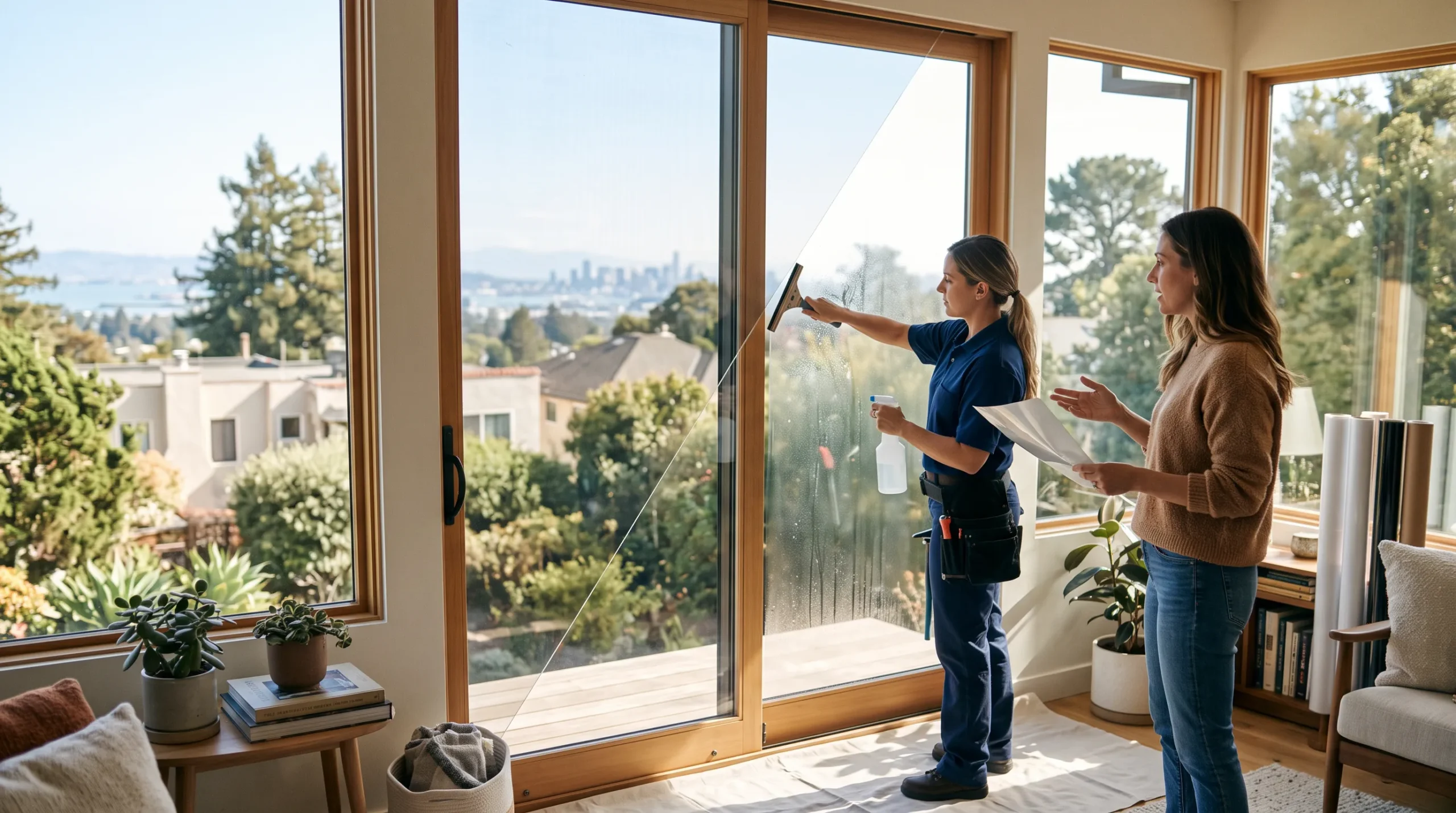
UV window film for Berkeley homes can reduce the amount of ultraviolet radiation, solar heat, and glare entering through residential glass without forcing homeowners to keep blinds or curtains closed all day. For rooms with large windows, direct afternoon sun, fading furniture, uncomfortable hot spots, or screen glare, professionally installed residential window film can change how that space feels.
Still, window film is often misunderstood.
Some homeowners expect a nearly clear film to stop all sunlight. Others assume the darkest film provides the strongest heat control. Neither assumption tells the full story.
XPEL residential solar control films are available in different shades and performance levels. Depending on the film selected, they can block 99% of harmful UV rays, reject part of the sun’s heat, cut glare, and maintain much of the natural light coming through the glass.
High Gloss Auto Detailing provides residential XPEL window film services for homeowners in Berkeley, CA and surrounding East Bay communities. Our team can help homeowners compare film choices based on window location, sun exposure, glare, heat, privacy, and the appearance they want.
This guide explains what UV window film actually blocks, what it cannot block completely, and what Berkeley, CA homeowners should know before choosing a residential film.
Table of Contents
- What UV Window Film for Berkeley Homes Actually Blocks
- How Much UV Can Residential Window Film Block?
- What Are UV Rays?
- Does Window Film Help Protect Furniture and Floors?
- Does UV Window Film Block Heat?
- How Residential Window Film Reduces Glare
- Does UV Window Film Make Your Home Dark?
- Clear Window Film vs Dark Window Film
- What XPEL CLEAR VIEW PLUS Does
- Can Window Film Fix Hot Rooms?
- UV Window Film for Home Offices
- UV Film for Living Rooms and Large Windows
- Can Residential Window Film Add Privacy?
- What UV Window Film Does Not Do
- How to Compare Residential Window Films
- Which Berkeley, CA Windows May Benefit Most?
- Schedule UV Window Film for a Berkeley Home
- Frequently Asked Questions
- Sources
What UV Window Film for Berkeley Homes Actually Blocks
When homeowners search for UV window film for Berkeley homes, they are often trying to solve several problems at once.
Sunlight coming through residential windows carries visible light, ultraviolet radiation, and solar energy that can contribute to indoor heat.
Window film can manage these parts of sunlight in different ways.
Depending on the XPEL residential film selected, it can help with:
- UV rejection
- Solar heat rejection
- Infrared heat rejection
- Glare reduction
- Interior fading
- Hot spots near windows
- Daytime privacy
- Sun exposure on furniture and flooring
The amount of each type of control depends on the film.
That is why homeowners should not judge residential film only by how dark it looks.
A lighter film can still provide strong UV and heat performance.
XPEL states that its residential Solar Window Film can shield home interiors from 99% of harmful UV rays. Certain XPEL films can also block up to 78% of the sun’s heat, depending on the product.
Those are different measurements.
UV rejection tells you about ultraviolet radiation.
Heat rejection tells you about solar energy entering through the glass.
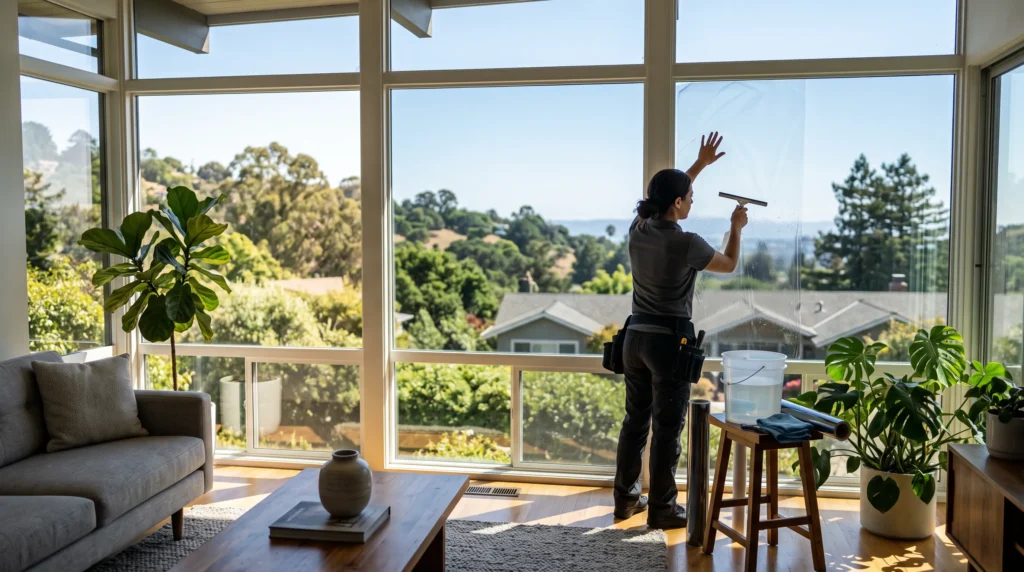
Glare reduction deals largely with visible light.
Understanding those differences makes film comparison much easier.
How Much UV Can Residential Window Film Block?
XPEL states that its Solar Window Film can block 99% of harmful UV rays.
That is one of the strongest reasons homeowners consider UV window film for Berkeley homes.
UV radiation is invisible. You cannot look through a window and tell how much is entering a room.
A room may feel cool and still receive UV exposure.
A window may also appear dark without providing the same UV performance as a film designed and tested for UV rejection.
For this reason, homeowners should ask for the manufacturer’s technical specifications instead of judging film by appearance.
XPEL’s residential film information includes UV-rejection data alongside measurements for visible light, solar energy, infrared rejection, and glare reduction.
When comparing products, ask the installer which exact film is being proposed and what its published UV-rejection figure is.
What Are UV Rays?
Ultraviolet radiation is part of the energy produced by the sun.
It sits outside the range of visible light, which means you cannot see UV rays with your eyes.
That does not mean they stop at your windows.
Sunlight entering a home can expose people and interior materials to UV radiation over long periods.
Rooms with large areas of glass may receive many hours of direct or indirect sunlight each day.
In Berkeley, CA, that can include:
- Living rooms with west-facing windows
- Dining rooms with large glass doors
- Sunrooms
- Home offices
- Bedrooms with afternoon sun
- Rooms with skylights
- Spaces with floor-to-ceiling glass
- Rooms overlooking decks or patios
Installing UV window film for Berkeley homes can reduce UV transmission through treated glass while still allowing homeowners to keep their windows and views.
Does Window Film Help Protect Furniture and Floors?
Residential window film can help reduce one of the causes of interior fading.
XPEL states that prolonged sunlight exposure can contribute to fading of furniture, flooring, artwork, and home décor. Its residential solar film blocks 99% of harmful UV rays.
UV is not the only factor behind fading.
Visible light, heat, material type, dyes, age, and the amount of daily sun exposure can also affect how quickly an item changes color.
This means window film should not be marketed as something that makes furniture or flooring fade-proof.
It can reduce a major source of sun exposure.
That can matter if sunlight falls on the same area every afternoon.
Think about a hardwood floor near patio doors. One portion may receive direct sunlight while another stays shaded.
The same thing can happen to:
- Area rugs
- Hardwood floors
- Upholstered chairs
- Sofas
- Curtains
- Photographs
- Artwork
- Books
- Wood furniture
- Decorative fabrics
If fading is one reason you are considering UV window film for Berkeley homes, tell the installer which windows receive the strongest sunlight.
Does UV Window Film Block Heat?
UV rejection and heat rejection are not the same thing, but many residential solar films are designed to address both.
XPEL states that certain residential Solar Window Films can block up to 78% of the sun’s heat.
The exact result depends on the film selected and the glass where it is installed.
Solar heat entering through windows can make some parts of a home warmer than others.
A room may be comfortable in the morning and noticeably warmer later in the day when sunlight begins hitting the windows.
XPEL describes this as solar heat gain.
Reducing part of that incoming solar energy can help reduce uncomfortable hot spots near treated windows.
The film does not replace an air conditioner.
It also does not guarantee that every room will remain at the same temperature.
Home insulation, roof exposure, air leaks, HVAC equipment, window size, glass type, exterior shade, and the direction each window faces all affect indoor temperature.
What window film can do is address solar energy at the glass before all of it enters the room.
How Residential Window Film Reduces Glare
Glare is another common reason Berkeley, CA homeowners look at residential window film.
Bright sunlight can make it difficult to:
- Watch television
- Work on a computer
- Read
- Use a tablet
- See phone screens
- Relax near a sunny window
Closing blinds can solve some glare problems, but it also blocks the view and natural light.
Residential solar window film offers another option.
Different film shades allow different amounts of visible light to pass through the window.
Reducing some of that visible light can reduce glare.
XPEL’s residential film specifications publish glare-reduction figures for individual films so homeowners can compare products.
The film with the strongest glare reduction may not be the right choice for every room.
Someone who works on a computer beside a large west-facing window may want more glare control.
A homeowner with a shaded north-facing window may prefer a lighter appearance.
The right choice depends on how that room is used.
Does UV Window Film Make Your Home Dark?
Not necessarily.
One misconception about UV window film for Berkeley homes is that strong UV protection requires very dark glass.
XPEL offers residential films that maintain high levels of visible light while still blocking UV radiation.
XPEL’s CLEAR VIEW PLUS 70 is one example.
According to XPEL, CLEAR VIEW PLUS 70 allows about 70% visible light transmission and appears nearly clear while still blocking 99% of UV rays.
That gives homeowners a way to address UV exposure and solar heat without making a room feel heavily tinted.
Other film choices are darker and may provide more glare reduction or privacy.
The right appearance depends on the house.
Some homeowners want the film to be hard to notice.
Others want stronger solar control or additional daytime privacy.
Ask to see film samples before making the choice.
Clear Window Film vs Dark Window Film
A darker film and a lighter film can solve different problems.
Lighter Residential Window Film
A lighter film may be a good fit when you want:
- High natural-light transmission
- UV rejection
- Heat control
- A less noticeable appearance
- An open view through the glass
Darker Residential Window Film
A darker film may be worth discussing when you want:
- More glare reduction
- Lower visible light transmission
- Greater daytime privacy with certain film types
- A darker exterior appearance
Do not assume darkness tells you everything about heat performance.
Modern residential films can use spectrally selective or nano-ceramic technology to manage solar energy while letting a larger amount of visible light pass through.
XPEL says its residential products include films using these types of technologies.
When comparing UV window film for Berkeley homes, start with the problem you want to solve, then choose the appearance.
What XPEL CLEAR VIEW PLUS Does
XPEL CLEAR VIEW PLUS is designed for homeowners who want solar control while keeping a clearer-looking window.
XPEL describes CLEAR VIEW PLUS 70 as one of its popular residential options.
The company states that this film provides about 70% visible light transmission while blocking 99% of UV rays.
XPEL has also published performance information showing CLEAR VIEW PLUS 70 rejecting 87% of infrared heat and 55% of total solar energy in one residential product demonstration.
These numbers describe different parts of film performance.
Infrared rejection should not be confused with total solar energy rejection.
That distinction matters when comparing specifications.
If one installer talks about infrared rejection and another talks about total solar heat rejection, those percentages should not be compared as though they measure exactly the same thing.
Ask which measurement is being quoted.
Can Window Film Fix Hot Rooms?
Residential solar film can help when sunlight through glass is one of the reasons a room gets hot.
Suppose a Berkeley, CA living room feels comfortable during the morning but becomes much warmer once afternoon sun hits a large bank of windows.
Solar-control film may reduce part of the energy entering through that glass.
That can help address the window-related portion of the heat problem.
There may still be other causes.
A hot room can also be affected by:
- Roof exposure
- Poor attic insulation
- Air leaks
- HVAC airflow
- Old windows
- Large skylights
- Exterior wall exposure
- Lack of shade
- Electronics and appliances
A residential window-film installer should focus on what film can control.
Film treats the glass.
It cannot repair an HVAC problem or add insulation to a wall.
That is why a good consultation starts with the windows receiving the strongest sun.
UV Window Film for Berkeley, CA Home Offices
Berkeley, CA has many homeowners and renters who work from home.
A bright room can look great until direct sunlight begins hitting a monitor.
Screen glare can make the room uncomfortable even if the temperature feels fine.
Residential film can reduce visible-light glare while still allowing daylight into the space.
A lighter solar-control film may work well when the homeowner wants to preserve a bright office.
A darker film may be considered when glare is severe and the room receives strong sun for hours at a time.
UV control can also matter in a home office containing:
- Books
- Photographs
- Wood desks
- Artwork
- Rugs
- Upholstered furniture
- Collectibles
If glare is the main concern, tell the installer where your monitor sits and when the problem occurs.
That gives the installer more information than simply asking for “UV film.”
UV Film for Living Rooms and Large Windows
Large windows make a room feel open, but they also create more glass area for sunlight to pass through.
This is one place where UV window film for Berkeley homes may make sense.
Living rooms often contain some of the home’s more sun-sensitive materials.
These can include furniture, rugs, hardwood flooring, artwork, and electronics.
Large glass doors can also create strong afternoon heat near seating areas.
Treating several windows in the same room may give more consistent solar control than treating a single pane while leaving nearby windows uncovered.
During a consultation, ask whether all windows receiving the same sun exposure should use the same film.
Also ask how the film will look from outside.
Film appearance can change based on:
- Exterior lighting
- Interior lighting
- Film shade
- Glass type
- Time of day
Seeing a sample on the glass can help before a larger installation.
Can Residential Window Film Add Privacy?
Some residential films can provide added daytime privacy.
Reflective or one-way films can make it harder to see into a house when outside conditions are brighter than the interior.
There is an important limitation.
One-way privacy effects depend heavily on lighting.
At night, when interior lights are on and it is dark outside, the privacy effect can weaken or reverse.
Homeowners may still need blinds or curtains for nighttime privacy.
Do not choose UV window film for Berkeley homes expecting it to function like a wall.
If privacy is one of your goals, tell the installer when privacy matters most.
Ask how the selected film behaves:
- During bright daytime conditions
- On cloudy days
- Around sunset
- At night with indoor lights on
That conversation can prevent disappointment after installation.
What UV Window Film Does Not Do
Good window-film advice also explains the limits.
Residential film does not:
- Block 100% of all sunlight
- Stop every form of interior fading
- Keep a room permanently cool
- Replace air conditioning
- Fix poor insulation
- Guarantee nighttime privacy
- Make glass impossible to break
- Turn ordinary solar film into security glass
Safety and security films are a separate film category.
XPEL lists Solar Control Films and Safety & Security Films separately within its home and office product range.
If your concern is breakage, forced entry, or glass retention, ask about a film made for that purpose rather than assuming a UV solar film provides the same function.
This is why the exact product name matters.
How to Compare UV Window Film for Berkeley Homes
When comparing UV window film for Berkeley homes, look at the manufacturer’s specifications instead of relying on broad claims.
Ask these questions:
- What XPEL residential film are you recommending?
- What percentage of UV radiation does it reject?
- How much visible light passes through?
- What total solar-energy rejection does it provide?
- What infrared-rejection figure is listed?
- How much glare reduction does it provide?
- Will it noticeably darken the room?
- Does the film have a reflective appearance?
- Can it add daytime privacy?
- How will privacy change at night?
- Is the film approved for my glass type?
- What warranty comes with the residential installation?
- How should the film be cleaned?
- How long should I wait before cleaning newly installed film?
- Can I see a sample before installation?
Film-to-glass compatibility also matters.
XPEL publishes architectural film-to-glass charts for its home and office films.
The installer should select a product suited to the glass where it will be installed.
Which Berkeley, CA Windows May Benefit Most?
Not every window in a house has the same sun exposure.
Homeowners can begin by paying attention to where problems happen.
Look for windows associated with:
- Strong afternoon heat
- Persistent screen glare
- Furniture fading
- Floor discoloration
- Direct sun on artwork
- Rooms that become hot near the glass
- Large uncovered windows
- Skylights
- Glass doors
- Workspaces beside windows
South-facing and west-facing windows often receive strong sun, though the exact exposure depends on the home, season, trees, neighboring buildings, rooflines, and surrounding terrain.
Berkeley, CA homes can also have very different window styles and ages.
A consultation gives the installer a chance to look at the actual glass rather than recommending one film for every house.
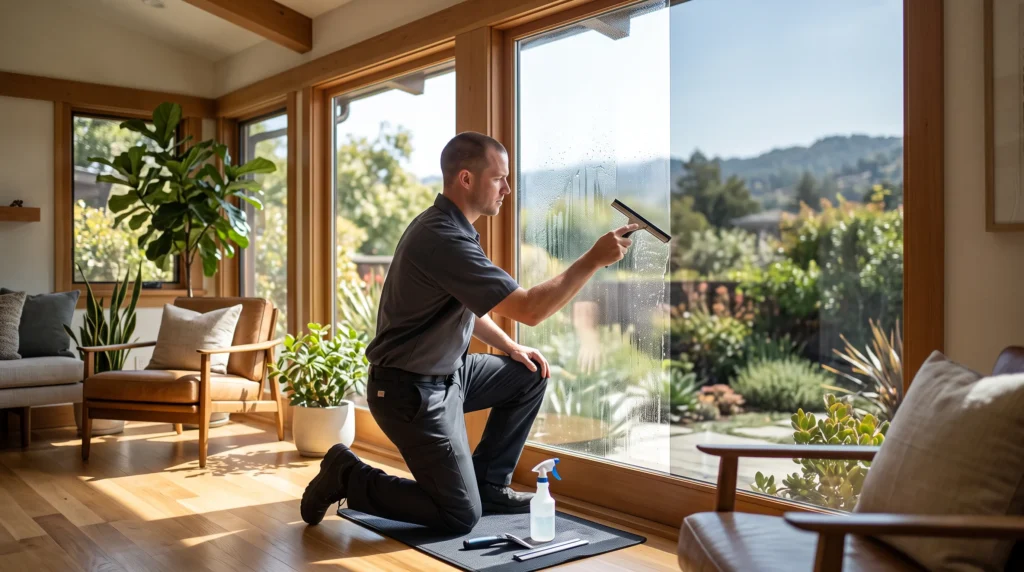
Nearby homeowners in Oakland, CA, Albany, CA, El Cerrito, CA, Emeryville, CA, and other East Bay communities may have similar concerns with sun-facing residential glass.
Schedule UV Window Film for a Berkeley Home
High Gloss Auto Detailing provides UV window film for Berkeley homes using XPEL residential window-film products.
XPEL offers residential solar-control films made to address UV exposure, solar heat, glare, natural-light transmission, and privacy.
The right film depends on the room, glass type, window direction, amount of sunlight, and the problem you want to address.
If your biggest concern is fading, ask about strong UV rejection.
If the room becomes uncomfortable in direct sun, ask about solar heat performance.
If you work beside a bright window, talk about glare.
If you want to keep the room bright, ask about lighter films such as XPEL CLEAR VIEW PLUS.
High Gloss Auto Detailing is located at:
7034 Commerce Cir Suite E Pleasanton, CA 94588
We serve customers in Berkeley, CA and surrounding East Bay communities.
Call (510) 542-3295 or visit the High Gloss Auto Detailing contact page to discuss your home’s windows and request an appointment.
Frequently Asked Questions About UV Window Film for Berkeley Homes
1. How much UV does home window film block?
XPEL states that its residential solar window films can block 99% of harmful UV rays. Check the published specifications for the exact film proposed for your home.
2. Will UV window film stop furniture from fading?
Window film can reduce UV exposure, which is one cause of fading. It cannot stop all fading because visible light, heat, material type, dyes, age, and other conditions can also affect furniture, flooring, artwork, and fabrics.
3. Does residential UV film reduce heat?
Many residential solar-control films are designed to reduce both UV transmission and solar heat. XPEL states that certain Solar Window Film products can block up to 78% of the sun’s heat. Results differ by film and glass.
4. Do I need dark window film to block UV rays?
No. XPEL CLEAR VIEW PLUS 70 is a lighter residential film that XPEL says allows about 70% visible light transmission while blocking 99% of UV rays. Homeowners can get UV protection without choosing very dark glass.
5. Can UV window film reduce glare on televisions and computers?
Yes. Solar window film can reduce visible-light glare. The amount depends on the film and shade. A room with strong screen glare may benefit from a film with greater glare reduction.
6. Can residential window film provide privacy?
Some reflective and one-way films can add daytime privacy when outdoor light is stronger than interior light. The effect can change at night when lights are turned on inside, so blinds or curtains may still be needed.
7. Where can I get UV window film for my Berkeley, CA home?
High Gloss Auto Detailing provides residential XPEL window film services for Berkeley, CA homeowners and surrounding East Bay communities. Call (510) 542-3295 or use the contact page to discuss your windows and request an appointment.
Sources
Summer Comfort in Your Home With XPEL Window Film
Publisher: XPEL
Publication Date: July 15, 2025
URL: https://www.xpel.com/blog/summer-comfort-in-your-home-with-xpel-window-film
XPEL Solar Window Film for Homes
Publisher: XPEL
Publication Date: Not listed
URL: https://lp.xpel.com/solar-window-film-home
XPEL Solar Control Films
Publisher: XPEL
Publication Date: Not listed
URL: https://www.xpel.com/products/solar-control
XPEL Home & Office Window Film
Publisher: XPEL
Publication Date: Not listed
URL: https://www.xpel.com/products/category/home-and-office-window-film
XPEL Product Specifications
Publisher: XPEL
Publication Date: Not listed
URL: https://www.xpel.com/product-specifications
XPEL VISION Home & Office Window Film Specification Sheet
Publisher: XPEL
Publication Date: Not listed on specification sheet
URL: https://www.xpel.com/web-assets/downloads/XPEL-VISION-Spec-Sheet.pdf
UV Window Film for Berkeley Homes: What It Actually Blocks - High Gloss Auto Detailing XPEL Certified Installer

UV Window Film for Berkeley Homes: What It Actually Blocks Premier Certified XPEL Installer. UV window film for Berkeley homes can reduce the amount of
Product Brand: High Gloss Auto Detailing
5
Pros
- Discover the best ceramic coating services in Pleasanton, CA, with High Gloss Auto Detailing. Protect your car’s paint with Ceramic Pro, the industry leader in automotive protection. Call us today or schedule an appointment online!